Wisdom Teeth Removal in Glendale, AZ

Wisdom Teeth Removal.
In-Office. Comfortable.

Independent · Doctor-Owned

Simple extractions and complex impactions handled in-office. IV sedation available so you sleep through everything. Back to normal in 4–7 days. Free evaluation to start.

Appointments available in 1-2 days.
4.9  ·  400+ Google Reviews
IV Sedation
Available In-Office
4–7 Days
Recovery Time
4.9 ★
Google Rating
What We Handle
  • Fully erupted wisdom teeth
  • Soft tissue impactions
  • Bony (fully impacted) teeth
  • All four removed in one visit
  • IV sedation for complete comfort
Free consultation & X-ray evaluation
What to Expect
  • Evaluation and X-rays at your first visit
  • Insurance verified before treatment
  • Procedure typically 45–90 minutes
  • Written post-op instructions provided
Should Yours Come Out?

When Wisdom Teeth Need to Be Removed

Not every wisdom tooth needs to be extracted. But most do. The decision depends on whether the tooth can erupt properly and function without harming neighboring teeth, gums, or the jaw. Here is how we think about it.

Extraction Recommended
  • Tooth is impacted and cannot erupt properly
  • Causing pain, pressure, or swelling
  • Crowding or shifting neighboring teeth
  • Decay in wisdom tooth or adjacent molar
  • Pericoronitis (gum infection around partially erupted tooth)
  • Cyst or pathology developing around the tooth
May Not Need Removal
  • Tooth has fully erupted, is in good alignment
  • Can be cleaned and brushed effectively
  • No decay, no gum inflammation, no crowding
  • Biting partner is present on the opposing arch

Even symptom-free impacted wisdom teeth are often recommended for removal before they cause problems. We evaluate each case individually at your free consultation.

Comfort Options for Every Patient

Sedation Options: From Mild to Fully Asleep

We offer three levels of sedation. There is no wrong choice. Pick whatever fits your comfort level and budget.

Nitrous Oxide (Laughing Gas) Mild relaxation. You stay awake, fully in control. Wears off in minutes. You can drive yourself home. No add-on fee.
Oral Conscious Sedation A prescription pill taken before your appointment. You stay awake but deeply relaxed with very little memory of the procedure. Driver required. $350 add-on.
IV Sedation Fully unconscious. Administered by a board-certified dental anesthesiologist in-office. You arrive, you wake up done. Driver required. Anesthesia fee: $1,500 (does not include extraction cost). Often partially covered by dental insurance.
Ask About Sedation Options
Why Sooner Is Better

What Happens When Impacted Wisdom Teeth Stay In

Not every wisdom tooth needs to come out. But impacted teeth that stay in can quietly cause problems over months or years. A 3D CBCT scan at your evaluation shows us exactly what is happening below the gumline.

Risks of Leaving Impacted Teeth In
  • Crowding and shifting of adjacent teeth as the wisdom tooth pushes forward
  • Pericoronitis: recurrent infection of the gum flap over a partially erupted tooth
  • Cyst formation around the tooth root, which can silently destroy surrounding bone
  • Decay on the back surface of your second molar, which the wisdom tooth traps food against
  • Increased surgical complexity as roots continue to develop and anchor deeper into bone
Why Early Removal Is Easier
  • Late teens and early twenties: roots are typically not yet fully formed, making removal faster and less traumatic
  • Bone is more flexible, healing is faster at a younger age
  • Waiting until teeth cause pain often means longer procedures and longer recovery
  • We evaluate every case individually. Some patients never need removal. We will tell you honestly.
What to Expect After

Recovery Timeline

Wisdom tooth recovery is predictable when you follow post-op instructions. Most patients are surprised by how manageable it is. Here is what the typical recovery looks like day by day.

Day of Procedure
Rest & Manage Bleeding

Bite down on gauze as instructed. Expect some oozing. This is normal. Take prescribed or recommended pain medication before the anesthesia fully wears off. Rest at home. No driving if you had sedation.

Days 2–3
Peak Swelling

Swelling typically peaks 48–72 hours after surgery. Ice packs applied in 20-minute intervals help. Stick to soft foods: yogurt, smoothies, mashed potatoes. Avoid straws. Swelling will noticeably reduce after day 3.

Days 4–7
Feeling Much Better

Most patients return to work or school in this window. Swelling and discomfort decrease significantly. You can introduce softer solid foods. Continue avoiding hard, crunchy, or sticky items. Rinse gently with warm saltwater after meals.

2 Weeks
Full Soft Tissue Healing

Gum tissue is fully healed. The bony socket continues to fill in over the following weeks. At your follow-up appointment we confirm healing is progressing normally. Most patients return to full normal diet by this point.

Post-Op Comfort

Our Approach to Pain Management After Wisdom Tooth Removal

We do not routinely prescribe opioids after wisdom tooth removal. Our protocol uses a combination of long-acting local anesthetics, anti-inflammatory medications, and OTC pain relief that most patients find highly effective. The goal is to keep you comfortable through the first 48 hours without narcotics.

Step 1
Long-Acting Local Anesthetic at Close of Procedure

Before you leave the chair, we inject bupivacaine (Marcaine), a long-acting local anesthetic that keeps the surgical area numb for approximately 6 to 12 hours after surgery. The intent is simple: you are home and settled before the anesthesia wears off, easing the transition out of sedation and giving your OTC medications time to get ahead of any discomfort.

Step 2
Anti-Inflammatory Stack: Dexamethasone and Medrol

Dexamethasone (dex) is administered via IV during your procedure. It significantly reduces post-operative swelling and inflammatory pain for the first 2 to 3 days. Most patients notice the difference. We follow this with a Medrol (methylprednisolone) dose pack post-op for continued inflammation control through the first week. Together, this anti-inflammatory stack is often the difference between a difficult recovery and a manageable one.

Step 3
Alternating Ibuprofen and Tylenol

Ibuprofen 800mg alternated with Tylenol Extra Strength, timed to overlap throughout the day, provides multimodal pain control using two different mechanisms. For most patients following this protocol, it is enough. We will walk you through the timing before you leave.

Antibiotics
Prescribed When Bone Removal Is Required

When wisdom tooth removal involves osseous (bone) removal, as is common with bony impactions, we prescribe antibiotics to reduce the risk of post-operative infection. Not every case requires them. We prescribe only when clinically indicated.

For parents of teenage patients: This protocol is particularly relevant if you are anxious about opioid prescriptions. The vast majority of our wisdom tooth patients, including teenagers, complete their recovery without narcotic pain medication. We will discuss the full protocol at your evaluation and answer any questions you have.
Post-Op Instructions

Do’s and Don’ts After Wisdom Tooth Removal

Following these guidelines is the single biggest factor in how smooth your recovery will be. Dry socket, the most common complication, is almost always preventable with proper post-op care.

Do These Things
  • Bite on gauze firmly for 30–45 minutes after leaving
  • Apply ice packs on and off for the first 24 hours
  • Take prescribed medications on schedule
  • Eat soft foods: yogurt, soup, mashed potatoes, smoothies
  • Rinse gently with warm salt water after 24 hours
  • Keep your head elevated when sleeping or resting
  • Call us if you have fever, severe pain after day 3, or swelling worsening after day 3
Avoid These Things
  • No straws for at least 72 hours, as suction dislodges the clot
  • No smoking or vaping for at least 3–5 days
  • No hard, crunchy, or chewy foods for the first week
  • No vigorous rinsing or spitting for 24 hours
  • No strenuous physical activity for 48–72 hours
  • No alcohol while taking prescription pain medication
Before You Arrive

Day-of Preparation

A little preparation the day of your procedure makes everything smoother. Here is what we ask patients to do before coming in.

01 Nothing to eat or drink for 6 hours before surgery if having IV sedation. This is a medical safety requirement. Water is permitted up to 2 hours before. If you are having local anesthesia only, a light meal beforehand is fine.
02 Arrange a driver if you are having IV sedation. You cannot drive yourself home. A responsible adult must drive you and stay with you for the remainder of the day. This is non-negotiable for safety reasons.
03 Wear comfortable, loose-fitting clothing. Avoid tight sleeves, as we need easy access to your arm for IV placement. Leave contact lenses at home if possible.
04 Prepare your recovery space before you leave. Stock up on soft foods, have ice packs ready, and set up a comfortable area to rest when you get home. You will not feel like shopping afterward.
05 Fill prescriptions before your appointment if possible. We will send your post-op prescriptions to your pharmacy in advance. Picking them up before surgery means they are ready when you get home.

What Our Patients Say

4.9 (400+ reviews)

Private Practice. Personal Accountability.

Smile Science is an independent, doctor-owned practice -- not a DSO, not a franchise, not a corporate chain. Every treatment recommendation comes from the dentist who will perform your procedure, with no production quotas or outside investors in the room.

Your consultation and your procedure are with the same doctor.

Common Questions

Wisdom Tooth Removal FAQ

Not necessarily. We evaluate each tooth individually. Many patients choose to remove all four at once to limit recovery time to a single episode. We will make a recommendation based on your specific situation at your evaluation.
Impacted wisdom teeth are very common and we handle both soft tissue and bony impactions. IV sedation ensures you are completely comfortable. Recovery is similar to a standard extraction. Most patients are back to normal activity within 4–7 days.
If you choose IV sedation, no. You must have a responsible adult drive you home and stay with you for the rest of the day. This is a safety requirement, not a suggestion. If you choose local anesthesia only, you may drive yourself.
Most patients are back to normal activity within 4–7 days. Swelling peaks around day 2–3, then reduces steadily. Soft tissue heals fully within 2 weeks. Following post-op instructions (no straws, no smoking, soft foods) significantly speeds recovery.
For the first 24 to 48 hours, stick to soft foods that require no chewing: yogurt, smoothies (no straw), mashed potatoes, applesauce, and scrambled eggs. Avoid hard, crunchy, or spicy foods for at least one week. Avoid straws for 72 hours to prevent dislodging the blood clot that protects the healing socket.
Most patients return to desk work or school within 2 to 3 days after extraction. Physical labor and strenuous activity should be avoided for at least 5 to 7 days to prevent increased swelling and the risk of dry socket. Swelling typically peaks at 48 to 72 hours and subsides significantly by the end of the first week.
Dry socket (alveolar osteitis) happens when the blood clot that forms in the extraction socket is dislodged before the bone heals. It causes significant pain starting 3 to 5 days post-extraction. Prevent it by avoiding straws, spitting forcefully, smoking, and carbonated drinks for 72 hours. If you develop dry socket, call us. We treat it with a medicated dressing that provides near-immediate relief.
During the procedure, you will feel pressure but not pain. The area is numbed with local anesthesia, and sedation is available if you want to be more relaxed or completely unaware. After the anesthesia wears off, most patients describe the discomfort as manageable with over-the-counter ibuprofen and acetaminophen. Prescription pain medication is provided when appropriate. The worst discomfort is typically days 2 and 3.
Antibiotics are prescribed selectively -- not for every extraction, but for cases with active infection, compromised immune function, or significant surgical complexity. If antibiotics are indicated, we send the prescription to your pharmacy before you leave. Post-op instructions include which medications to take, when, and in what order for best pain control.
No. Smile Science is 100% owned by Dr. Dawson and Dr. Turke, two practicing dentists. There are no outside investors, no private equity involvement, and no management company directing clinical decisions. Both owners practice here full time. In a DSO or corporate chain, treatment recommendations can be influenced by investor returns, production quotas, or rotating providers who do not know your history. At Smile Science, the people making your treatment decisions are the same people whose names are on the practice. They are the doctors you will see at your appointment.
Your Care Team

Meet Your Glendale Dentists
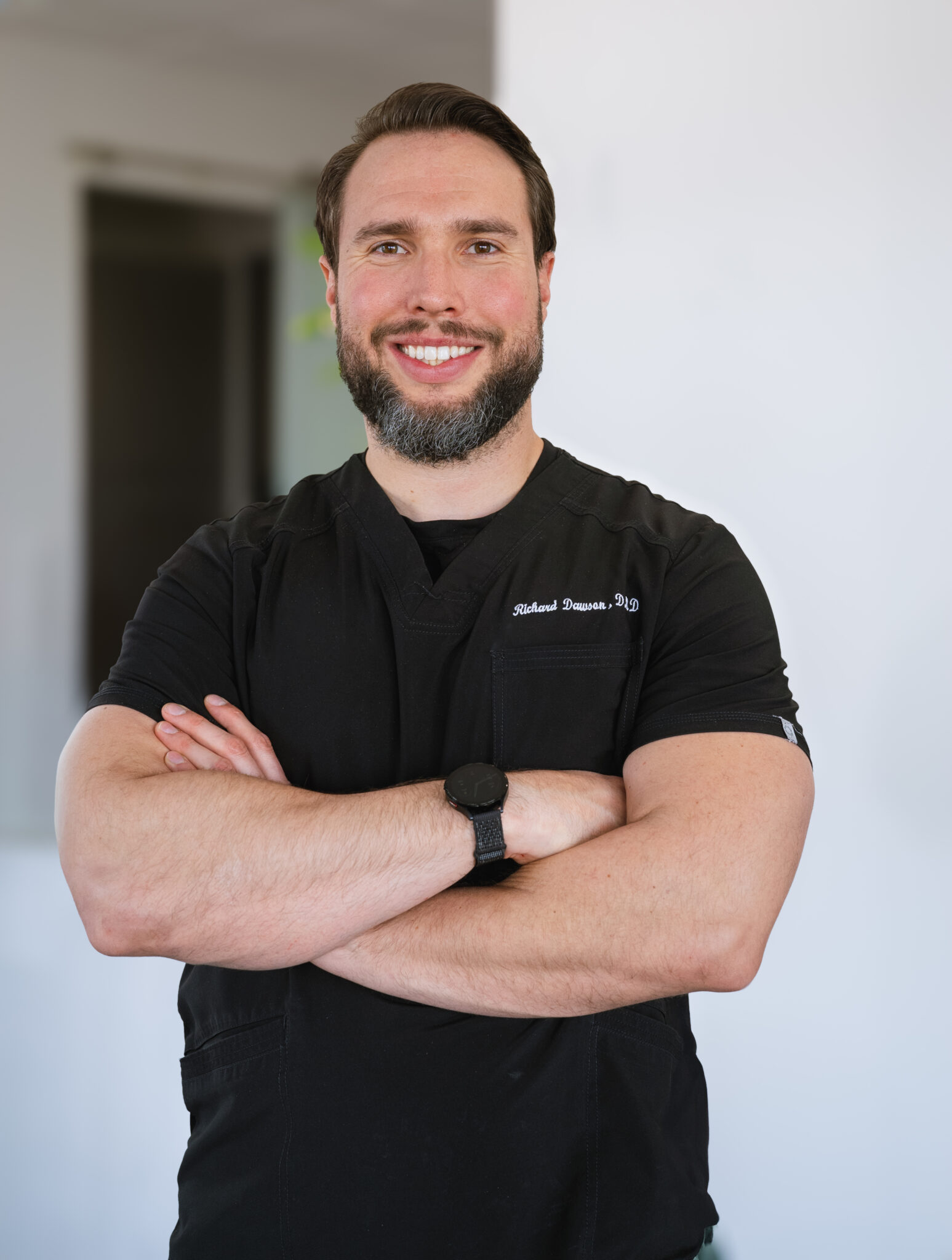
Dr. Richard Dawson, DMD
Co-Founder
Dr. Richard Dawson, DMD
DMD, ICOI Fellow, OCS Certified. Focuses on wisdom tooth extraction, complex extractions, and bone grafting.
Dr. John Turke, DMD
Co-Founder
Dr. John Turke, DMD
Restorative dentist and digital dentistry lead. Implant Pathway Fellow. Focuses on restorative care following extractions and post-surgical implant placement.
20118 N 67th Ave, Suite 308 | Glendale, AZ 85308 | (480) 530-3663
Patient Stories

Hear From Our Patients

Real patients. Real results. Unscripted.

Ariana

Jamie

Sarah

Visit Smile Science in Glendale

Your Next Step

Free Wisdom Tooth Evaluation

We take X-rays, review your case, verify your insurance, and give you a clear treatment plan, all at no charge. Come in knowing exactly what to expect.

Or call: (480) 530-3663