
Glendale, Arizona
Sleep Apnea Dental Treatment in Glendale, AZ
Services provided by an Arizona licensed general dentist.
You do not have to live with a CPAP machine to treat obstructive sleep apnea. SmileScience Dental Spa provides custom oral appliance therapy -- a quiet, comfortable, travel-friendly alternative for patients with mild to moderate OSA or CPAP intolerance -- in coordination with your sleep physician.
The Condition
Understanding Obstructive Sleep Apnea
Obstructive sleep apnea (OSA) occurs when the muscles at the back of the throat relax during sleep, allowing the airway to partially or fully collapse. Each collapse stops breathing for 10 seconds or longer -- a pause called an apnea event. These events can occur hundreds of times per night. The brain detects the oxygen drop and produces a micro-arousal to restart breathing -- brief enough that most people have no memory of waking up, but sufficient to fragment sleep architecture and prevent restorative sleep.
OSA affects an estimated 25 to 30 million adults in the United States. The majority remain undiagnosed. Risk factors include obesity, a large neck circumference, male sex, age over 40, family history, nasal obstruction, and structural features of the jaw and airway -- including a small lower jaw (retrognathia) and large tonsils.
Left untreated, OSA is associated with substantially elevated cardiovascular risk. Studies show significant associations with hypertension, atrial fibrillation, heart disease, stroke, type 2 diabetes, and motor vehicle accidents from daytime sleepiness.
Common Signs of Sleep Apnea
- --Loud or chronic snoring, especially with gasping or choking
- --Waking unrefreshed despite 7 to 8 hours of sleep
- --Excessive daytime sleepiness or dozing in low-stimulation situations
- --Morning headaches or dry mouth
- --Difficulty concentrating, memory problems, or mood changes
- --Partner reports breathing pauses or choking during sleep
- --Frequent nighttime waking or insomnia
The Dentist's Role
How Dentists Treat Obstructive Sleep Apnea
Important: Dentists do not diagnose sleep apnea.
A diagnosis of obstructive sleep apnea requires a sleep study (polysomnography or home sleep test) ordered and interpreted by a physician or sleep medicine specialist. At SmileScience, we provide the dental component of care -- oral appliance therapy -- once a diagnosis has been established. If you suspect sleep apnea but have not been tested, we can help coordinate a referral for a home sleep test as part of your consultation.
Obstructive sleep apnea is fundamentally an airway anatomy problem. The obstruction occurs in the oropharynx -- the region immediately behind the mouth and tongue. Because jaw position directly controls tongue position and the cross-sectional area of this airway, dentists are uniquely qualified to provide appliances that keep the airway open during sleep.
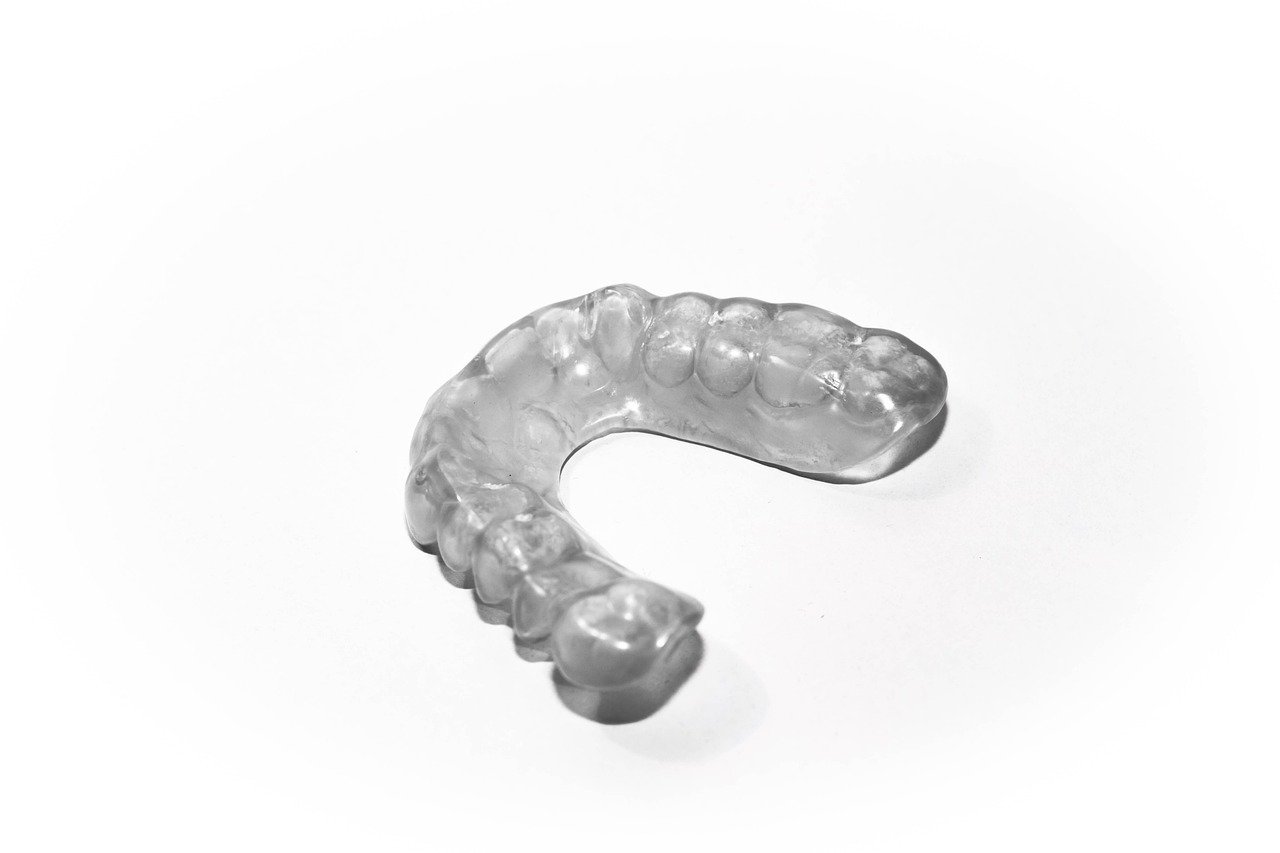
Oral appliance therapy (OAT) uses a custom-fit device worn in the mouth during sleep that holds the lower jaw (mandible) slightly forward. This forward mandibular position: tightens the muscles and soft tissues at the back of the throat; moves the tongue base forward away from the posterior airway wall; and increases the cross-sectional area of the upper airway enough to prevent collapse during sleep.
The American Academy of Sleep Medicine (AASM) formally recommends oral appliance therapy as a first-line treatment for mild to moderate OSA and as a treatment alternative for patients with severe OSA who cannot tolerate CPAP.
Treatment Comparison
Oral Appliance Therapy vs. CPAP
Both treatments are effective for OSA. The right choice depends on your diagnosis, severity, lifestyle, and tolerability.
| Feature | Oral Appliance | CPAP |
|---|---|---|
| Comfort | Small device worn in mouth -- no mask or tubing | Face mask with hose and machine |
| Noise | Completely silent | Machine produces audible airflow noise |
| Travel | Fits in a small case, pocket-sized | Bulky equipment; requires power source |
| Patient compliance | Higher -- easier to adopt and maintain | 30 to 50% of patients abandon within one year |
| Best severity range | Mild to moderate OSA; CPAP-intolerant severe | All severities; gold standard for severe OSA |
| Efficacy for mild-moderate OSA | Comparable to CPAP in multiple studies | Highly effective when used correctly |
| Insurance coverage | Medical insurance, including Medicare Part B | Medical insurance |
| Can be combined | Yes -- combination therapy reduces CPAP pressure needs | Yes -- combination approach available |
Multiple randomized clinical trials show oral appliance therapy produces AHI reductions comparable to CPAP for mild-to-moderate OSA. Because real-world compliance with OAT is significantly higher, the net health benefit is equivalent or greater for many patients in practice.
Device Types
Mandibular Advancement Devices and Tongue-Retaining Devices
Mandibular Advancement Device (MAD)
The most widely prescribed type of oral sleep appliance. Consists of upper and lower trays connected by a mechanism that holds the mandible (lower jaw) in a forward position. The amount of advancement is adjustable -- typically in 0.25 mm increments -- allowing precise titration to the minimum effective position for airway control and joint comfort.
MADs are appropriate for patients with adequate teeth to anchor the appliance. Multiple designs are available, each with different connection mechanisms and advancement ranges. We select the design best matched to your anatomy, severity, and jaw mobility.
Best for: Most OSA patients, including those with bruxism (some designs protect teeth simultaneously)
Tongue-Retaining Device (TRD)
Works by holding the tongue forward in a small bulb using gentle suction, keeping it from falling back and obstructing the airway. Does not depend on teeth for retention -- suitable for edentulous patients or those who cannot tolerate mandibular advancement.
Generally less comfortable than MADs during the adaptation period. A smaller patient population finds these preferable, but they are an important option when jaw advancement is contraindicated.
Best for: Patients without adequate teeth, or with jaw joint conditions limiting mandibular advancement
Is OAT Right for You?
Who Is a Candidate for Oral Appliance Therapy?
Good Candidates for OAT
- --Diagnosed mild to moderate OSA (AHI 5 to 30 events/hour)
- --CPAP intolerant or refusing CPAP with documented efforts
- --Patients who prefer OAT after being informed of all options
- --Severe OSA when CPAP cannot be used (AASM guideline)
- --Combination therapy with CPAP to reduce required pressure
- --Patients with sufficient healthy teeth to retain an MAD
OAT May Not Be the Best Fit When...
- --Severe OSA with no CPAP intolerance (CPAP is first-line)
- --Central sleep apnea (not obstructive) -- requires medical management
- --Active TMJ disorder that would be worsened by mandibular advancement
- --Insufficient teeth for appliance retention (TRD may still be an option)
- --No confirmed diagnosis -- a sleep study is required before OAT
A sleep study is required before oral appliance therapy for OSA.
We cannot fabricate an OAT device for OSA without a sleep study confirming the diagnosis. If you suspect sleep apnea but have not had a study, call us -- we can discuss whether a home sleep test referral is appropriate and how to navigate the process from first consultation to treatment.
The Diagnosis and Care Pathway
- Step 1
Screening for sleep apnea risk can happen at a routine dental appointment -- we assess jaw size, tongue size, neck circumference, and ask about snoring and sleep quality. If risk is indicated, we facilitate a referral to your primary care physician or directly to a sleep medicine specialist for a sleep study.
Recognition and Referral
Sleep Study
Step 2A sleep study (polysomnography in a sleep lab or a home sleep test) measures your apnea-hypopnea index (AHI) -- the number of breathing disruptions per hour of sleep. The AHI determines severity: mild (5 to 14.9), moderate (15 to 29.9), or severe (30+). Your physician interprets the results and establishes the diagnosis.
- Step 3
With a diagnosis in hand, you schedule an OAT consultation. We review your sleep study, examine your teeth and jaw, assess jaw range of motion, and discuss which device design is appropriate. We also take digital impressions and a bite registration at this appointment.
Dental Consultation at SmileScience
Device Fabrication and Delivery
Step 4Your appliance is fabricated by a specialized dental laboratory -- typically 2 to 3 weeks. At the delivery appointment, we seat the device, verify the fit, set the initial mandibular advancement, and provide cleaning and care instructions. You leave with the appliance and begin wearing it that night.
- Step 5
Over 4 to 8 weeks, we progressively advance the appliance in small increments. We monitor for jaw comfort, sleep quality improvement, and snoring reduction (often reported by partners from the first night). The goal is the minimum effective advancement that controls OSA without causing jaw joint discomfort.
Titration
Follow-Up Sleep Study and Ongoing Care
Step 6A follow-up home sleep test at optimal titration confirms that your AHI has reached a controlled level. We coordinate the results with your prescribing physician. Annual dental follow-ups monitor appliance condition, check for bite changes, and verify ongoing effectiveness.

Why Custom Matters
Custom Appliances vs. Over-the-Counter Devices
Custom (SmileScience)
- --Fabricated from precise digital dental impressions
- --Adjustable titration in 0.25 mm increments
- --FDA-cleared as a prescription medical device
- --Monitored with clinical follow-ups and sleep testing
- --Medical insurance covers most or all of the cost
- --2 to 5 year lifespan with proper care
Over-the-Counter
- --Boil-and-bite approximation -- not fitted to your anatomy
- --Fixed jaw position, no adjustment possible
- --Not FDA-cleared for OSA treatment
- --No clinical monitoring or outcome verification
- --Not covered by insurance
- --6 to 12 month lifespan; may cause tooth movement with improper fit
For snoring without a confirmed OSA diagnosis, an OTC device may provide temporary relief. For diagnosed obstructive sleep apnea, a custom device is the medically appropriate standard of care. Using an improperly fitted device for OSA carries real cardiovascular risk if it does not adequately control breathing events.
Coverage
Insurance Coverage for Oral Appliance Therapy
Oral appliance therapy for obstructive sleep apnea is generally covered as a medical benefit -- not a dental benefit. This means your medical insurance, not your dental plan, is the appropriate payer. Most commercial medical plans and Medicare Part B cover FDA-cleared oral appliances when:
- --A qualifying OSA diagnosis from a sleep study is documented
- --The device is FDA-cleared as a medical device (prescription custom appliances are; OTC devices are not)
- --The prescribing physician has authorized the treatment
We help navigate the insurance authorization process, including providing documentation of your diagnosis, treatment justification, and the specific device to be used. Our team verifies your coverage before treatment and provides a clear estimate of your expected out-of-pocket cost.
Some plans require documentation of CPAP trial and failure before covering OAT. We can advise on what documentation is typically needed and how to obtain it from your sleep physician.
What Our Patients Say
4.9 (437 reviews)
I recently had the pleasure of visiting Smile Science Dental Spa, and I couldn't be more impressed with the level of care and service provided by the entire team. Dr. Dawson and Dr. Turke are both incredibly skilled and made me feel completely at ease throughout my procedures. Their professionalism, combined with their gentle approach, made me feel comfortable and well-informed every step of the way. I was especially impressed that I was able to get a same-day crown(apparently their first ever!), which exceeded my expectations. I couldn’t believe how quick and seamless the process was. It really saved me time and made the experience even more convenient. Cindiray and Angeles, the dental assistants, were equally wonderful. They were not only friendly and attentive but also thorough in explaining everything and made sure I was relaxed during each phase of my visit. Lastly, a big thank you to Litzy at the front desk, who greeted me with a smile and helped with scheduling and any questions I had. She made the entire check-in process a breeze. From start to finish, my experience at Smile Science Dental Spa was exceptional. I'll be returning for sure. I highly, highly, highly recommend them for anyone looking for high-quality dental care.
View Full Review on GoogleDusty

Honestly I’ve never been so happy to go to the dentist. I came in (late due to Lyft) and was still taken care of and treated with care. Even without insurance (kicking in within the next month) prices for an extraction on my infected tooth were more than reasonable. I was able to get more than expected done in the same visit. Dr. Dawson and his team made me feel so comfortable and taken care of. Won’t go anywhere else.
View Full Review on GoogleCherish B

I recently started as a patient after leaving our long-time family Dentist and couldn’t be happier! Marcela is AMAZING and a FANTASTIC hygienist!!!! 😃 Dr Dawson is great too! Every time I visit, they make me feel like family.
View Full Review on GoogleTJ Winzeler

Myself and my family had previously gone to Dr. Turk at another dental office that he worked at. He had relocated and we did not know where he had gone to until this week. Today I got in with Dr. Turk and he took the time to look at my x-rays carefully . I was having pain from a tooth and some other issues. The previous Dentist I went to that I saw just a few days earlier, he did not find any issues with my tooth which I had pain in. Dr. Turk identified infection and referred me to an endodontist. He is very gentle as a wonderful disposition and my self and my family are thrilled to be able to get back with him. The office is lovely, relaxing music, heat and massage chair.I have always been very nervous and some anxiety going to dentist as I have had bad reactions with the anesthesia. I am confident that Dr. Kirk will help me get through my next appointment just fine. “The staff are very kind and attentive. I am looking forward as I have quite a bit of work to be done, and I know I’m in good hands with Dr. Turk and his staff. Five stars!⭐️ Sherry
View Full Review on GoogleSherry Redmond

I recently moved to Arizona and had an issue with a tooth repair from 15 years back. Not knowing anyone here in my new home, I searched dentists close to me. I chose Smile Science much like pinning the tail on the donkey and my selection couldn't have been better! What a terrific staff! Dr. Turke was concerned the tooth would need to be extracted, but said he wanted to take a shot at saving it..and that's just what he did! After setting a temporary crown, I was on my way with an appointment to install the permanent crown in the following two weeks. That evening I received a call I've never received from a dentist. Dr. Turke had taken the time to follow up with me to make sure I wasn't in any discomfort..I was completely caught off guard by this kind of attention to detail and caring for my well being. The permanent crown is now in place, it fits and feels fantastic, the job and treatment are first class! Thank you, Dr. Turke and staff for taking in this stray and giving me a home dentist! I'd like to say that I'm just good at selecting blindly, but the truth is I am very lucky..and I'll take lucky over being good any day of the week! Thank you, again and Happiest of New Year's in 2026, Science Smile!!
View Full Review on GoogleEddy

Sleep Apnea Dental Treatment FAQ
Often yes -- through medical insurance, not dental insurance. Most commercial medical plans and Medicare Part B cover FDA-cleared oral appliances with a qualifying OSA diagnosis. We verify your specific coverage before treatment and assist with the authorization process.
Most patients adapt within 2 to 4 weeks. Initial jaw soreness and increased salivation are common and temporary. We schedule regular follow-up appointments to adjust the device and address any discomfort. Partners typically report improvement in snoring from the first or second night.
Yes. Combination therapy is a recognized approach for patients who are partially tolerant of CPAP. Wearing an oral appliance simultaneously can allow a lower CPAP pressure setting, reducing mask leak and improving comfort -- which improves compliance with both treatments.
Minor tooth movement and transient changes in bite are possible over time with any MAD. We monitor for these changes at every follow-up visit and provide morning repositioning exercises that help maintain normal jaw position during waking hours. Significant permanent changes are uncommon with properly fitted, monitored devices.
Yes. CPAP intolerance is one of the primary indications for oral appliance therapy. The AASM guidelines explicitly recognize OAT as appropriate for patients who have been informed of CPAP as first-line treatment and prefer or cannot tolerate it. Your sleep physician's documentation of CPAP intolerance typically supports insurance coverage for OAT.
Yes. A follow-up home sleep test while wearing the appliance at optimal titration is standard of care. It confirms that the device is adequately controlling your AHI and informs your sleep physician's continued management. Insurance often requires this outcome study as well.
OAT reduces AHI in most patients, including those with severe OSA, but may not achieve the same AHI reduction as CPAP at the severe end of the spectrum. For patients with severe OSA who cannot use CPAP, OAT may reduce AHI to a controlled level and significantly reduce cardiovascular risk -- even if it does not achieve the same absolute reduction as CPAP would. This is a discussion to have with your sleep physician based on your specific AHI and health status.
Yes. If a sleep study confirms that snoring is present without OSA, an oral appliance can still be prescribed for snoring management. We discuss this option at consultation. However, since snoring is the most common presenting symptom of OSA, we strongly recommend a sleep study first to rule out or confirm OSA before treating the symptom alone.
4.9 (437 reviews)
I recently had the pleasure of visiting Smile Science Dental Spa, and I couldn't be more impressed with the level of care and service provided by the entire team. Dr. Dawson and Dr. Turke are both incredibly skilled and made me feel completely at ease throughout my procedures. Their professionalism, combined with their gentle approach, made me feel comfortable and well-informed every step of the way. I was especially impressed that I was able to get a same-day crown(apparently their first ever!), which exceeded my expectations. I couldn’t believe how quick and seamless the process was. It really saved me time and made the experience even more convenient. Cindiray and Angeles, the dental assistants, were equally wonderful. They were not only friendly and attentive but also thorough in explaining everything and made sure I was relaxed during each phase of my visit. Lastly, a big thank you to Litzy at the front desk, who greeted me with a smile and helped with scheduling and any questions I had. She made the entire check-in process a breeze. From start to finish, my experience at Smile Science Dental Spa was exceptional. I'll be returning for sure. I highly, highly, highly recommend them for anyone looking for high-quality dental care.
View Full Review on GoogleDusty
Honestly I’ve never been so happy to go to the dentist. I came in (late due to Lyft) and was still taken care of and treated with care. Even without insurance (kicking in within the next month) prices for an extraction on my infected tooth were more than reasonable. I was able to get more than expected done in the same visit. Dr. Dawson and his team made me feel so comfortable and taken care of. Won’t go anywhere else.
View Full Review on GoogleCherish B
I recently started as a patient after leaving our long-time family Dentist and couldn’t be happier! Marcela is AMAZING and a FANTASTIC hygienist!!!! 😃 Dr Dawson is great too! Every time I visit, they make me feel like family.
View Full Review on GoogleTJ Winzeler
Myself and my family had previously gone to Dr. Turk at another dental office that he worked at. He had relocated and we did not know where he had gone to until this week. Today I got in with Dr. Turk and he took the time to look at my x-rays carefully . I was having pain from a tooth and some other issues. The previous Dentist I went to that I saw just a few days earlier, he did not find any issues with my tooth which I had pain in. Dr. Turk identified infection and referred me to an endodontist. He is very gentle as a wonderful disposition and my self and my family are thrilled to be able to get back with him. The office is lovely, relaxing music, heat and massage chair.I have always been very nervous and some anxiety going to dentist as I have had bad reactions with the anesthesia. I am confident that Dr. Kirk will help me get through my next appointment just fine. “The staff are very kind and attentive. I am looking forward as I have quite a bit of work to be done, and I know I’m in good hands with Dr. Turk and his staff. Five stars!⭐️ Sherry
View Full Review on GoogleSherry Redmond
I recently moved to Arizona and had an issue with a tooth repair from 15 years back. Not knowing anyone here in my new home, I searched dentists close to me. I chose Smile Science much like pinning the tail on the donkey and my selection couldn't have been better! What a terrific staff! Dr. Turke was concerned the tooth would need to be extracted, but said he wanted to take a shot at saving it..and that's just what he did! After setting a temporary crown, I was on my way with an appointment to install the permanent crown in the following two weeks. That evening I received a call I've never received from a dentist. Dr. Turke had taken the time to follow up with me to make sure I wasn't in any discomfort..I was completely caught off guard by this kind of attention to detail and caring for my well being. The permanent crown is now in place, it fits and feels fantastic, the job and treatment are first class! Thank you, Dr. Turke and staff for taking in this stray and giving me a home dentist! I'd like to say that I'm just good at selecting blindly, but the truth is I am very lucky..and I'll take lucky over being good any day of the week! Thank you, again and Happiest of New Year's in 2026, Science Smile!!
View Full Review on GoogleEddy
Sleep Better Without a CPAP Machine
Custom oral appliance therapy for obstructive sleep apnea at SmileScience Dental Spa, Glendale, AZ. We work with your sleep physician from diagnosis to follow-up. Most medical insurance plans accepted. Call or book online.