
Glendale, Arizona
Nitrous Oxide Sedation in Glendale, AZ
Services provided by an Arizona licensed general dentist.
Nitrous oxide is the gentlest form of dental sedation available -- inhaled through a small nose mask, it produces warmth and calm within minutes. When the mask comes off, it clears from your system quickly. No driver required. No recovery day. Just a noticeably more comfortable dental visit.
The Basics
What Is Nitrous Oxide?
Nitrous oxide is a colorless, odorless gas that has been used safely in dentistry for well over a century. You have probably heard it called "laughing gas" -- a nickname from its early days, when people noticed it sometimes produced mild euphoria or giggles. Modern dental applications are more controlled than that, but the core effect is the same: relaxation, a gentle warmth, and a reduced sense of anxiety.
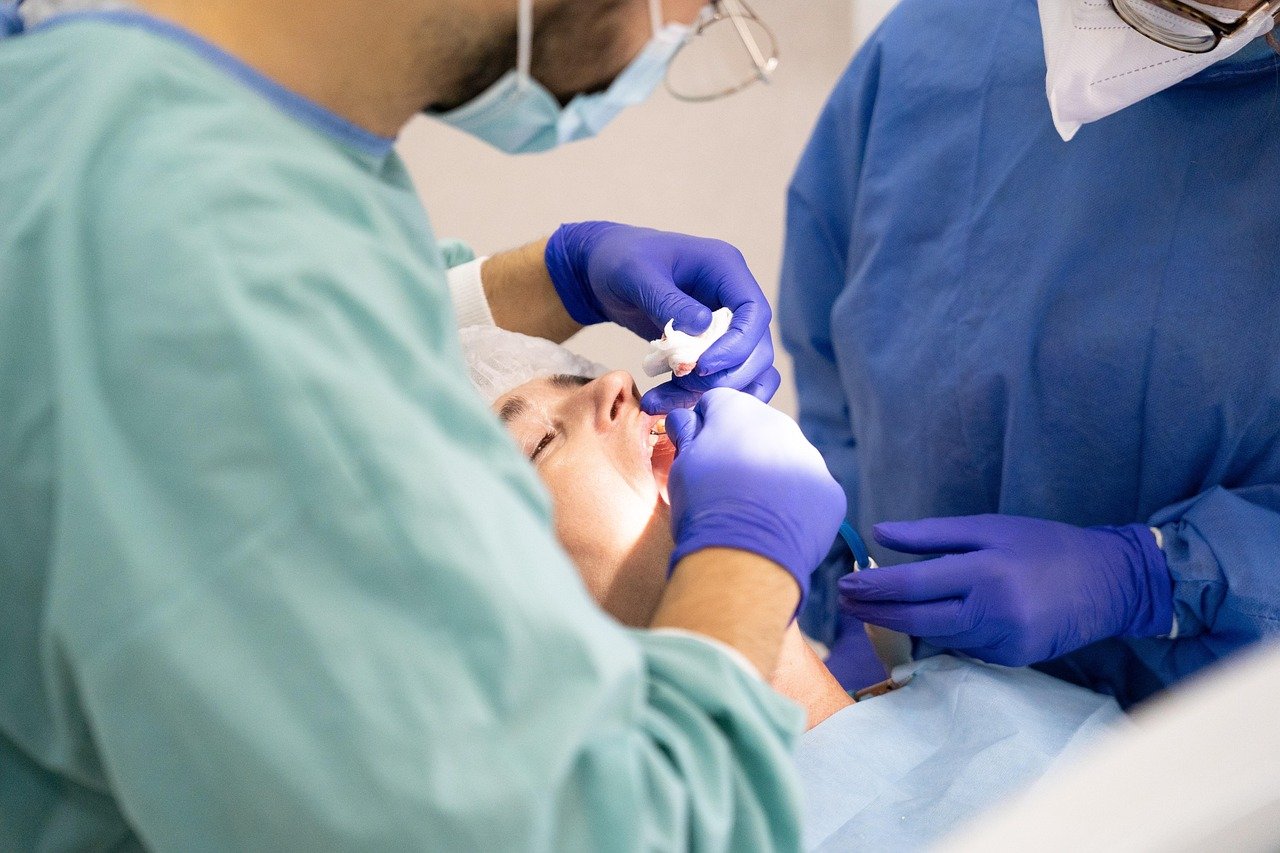
It is administered through a small, comfortable mask placed over your nose. You continue to breathe normally and can communicate throughout your appointment. The gas mixture is delivered in a precise concentration of nitrous oxide and oxygen, adjusted in real time by Dr. Dawson based on your response.
The most important feature for many patients: when your appointment ends, the mask is removed and you breathe pure oxygen for a few minutes to flush the nitrous from your system. Within 5 to 10 minutes, most patients feel fully back to normal and can drive themselves home. No recovery day. No driver to arrange. No waiting room groggy hour. You walk in with mild anxiety, you walk out with your appointment done and your car keys in hand.

The Patient Experience
What Nitrous Oxide Feels Like
Most patients find nitrous oxide produces a distinctly pleasant sensation. Here is what to expect once the mask is on.
Ideal Candidates
Who Benefits Most from Nitrous Oxide
Nitrous oxide is the most accessible sedation option we offer — safe, fast-acting, and appropriate for a wide range of patients, adults and children alike.
Dental Anxiety
Nervous but not phobic patients who want to take the edge off without deeper sedation.
Children
Safe and well-tolerated for pediatric patients during cleanings, fillings, and routine care.
Needle Phobia
Nitrous significantly reduces anxiety around the local anesthetic injection before it happens.
Sensitive Gag Reflex
The relaxation effect suppresses the gag response, making treatment far more tolerable.
Short Procedures
Fillings, cleanings, single extractions, and exams — ideal whenever the procedure is 60 minutes or less.
Busy Schedules
No driver required. Effects clear within minutes — you can drive yourself home and return to work.
First-Time Sedation
A low-risk entry point for patients curious about sedation before committing to a stronger option.
Nitrous oxide is safe for most healthy patients. A brief medical history review at your consultation confirms whether it is right for you.
Knowing the Limits
When Nitrous Oxide Is Not the Right Fit
Nitrous oxide is excellent for mild to moderate anxiety and straightforward procedures. But it has real limitations, and being honest about those limitations is part of how we help patients find the right solution.
Moderate to Severe Anxiety
Nitrous oxide produces mild relaxation -- enough for many patients, but not for those with significant dental phobia or highly anxiety-provoking procedures. If you have been unable to get through appointments with nitrous oxide before, or if the thought of an appointment causes intense fear or physical stress, oral conscious sedation or IV sedation is a more appropriate choice.
Long or Complex Surgical Procedures
For implant surgery, bone grafting, full-mouth rehabilitation, or extensive periodontal surgery, nitrous oxide alone is generally insufficient. The depth of relaxation does not match what these procedures demand, and nitrous has no amnesiac effect -- you will remember the experience clearly. Oral or IV sedation is typically recommended for these cases.
Some Medical Conditions
Patients with certain respiratory conditions (including COPD), a first-trimester pregnancy, some emotional or psychiatric disorders, or an inability to breathe through the nose may not be suitable candidates for nitrous oxide. A brief medical history review at your consultation will confirm whether it is appropriate for you.
If nitrous oxide is not the right fit, we offer oral conscious sedation and IV sedation for deeper levels of relaxation.
How They Work Together
Nitrous Oxide and Local Anesthesia
Nitrous oxide and local anesthesia serve different roles. Nitrous oxide reduces anxiety and creates a calm, relaxed mental state. Local anesthesia (the numbing injection) blocks nerve signals in the specific treatment area to prevent pain.
Both are used together for most procedures. Nitrous oxide does not replace local anesthesia -- and local anesthesia without nitrous oxide does not address anxiety. Used together, they cover both the physical and psychological dimensions of patient comfort. One of the most common observations from first-time nitrous patients is that the injection -- which they had always dreaded -- bothered them far less than they expected, precisely because the nitrous had already reduced their anxiety response before the needle was near them.
Investment
What Nitrous Oxide Costs
Nitrous oxide is the most affordable sedation option available at SmileScience. Fees typically range from $50 to $100 per visit as an add-on to your procedure cost. The exact amount depends on the duration of your appointment and the concentration used.
Some dental insurance plans cover nitrous oxide, particularly for children's appointments or when there is a documented medical indication. Coverage for adult elective use varies widely by plan. Our team will help verify your benefits before your appointment so there are no surprises.
Many patients find that even as a fully out-of-pocket expense, the cost of nitrous oxide per visit is modest compared to the benefit -- a significantly more comfortable appointment and a meaningful reduction in anxiety that makes it easier to return for ongoing care.
What Our Patients Say
4.9 (437 reviews)
I recently had the pleasure of visiting Smile Science Dental Spa, and I couldn't be more impressed with the level of care and service provided by the entire team. Dr. Dawson and Dr. Turke are both incredibly skilled and made me feel completely at ease throughout my procedures. Their professionalism, combined with their gentle approach, made me feel comfortable and well-informed every step of the way. I was especially impressed that I was able to get a same-day crown(apparently their first ever!), which exceeded my expectations. I couldn’t believe how quick and seamless the process was. It really saved me time and made the experience even more convenient. Cindiray and Angeles, the dental assistants, were equally wonderful. They were not only friendly and attentive but also thorough in explaining everything and made sure I was relaxed during each phase of my visit. Lastly, a big thank you to Litzy at the front desk, who greeted me with a smile and helped with scheduling and any questions I had. She made the entire check-in process a breeze. From start to finish, my experience at Smile Science Dental Spa was exceptional. I'll be returning for sure. I highly, highly, highly recommend them for anyone looking for high-quality dental care.
View Full Review on GoogleDusty

Honestly I’ve never been so happy to go to the dentist. I came in (late due to Lyft) and was still taken care of and treated with care. Even without insurance (kicking in within the next month) prices for an extraction on my infected tooth were more than reasonable. I was able to get more than expected done in the same visit. Dr. Dawson and his team made me feel so comfortable and taken care of. Won’t go anywhere else.
View Full Review on GoogleCherish B

I recently started as a patient after leaving our long-time family Dentist and couldn’t be happier! Marcela is AMAZING and a FANTASTIC hygienist!!!! 😃 Dr Dawson is great too! Every time I visit, they make me feel like family.
View Full Review on GoogleTJ Winzeler

Myself and my family had previously gone to Dr. Turk at another dental office that he worked at. He had relocated and we did not know where he had gone to until this week. Today I got in with Dr. Turk and he took the time to look at my x-rays carefully . I was having pain from a tooth and some other issues. The previous Dentist I went to that I saw just a few days earlier, he did not find any issues with my tooth which I had pain in. Dr. Turk identified infection and referred me to an endodontist. He is very gentle as a wonderful disposition and my self and my family are thrilled to be able to get back with him. The office is lovely, relaxing music, heat and massage chair.I have always been very nervous and some anxiety going to dentist as I have had bad reactions with the anesthesia. I am confident that Dr. Kirk will help me get through my next appointment just fine. “The staff are very kind and attentive. I am looking forward as I have quite a bit of work to be done, and I know I’m in good hands with Dr. Turk and his staff. Five stars!⭐️ Sherry
View Full Review on GoogleSherry Redmond

I recently moved to Arizona and had an issue with a tooth repair from 15 years back. Not knowing anyone here in my new home, I searched dentists close to me. I chose Smile Science much like pinning the tail on the donkey and my selection couldn't have been better! What a terrific staff! Dr. Turke was concerned the tooth would need to be extracted, but said he wanted to take a shot at saving it..and that's just what he did! After setting a temporary crown, I was on my way with an appointment to install the permanent crown in the following two weeks. That evening I received a call I've never received from a dentist. Dr. Turke had taken the time to follow up with me to make sure I wasn't in any discomfort..I was completely caught off guard by this kind of attention to detail and caring for my well being. The permanent crown is now in place, it fits and feels fantastic, the job and treatment are first class! Thank you, Dr. Turke and staff for taking in this stray and giving me a home dentist! I'd like to say that I'm just good at selecting blindly, but the truth is I am very lucky..and I'll take lucky over being good any day of the week! Thank you, again and Happiest of New Year's in 2026, Science Smile!!
View Full Review on GoogleEddy

Medical Review & Evidence
- American Dental Association. Guidelines for the Use of Sedation and General Anesthesia by Dentists. ADA House of Delegates, 2016 (reaffirmed 2022).
- American Academy of Pediatric Dentistry. Guideline on Use of Nitrous Oxide for Pediatric Dental Patients. AAPD Reference Manual, 2023.
- Clark MS, Brunick AL. Handbook of Nitrous Oxide and Oxygen Sedation. Elsevier.
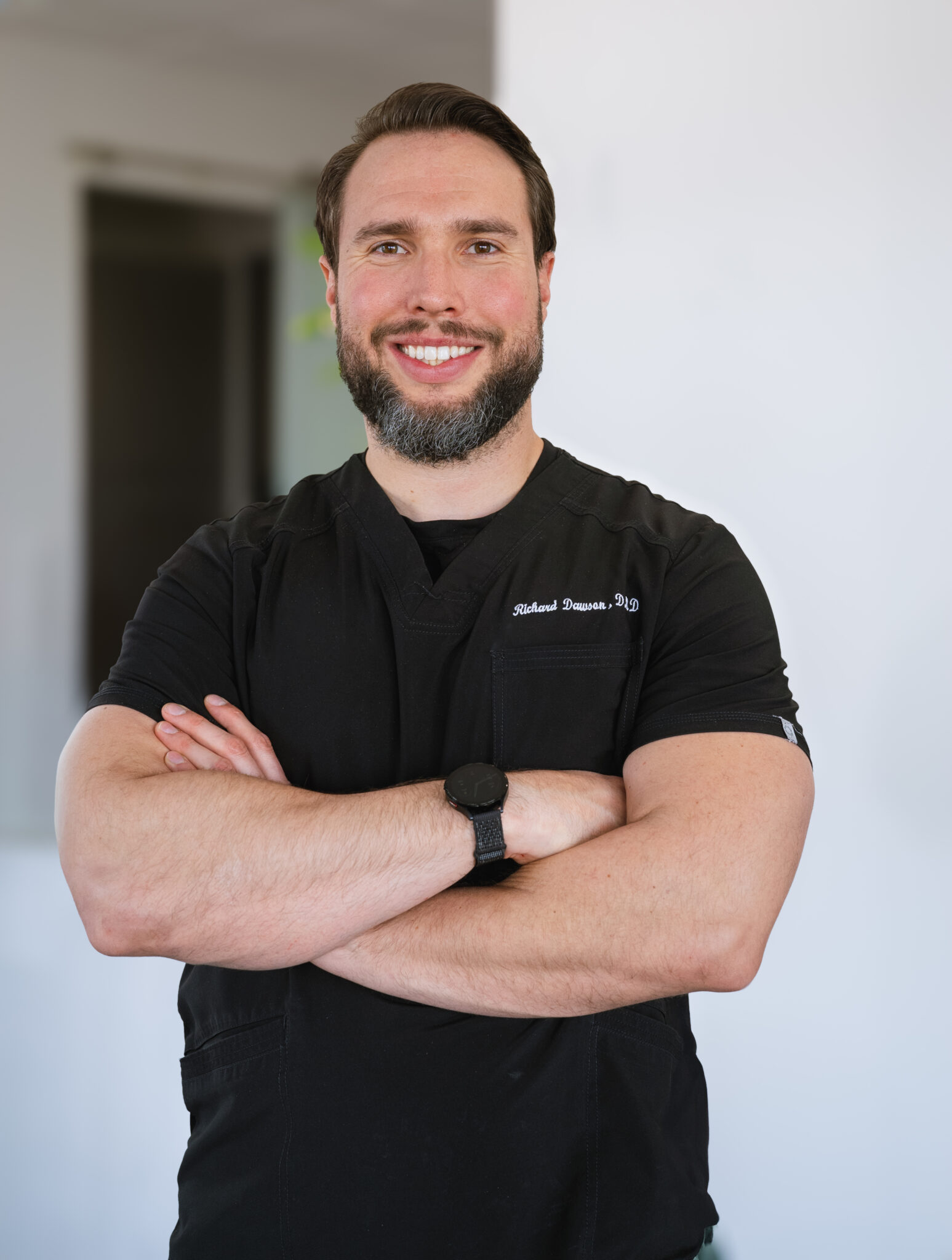
Content reflects current clinical guidelines and the experience of Dr. Richard Dawson, DMD, ICOI Fellow, at Smile Science Dental Spa, Glendale, AZ.
Nitrous Oxide FAQs
Yes. This is one of the most practical advantages of nitrous oxide. After the mask is removed at the end of your appointment, you breathe pure oxygen for about 5 minutes to flush the nitrous from your system. Most patients feel completely normal within 5 to 10 minutes and can drive themselves home without any impairment. This is fundamentally different from oral sedation or IV sedation, both of which require a driver.
Yes. Nitrous oxide is widely used in pediatric dentistry and has an excellent safety record for children. It is often the first choice for anxious young patients because it takes effect quickly, is gentle, causes no lasting impairment, and does not require an injection or IV. Children who might otherwise require general anesthesia for routine care can frequently be treated comfortably with nitrous oxide instead. The child must be able to breathe comfortably through their nose to use the mask effectively.
No. Nitrous oxide does not cause unconsciousness at the concentrations used in dental practice. You remain fully awake, aware of your surroundings, and able to speak, raise your hand to stop the procedure, or ask questions at any time. Many patients who are anxious about losing control actually find nitrous oxide reassuring precisely because it makes them calmer without taking away their awareness or ability to respond.
No. Local anesthetic is still required to numb the treatment area for procedures involving drilling, extraction, or other invasive steps. Nitrous oxide reduces anxiety and produces mild pain modulation, but it does not block nerve signals the way local anesthetic does. What it does do is significantly reduce the anxiety around receiving the numbing injection -- most patients who have always dreaded the needle find it much less bothersome after the nitrous takes effect.
That is a completely normal outcome for patients with moderate to severe dental anxiety. Nitrous oxide is specifically calibrated for mild anxiety -- if your anxiety goes beyond that, the right response is not to push through with insufficient sedation. Instead, we would recommend either oral conscious sedation or IV sedation, depending on your needs. We offer all levels at SmileScience, so there is always a next step available.
Side effects are uncommon but can include mild nausea, dizziness, or headache in some patients -- usually from breathing too deeply, if the concentration is set too high, or if a patient eats a large meal before the appointment. To minimize this risk, avoid eating a large meal within 2 to 3 hours before your appointment. Let us know if you have ever felt nauseous from nitrous oxide previously so we can adjust the concentration accordingly.
Nitrous oxide is generally considered contraindicated during the first trimester and is used with caution throughout pregnancy. If you are pregnant or think you may be, let us know before your appointment. We will discuss your options, including whether your dental care can be safely deferred until after delivery or whether an alternative approach is more appropriate for your situation.
Most patients begin to notice the calming effects within 2 to 3 minutes of breathing through the mask. Full effect is typically reached within 5 minutes. The concentration can be adjusted during your appointment if needed -- this is one advantage of nitrous oxide over oral sedation, where the dose is fixed once you take the medication. When the mask is removed at the end of your visit, the effects wear off in about 5 minutes of breathing room air.
4.9 (437 reviews)
I recently had the pleasure of visiting Smile Science Dental Spa, and I couldn't be more impressed with the level of care and service provided by the entire team. Dr. Dawson and Dr. Turke are both incredibly skilled and made me feel completely at ease throughout my procedures. Their professionalism, combined with their gentle approach, made me feel comfortable and well-informed every step of the way. I was especially impressed that I was able to get a same-day crown(apparently their first ever!), which exceeded my expectations. I couldn’t believe how quick and seamless the process was. It really saved me time and made the experience even more convenient. Cindiray and Angeles, the dental assistants, were equally wonderful. They were not only friendly and attentive but also thorough in explaining everything and made sure I was relaxed during each phase of my visit. Lastly, a big thank you to Litzy at the front desk, who greeted me with a smile and helped with scheduling and any questions I had. She made the entire check-in process a breeze. From start to finish, my experience at Smile Science Dental Spa was exceptional. I'll be returning for sure. I highly, highly, highly recommend them for anyone looking for high-quality dental care.
View Full Review on GoogleDusty
Honestly I’ve never been so happy to go to the dentist. I came in (late due to Lyft) and was still taken care of and treated with care. Even without insurance (kicking in within the next month) prices for an extraction on my infected tooth were more than reasonable. I was able to get more than expected done in the same visit. Dr. Dawson and his team made me feel so comfortable and taken care of. Won’t go anywhere else.
View Full Review on GoogleCherish B
I recently started as a patient after leaving our long-time family Dentist and couldn’t be happier! Marcela is AMAZING and a FANTASTIC hygienist!!!! 😃 Dr Dawson is great too! Every time I visit, they make me feel like family.
View Full Review on GoogleTJ Winzeler
Myself and my family had previously gone to Dr. Turk at another dental office that he worked at. He had relocated and we did not know where he had gone to until this week. Today I got in with Dr. Turk and he took the time to look at my x-rays carefully . I was having pain from a tooth and some other issues. The previous Dentist I went to that I saw just a few days earlier, he did not find any issues with my tooth which I had pain in. Dr. Turk identified infection and referred me to an endodontist. He is very gentle as a wonderful disposition and my self and my family are thrilled to be able to get back with him. The office is lovely, relaxing music, heat and massage chair.I have always been very nervous and some anxiety going to dentist as I have had bad reactions with the anesthesia. I am confident that Dr. Kirk will help me get through my next appointment just fine. “The staff are very kind and attentive. I am looking forward as I have quite a bit of work to be done, and I know I’m in good hands with Dr. Turk and his staff. Five stars!⭐️ Sherry
View Full Review on GoogleSherry Redmond
I recently moved to Arizona and had an issue with a tooth repair from 15 years back. Not knowing anyone here in my new home, I searched dentists close to me. I chose Smile Science much like pinning the tail on the donkey and my selection couldn't have been better! What a terrific staff! Dr. Turke was concerned the tooth would need to be extracted, but said he wanted to take a shot at saving it..and that's just what he did! After setting a temporary crown, I was on my way with an appointment to install the permanent crown in the following two weeks. That evening I received a call I've never received from a dentist. Dr. Turke had taken the time to follow up with me to make sure I wasn't in any discomfort..I was completely caught off guard by this kind of attention to detail and caring for my well being. The permanent crown is now in place, it fits and feels fantastic, the job and treatment are first class! Thank you, Dr. Turke and staff for taking in this stray and giving me a home dentist! I'd like to say that I'm just good at selecting blindly, but the truth is I am very lucky..and I'll take lucky over being good any day of the week! Thank you, again and Happiest of New Year's in 2026, Science Smile!!
View Full Review on GoogleEddy
A More Comfortable Appointment Starts Here
Contact SmileScience Dental Spa in Glendale to ask about adding nitrous oxide to your next appointment. It takes just a few minutes to set up and can make a significant difference in how you experience dental care.