

Pick your insurance
Sixteen carriers including Delta, Cigna, Aetna, all 4 major BCBS-network plans, AARP, and "I don't see my plan." We file claims for every carrier.
Glendale, Arizona
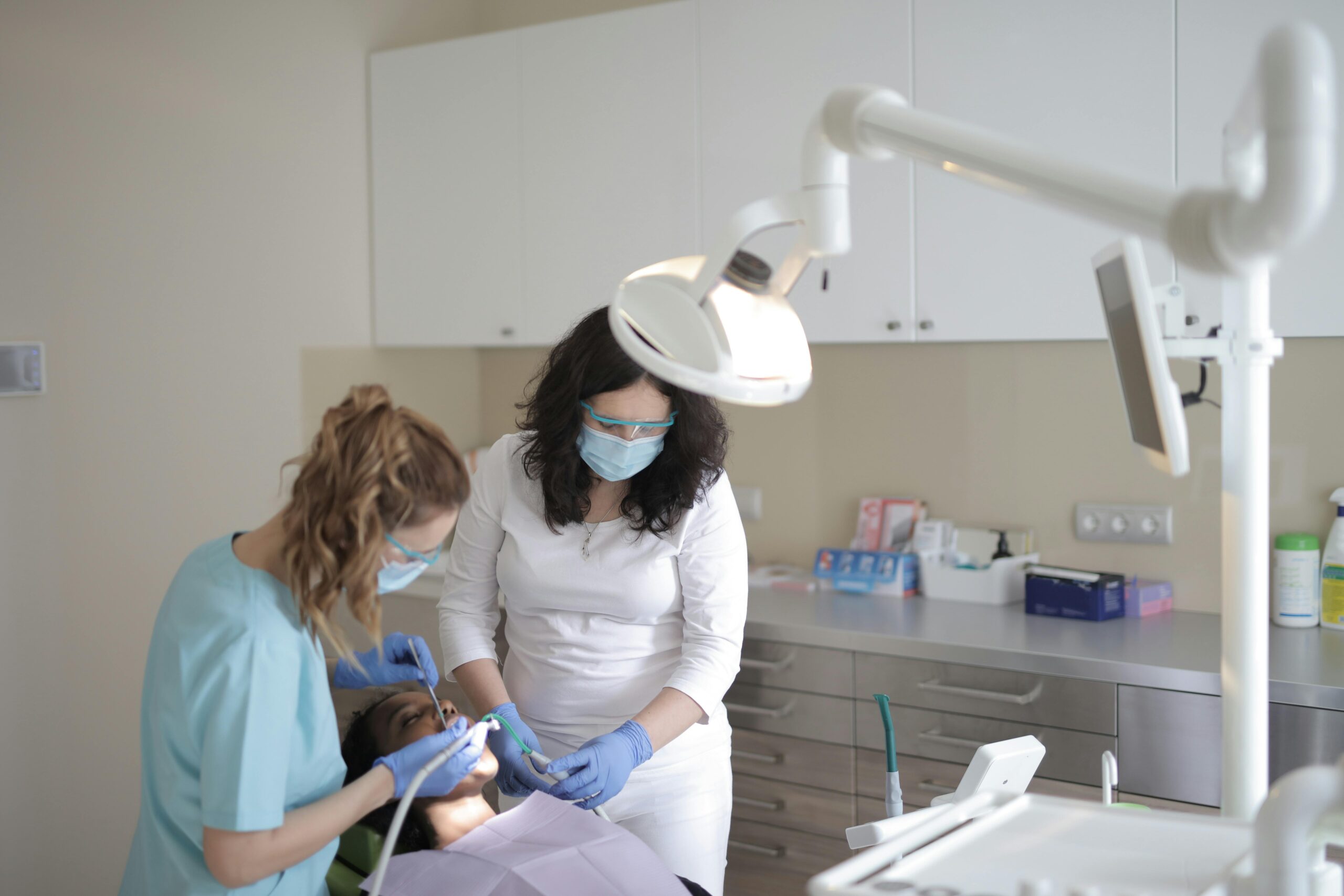
IV sedation delivers controlled, adjustable deep relaxation during dental treatment. At SmileScience Dental Spa, IV sedation is administered exclusively by a board-certified dental anesthesiologist -- so Dr. Dawson can focus entirely on your care while a dedicated specialist manages your comfort and safety.
Understanding the Procedure
Intravenous (IV) sedation delivers medication directly into the bloodstream through a small catheter -- typically placed in the back of the hand or forearm. Because the medication reaches the brain quickly and the dose can be adjusted in real time, the anesthesiologist maintains precise, continuous control over your level of sedation for the entire appointment.
IV sedation falls between oral sedation and general anesthesia on the sedation spectrum. Patients are deeply relaxed and minimally aware of what is happening around them. Most are not unconscious -- they are in a state clinicians describe as moderate-to-deep conscious sedation -- but they typically retain little or no memory of the appointment. You breathe on your own, and protective airway reflexes remain intact.
You may have heard it called "twilight sedation." That informal term captures the experience well: you are not fully asleep, but you are not fully present either. The benefit is meaningful -- the depth and safety of something close to general anesthesia, without requiring full airway management.
Why This Matters
Many dental offices that offer "IV sedation" have the treating dentist administer and monitor the sedation while also performing your procedure. At SmileScience, we use a different model.
A board-certified dental anesthesiologist comes to our office specifically for your appointment. Their entire role is to manage your sedation and monitor your vital signs. Dr. Dawson's entire role is to perform your dental treatment. Neither one is splitting attention between two jobs.
This two-specialist model is the same standard used in hospital operating rooms. For dental IV sedation, it is not common in private practice -- which is what makes it a meaningful differentiator at SmileScience.
Is This Right for You?
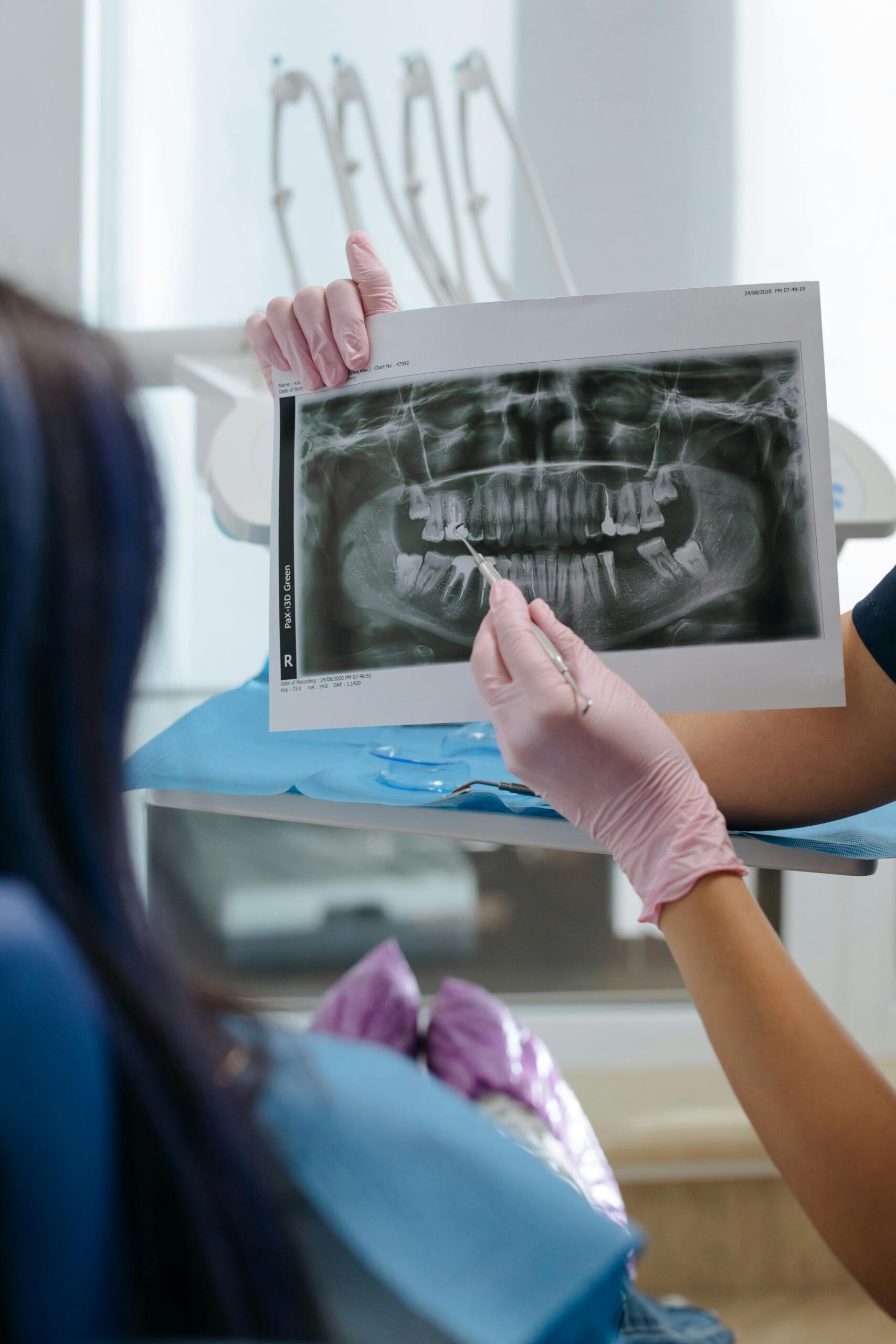
IV sedation is appropriate when nitrous oxide or oral sedation would not provide sufficient relaxation, but the procedure does not require full general anesthesia.
How It Compares
IV sedation sits between oral sedation and general anesthesia -- it offers deep comfort without requiring full airway management.
| Feature | Nitrous Oxide | Oral Sedation | IV Sedation | General Anesthesia |
|---|---|---|---|---|
| Depth of sedation | Minimal | Moderate | Moderate to deep | Full unconsciousness |
| Real-time adjustability | Yes | No | Yes | Yes |
| Memory of procedure | Full | Partial to none | Minimal to none | None |
| Breathes independently | Yes | Yes | Yes | Airway managed |
| Driver required | No | Yes | Yes | Yes |
| Administered by | Dentist | Dentist | Anesthesiologist | Anesthesiologist |
Before any sedation appointment is scheduled, the anesthesiologist reviews your health history, current medications, and any known allergies. Certain conditions -- including obstructive sleep apnea, uncontrolled hypertension, and some respiratory diseases -- require additional planning or physician clearance. This screening happens before the day of your procedure, never the morning of.
You will receive fasting instructions: nothing to eat or drink (including water) for 6 to 8 hours before your appointment. Arrange for a responsible adult to drive you to and from the office and to stay with you for a few hours after you return home. Wear comfortable, loose-fitting clothing and avoid wearing contact lenses on the day of your appointment.
When you arrive, the anesthesiologist greets you and confirms your health status for that day. Monitoring equipment is applied: a blood pressure cuff, pulse oximeter, and cardiac leads as warranted. The IV catheter is placed -- typically in the back of the hand or the forearm. Most patients feel only a brief, mild pinch at placement.
Medication is delivered gradually through the IV line until you reach the target level of sedation. Most patients feel a wave of calm and warmth within seconds. The sensation is gentle -- not disorienting. The anesthesiologist confirms you are at the right depth before signaling Dr. Dawson to begin. You may hear distant voices but feel completely detached and at ease.
Dr. Dawson performs your dental treatment while the anesthesiologist monitors your vitals and maintains sedation depth. Local anesthetic is still used to ensure the treatment area is fully numb -- sedation reduces anxiety and awareness, and local anesthesia ensures there is no pain. The anesthesiologist can increase or decrease sedation at any point based on your response.
When treatment is complete, the sedation medication is discontinued. Most patients are alert enough to walk out of the office within 20 to 30 minutes, though you will feel groggy and should not drive. Your escort takes you home, where you should rest for the remainder of the day. Full mental clarity returns for most patients within a few hours.
Your Safety
The level of monitoring during IV sedation at SmileScience matches or exceeds what you would receive in a hospital or surgical center.
After Your Appointment
IV sedation clears from your system relatively quickly. Here is what to expect in the hours after your appointment.
You rest in the chair until stable. Most patients are ready to walk out within 20 to 30 minutes of treatment ending. Do not drive under any circumstances.
Groggy but functional. Rest at home. Light food is fine once nausea has passed. Avoid alcohol, important decisions, and operating any machinery.
Most patients feel significantly more alert. Mental clarity is largely restored. Continue to rest and follow any procedure-specific post-care instructions.
Sedation effects are fully resolved. Any remaining recovery from this point forward relates to the dental procedure performed, not the sedation itself.
Common Applications
Any procedure requiring significant chair time, surgical access, or a patient who benefits from minimal awareness is a good candidate for IV sedation. Common applications include:
IV sedation is not required for all of these procedures -- but it is available for any patient who would benefit from it. The decision is made collaboratively between you, Dr. Dawson, and the anesthesiologist at your consultation.
Investment
IV sedation carries a higher fee than nitrous oxide or oral sedation because it requires a board-certified anesthesiologist to be physically present for your appointment. The anesthesiologist fee is separate from the dental treatment fee and will be outlined clearly in your pre-appointment estimate.
Most dental insurance plans do not routinely cover IV sedation for elective procedures, but coverage may apply when sedation is medically indicated -- for example, for documented anxiety disorders, special needs patients, or procedures where the medical history requires anesthesiologist oversight. Our team will help verify your benefits before your appointment.
Many patients find that the ability to complete substantially more treatment in a single IV sedation visit reduces their total number of appointments -- and in some cases, their total cost over time. We will provide a clear, itemized estimate before you commit to anything.
IV sedation at Smile Science is administered by a board-certified dental anesthesiologist. Content reviewed by Dr. John Turke, DMD, April 2026.
Live coverage estimator
Three quick taps — pick your insurance, pick your procedure, see the patient-cost range against our 2026 fee schedule next to our in-house membership plan. No login, no email, no sales pitch.
Estimate range, not a quote. Final cost depends on your specific plan benefits, remaining annual max, and clinical findings at your consult. Defaults used here: $1,500 annual max, $50 deductible.
Sixteen carriers including Delta, Cigna, Aetna, all 4 major BCBS-network plans, AARP, and "I don't see my plan." We file claims for every carrier.
Plain-language categories — Cleaning, Filling, Crown, Root Canal, Extraction, Gum Treatment, Implants, Cosmetic. Drill down to the specific option that matches your case.
Insurance estimate vs. our in-house membership plan, side-by-side. Ranges (not single numbers) so you're not surprised at the desk. Real 2026 Glendale-market pricing.
Not in the technical sense. IV sedation produces a state of deep relaxation often called "twilight sedation." You are not fully asleep, but you are deeply calm and largely unaware of what is happening. Most patients can respond to a verbal prompt if necessary but have essentially no memory of the appointment afterward. If complete unconsciousness is needed for your case, that would require general anesthesia -- a separate level we also offer at SmileScience.
Yes, when administered by a qualified anesthesiologist with appropriate patient screening and monitoring. At SmileScience, a board-certified dental anesthesiologist manages all IV sedation cases -- this is the same level of oversight used in hospital operating rooms. Your full health history is reviewed before sedation is approved, and continuous vital sign monitoring is maintained throughout your appointment. Reversal medications and emergency equipment are on hand at all times.
A board-certified dental anesthesiologist administers and manages your sedation for the entire appointment. This is not Dr. Dawson -- it is a separate specialist whose only role during your procedure is to monitor your comfort and vital signs. Dr. Dawson focuses exclusively on your dental treatment. This two-provider model is a meaningful safety advantage compared to practices where one provider handles both tasks.
With IV sedation, you are in a deeply relaxed, drowsy state but retain your protective airway reflexes and breathe on your own. General anesthesia renders you completely unconscious and requires active airway management. IV sedation carries a lower risk profile while still providing excellent comfort and amnesia for the vast majority of patients. General anesthesia is reserved for the most complex cases or patients who require complete unconsciousness.
No. Local anesthetic is still administered to numb the treatment area, so there is no sensation of pain regardless of sedation level. IV sedation handles the anxiety, awareness, and memory components of the experience. Local anesthesia handles the pain. Both work together so that the only thing you have to do is relax and let us handle the rest.
Many patients who take daily medications are safe candidates for IV sedation. Some medications interact with sedatives and may need to be held or adjusted before the appointment -- blood thinners, certain blood pressure medications, and sedatives are common examples. The anesthesiologist reviews your full medication list at your pre-appointment consultation and will give you specific instructions for what to take, hold, or adjust on your procedure day.
Yes, absolutely. You cannot drive after IV sedation, and this is non-negotiable. Arrange for a responsible adult to drive you both ways and to stay with you for a few hours after returning home. Ride-sharing services are not acceptable as your escort for this -- you need someone who can help you inside and remain with you during early recovery.
Nothing to eat or drink -- including water -- for 6 to 8 hours before your appointment. This is a safety requirement, not a preference. Eating or drinking before IV sedation increases the risk of aspiration, which is a serious medical complication. You will receive specific fasting instructions when your sedation appointment is scheduled. Follow them exactly.
Coverage varies significantly by plan. IV sedation is not routinely covered for elective dental procedures, but some plans will cover it when medically indicated -- for example, for patients with documented anxiety disorders, special needs, or complex medical conditions that require anesthesiologist oversight. Our team verifies your benefits before scheduling and provides a clear cost estimate so there are no surprises.
4.9 (437 reviews)
I recently had the pleasure of visiting Smile Science Dental Spa, and I couldn't be more impressed with the level of care and service provided by the entire team. Dr. Dawson and Dr. Turke are both incredibly skilled and made me feel completely at ease throughout my procedures. Their professionalism, combined with their gentle approach, made me feel comfortable and well-informed every step of the way. I was especially impressed that I was able to get a same-day crown(apparently their first ever!), which exceeded my expectations. I couldn’t believe how quick and seamless the process was. It really saved me time and made the experience even more convenient. Cindiray and Angeles, the dental assistants, were equally wonderful. They were not only friendly and attentive but also thorough in explaining everything and made sure I was relaxed during each phase of my visit. Lastly, a big thank you to Litzy at the front desk, who greeted me with a smile and helped with scheduling and any questions I had. She made the entire check-in process a breeze. From start to finish, my experience at Smile Science Dental Spa was exceptional. I'll be returning for sure. I highly, highly, highly recommend them for anyone looking for high-quality dental care.
View Full Review on GoogleDusty
Honestly I’ve never been so happy to go to the dentist. I came in (late due to Lyft) and was still taken care of and treated with care. Even without insurance (kicking in within the next month) prices for an extraction on my infected tooth were more than reasonable. I was able to get more than expected done in the same visit. Dr. Dawson and his team made me feel so comfortable and taken care of. Won’t go anywhere else.
View Full Review on GoogleCherish B
I recently started as a patient after leaving our long-time family Dentist and couldn’t be happier! Marcela is AMAZING and a FANTASTIC hygienist!!!! 😃 Dr Dawson is great too! Every time I visit, they make me feel like family.
View Full Review on GoogleTJ Winzeler
Myself and my family had previously gone to Dr. Turk at another dental office that he worked at. He had relocated and we did not know where he had gone to until this week. Today I got in with Dr. Turk and he took the time to look at my x-rays carefully . I was having pain from a tooth and some other issues. The previous Dentist I went to that I saw just a few days earlier, he did not find any issues with my tooth which I had pain in. Dr. Turk identified infection and referred me to an endodontist. He is very gentle as a wonderful disposition and my self and my family are thrilled to be able to get back with him. The office is lovely, relaxing music, heat and massage chair.I have always been very nervous and some anxiety going to dentist as I have had bad reactions with the anesthesia. I am confident that Dr. Kirk will help me get through my next appointment just fine. “The staff are very kind and attentive. I am looking forward as I have quite a bit of work to be done, and I know I’m in good hands with Dr. Turk and his staff. Five stars!⭐️ Sherry
View Full Review on GoogleSherry Redmond
I recently moved to Arizona and had an issue with a tooth repair from 15 years back. Not knowing anyone here in my new home, I searched dentists close to me. I chose Smile Science much like pinning the tail on the donkey and my selection couldn't have been better! What a terrific staff! Dr. Turke was concerned the tooth would need to be extracted, but said he wanted to take a shot at saving it..and that's just what he did! After setting a temporary crown, I was on my way with an appointment to install the permanent crown in the following two weeks. That evening I received a call I've never received from a dentist. Dr. Turke had taken the time to follow up with me to make sure I wasn't in any discomfort..I was completely caught off guard by this kind of attention to detail and caring for my well being. The permanent crown is now in place, it fits and feels fantastic, the job and treatment are first class! Thank you, Dr. Turke and staff for taking in this stray and giving me a home dentist! I'd like to say that I'm just good at selecting blindly, but the truth is I am very lucky..and I'll take lucky over being good any day of the week! Thank you, again and Happiest of New Year's in 2026, Science Smile!!
View Full Review on GoogleEddy
Schedule a consultation at SmileScience Dental Spa in Glendale to discuss whether IV sedation is right for your procedure. A board-certified dental anesthesiologist manages your care from start to finish -- you arrive, relax, and leave with the hard part behind you.


