
What Are Invisible Braces?
Invisible braces are orthodontic systems designed to move teeth with minimal show in daily life. They include clear plastic aligners, tooth-colored ceramic braces, and braces placed on the tongue side of teeth. All options use gentle, planned forces to shift teeth into better alignment. Your dentist or orthodontist guides the plan and checks progress at regular visits.
Clear aligners work as a series of custom trays that you change on a schedule. Each new set nudges teeth a little closer to the goal position. You wear them most of the day, remove them to eat and brush, and clean them daily. You remove the trays for lunch, brush, then wear them again. Research shows clear aligners can treat many mild to moderate cases, though control differs by the type of tooth movement needed [1][2].
Ceramic braces use tooth-colored brackets and clear or coated wires, so they blend with your smile while delivering continuous guidance. Lingual braces sit behind your teeth, hiding hardware from view. These fixed systems can be helpful when complex movements or round-the-clock control are priorities. Because they are bonded to teeth, they demand careful brushing and flossing to prevent plaque buildup. Your dentist will discuss which approach fits your goals, lifestyle, and oral hygiene habits.
After any orthodontic treatment, teeth can drift back toward old positions if not held in place. Retainers, worn as directed, help preserve alignment and protect your investment in time and care [3]. If you are weighing choices, you can compare options in our overview to see how they differ in look, care, and daily routine. Joint planning with your dental team supports lasting results.
How Do Invisible Braces Work?
Invisible braces move teeth by applying light, controlled forces that guide roots through bone in small steps. Clear aligners deliver force through shaped plastic surfaces, while ceramic or lingual braces use brackets and wires to transmit force. In both systems, your dentist plans the sequence so each tooth shifts safely and predictably.
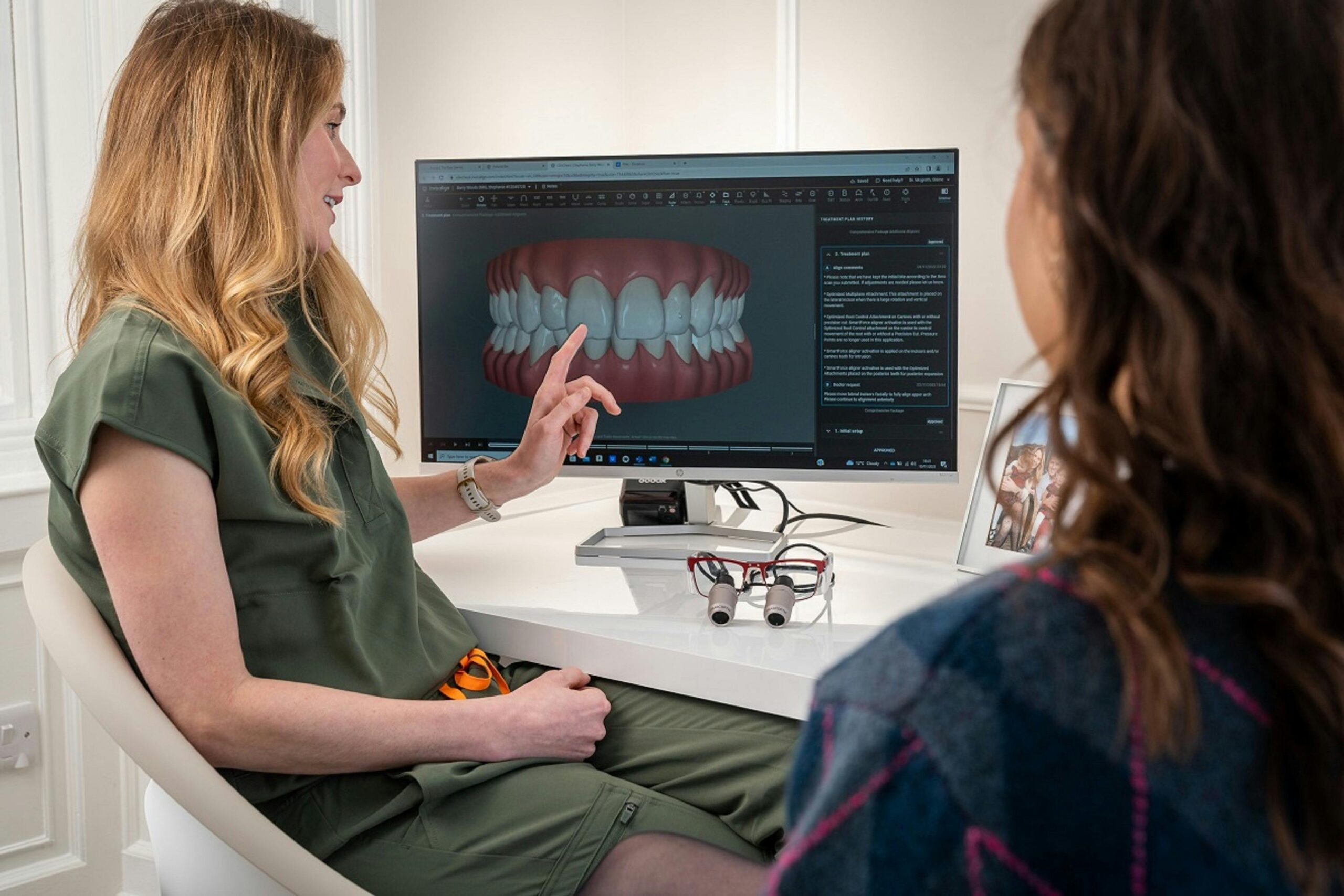
With clear aligners, a 3D scan and digital plan break your treatment into many tiny stages. Each new tray has slightly different contours that press on targeted spots, steering teeth toward the next position. Small tooth-colored “attachments” on select teeth act like handles to improve grip and direction of movement. When tight spacing blocks motion, slender polishing between teeth or short elastics may be used to create room or guide the bite. You switch to a new tray, and the front tooth nudges forward.
For ceramic or lingual braces, brackets are bonded to teeth and linked by an archwire that tries to return to its preformed shape. As the wire rebounds, it transmits steady force to each tooth through the bracket slot. Periodic wire changes adjust stiffness and shape to advance the plan, and small bends or auxiliaries refine torque, rotation, or vertical positioning. Because the system is fixed, it works continuously between visits.
Progress depends on accurate fit and timely adjustments. Aligners must be fully seated and changed on the recommended schedule; if a tooth falls behind, extra aligners called refinements are added. With braces, targeted wire updates and small component changes fine-tune movement. For a closer look at how attachments help aligners control tricky movements, see our overview of attachment details.
Benefits of Clear Braces Invisible
Invisible braces offer a low-profile path to straighter teeth with day-to-day comfort and simple care. Most patients notice three core advantages: a discreet look, smoother-feeling surfaces, and routines that are easy to keep clean. The exact benefits vary by system, but aligners, ceramic, and lingual options can all minimize how treatment shows in your life.
You have a client meeting tomorrow and prefer a low-profile option. Aesthetic blending is the first benefit many people value, since clear materials or hidden placement keep attention off the hardware. Comfort also matters; smooth edges and tailored fit often mean fewer cheek or lip irritations. Travel-friendly plans, such as scheduled aligner changes or prebooked adjustment visits, help busy calendars stay on track.
- Subtle appearance in photos, meetings, and daily interactions.
- Smoother surfaces that tend to reduce soft-tissue irritation.
- Familiar brushing and flossing routines to support gum and tooth health.
- Fewer wire-related food traps and less chance of snagging on cheeks.
- Planned, incremental steps that make progress easy to monitor.
- Options for adults and teens, including athletes and performers.
Results depend on your goals, the movements needed, and how closely you follow the plan. Aligners can add flexibility for travel or events, while ceramic and lingual systems keep steady control without drawing attention. For timing expectations, you can compare typical timelines across approaches. If you are planning a visit, see our current hours to choose a convenient time. Joint care between you and your dental team helps sustain long-term results.
Invisalign Alternative: What to Consider
If Invisalign is not ideal for you, consider other clear aligners, ceramic braces, or lingual braces. Weigh case complexity, how reliably you can wear removable trays, and how each option affects speech and cleaning. Appointment frequency, the need for elastics or small auxiliaries, and your day-to-day routine also matter. Your choice should match your goals and lifestyle with the right level of control.
Removable systems depend on consistent wear, so they suit motivated patients who want flexibility at meals and brushing. Fixed appliances provide constant guidance, which can help with rotations, root torque, or vertical changes. Reviews suggest clear aligners may be associated with less external apical root resorption than fixed appliances, a factor some patients value when comparing risks [4]. Pain experience can differ too; meta-analyses report lower early pain scores with aligners in some comparisons, though individual response varies [5]. These details can inform comfort expectations and check-in scheduling.
Daily life plays a big role. You travel weekly and worry about keeping up with tray changes. Aligners allow you to remove trays for meals, but they must be worn the recommended hours to stay on track. Ceramic braces blend with teeth but can require extra care around brackets to prevent plaque and staining. Lingual braces hide behind teeth and may affect speech at first, then improve as you adapt. For a wider view across systems, see our guide to teeth straightening choices.
Before deciding, clarify priorities: discretion in photos, fewest office visits, strict control for complex movements, or simplest hygiene. An exam and 3D records help map which path reaches your goals with the least friction. Collaborative planning helps you choose the right path and stick with it.
See your alignment options, expected timeline, and retention strategy.
Straighter teeth, clearer plan.
Ceramic Clear Braces vs. Traditional Options
Ceramic clear braces use tooth-colored brackets that blend with enamel, while traditional metal braces use stainless-steel brackets that are more visible. Both systems can move teeth effectively when planned and adjusted correctly. Choosing between them often comes down to appearance, durability, and how your bite functions during treatment.
Ceramic brackets are made from alumina, so they are color-stable and resist staining; however, the tiny elastic ties that hold the wire can discolor between visits. The brackets are usually a bit larger than metal, which can make cleaning more detailed around edges. Because ceramic is harder and more brittle than metal, brackets can chip or fracture if stressed, and removal requires careful technique. In certain bite patterns, especially when lower brackets contact upper teeth, the hardness of ceramic may increase the risk of wear on opposing teeth. Your clinician may avoid ceramic in those contact zones or adapt the plan to protect enamel.
With sliding mechanics, ceramic can generate more friction than metal, especially with certain wires or ligation methods. This does not mean ceramic cannot handle complex movements, but it may influence how your orthodontist sequences wires, uses elastics, or schedules refinements. Metal brackets remain very durable and compact, which can be helpful for deep bites, rotations, or when stronger ligation is preferred. A quick office scene: a broken ceramic bracket is swapped out, and the wire is re-seated to keep progress on track.
Day to day, both types require attentive brushing and flossing around brackets, plus mindful food choices to prevent dislodging parts. If you value a low-profile look and your bite allows it, ceramic is a strong aesthetic option within the family of invisible braces. If you prioritize maximum toughness, small bracket size, or lower risk of opposing-tooth wear in tight bites, metal may be the better fit. For material and design details beyond this comparison, see our detailed ceramic braces guide. Discussing these trade-offs helps match the appliance to your goals and routine.
Understanding Clear Aligners vs Braces
Clear aligners are removable trays, while braces are fixed brackets and wires. Both straighten teeth effectively when planned well. The main differences are removability, day-to-day care, diet limits, and how precisely certain tooth movements are controlled. The best choice depends on your goals, bite complexity, and habits.
Clear aligners suit people who can wear trays consistently and prefer taking them out for meals and brushing. They handle many spacing and crowding cases and can coordinate bite changes with elastics when needed. Braces work around the clock and are often chosen for complex rotations, larger root torque, vertical corrections, or when impacted teeth must be guided into place. You play the saxophone and want minimal lip irritation.
Daily life feels different with each system. Aligners do not require food restrictions, but they must be worn the recommended hours and kept clean; forgetting them slows progress. Braces stay on, so you do not misplace them, but you will avoid very hard or sticky foods and clean carefully around brackets. Speech can change slightly at first with either approach, then improves as you adapt. If something breaks, a lost tray is replaced, while a loose bracket or pokey wire needs a quick repair visit.
Oral hygiene also guides the decision. Aligners let you brush and floss normally, which helps gum health if you are diligent about wear and cleaning. Braces concentrate plaque around brackets unless you use targeted tools and technique. Both systems can be discreet. Clear aligners are nearly invisible, and tooth-colored brackets reduce the look of braces, so both fit within the idea of invisible braces. For a deeper look at hardware choices, see our brace types overview.
Choosing between clear aligners and braces is about matching the appliance to the movements your case needs and the routine you can keep. A short exam and 3D records clarify which path offers the smoothest journey. Clear goals and steady habits guide smooth treatment.
The Role of Aesthetic Orthodontics
Aesthetic orthodontics focuses on aligning teeth to improve appearance while protecting function and oral health. It uses discreet tools, such as clear aligners, ceramic brackets, or lingual braces, to refine smile lines, tooth fit, and bite. The goal is a natural look that works well in daily life. In this context, invisible braces are one set of tools within a broader, smile-centered plan.
This approach starts with smile design. Tooth width-to-height ratios, midline position, incisal edges, and gum display guide how teeth are moved. Digital planning helps map small, staged adjustments, so movements match facial features and bite goals. Predictability depends on careful staging, the use of auxiliaries like attachments, and consistent wear when trays are chosen [6]. Correcting front-tooth proportions and positions can meaningfully improve how a smile is perceived in photos and in person [7]. You have a big event soon and want changes that look subtle, not obvious.
Because the plan centers on appearance and health, sequencing matters. Teeth may first be aligned to create symmetry, then whitening or minor bonding can be added for final polish. If you want to see how combination care comes together, explore how we coordinate full smile planning. Aligners make brushing and flossing simpler for many people, while fixed appliances can demand targeted tools to control plaque. Systematic reviews note that fixed braces and aligners lead to different patterns of oral microbiome change, which reinforces the need for tailored hygiene with any system [8].
Patient priorities drive success. Comfort, speech, wear time, and appointment cadence should fit your routine. Evidence highlights that adherence, expectations, and satisfaction are key contributors to orthodontic outcomes, not just the appliance type [9]. After active movement, a planned retention phase helps hold your hard-won symmetry and smile line. The right aesthetic orthodontic plan matches your timeline, habits, and goals, then maintains them with simple steps. Well-planned alignment can elevate both esthetics and function.
Choosing Nearly Invisible Braces
Choosing nearly invisible braces starts with matching your goals to how each system works in real life. Clear aligners, ceramic braces, and lingual braces can all be discreet; the best fit depends on your bite complexity, hygiene habits, and how consistently you can follow the plan. A focused exam and 3D records help your dentist map the safest, most efficient path.
Clinical priorities guide selection. If your case needs larger root torque, vertical changes, or impacted-tooth guidance, a fixed system may provide the control required. For mild to moderate crowding or spacing, removable trays often handle movements well when worn as directed. Gum health, enamel condition, and existing crowns or veneers also influence choices, since brackets and attachments must bond securely and be cleaned well. Your daily speech demands matter too; tongue-space-sensitive tasks, like certain instruments or frequent on-camera work, may favor aligners or front-side ceramic brackets over lingual hardware.
Life logistics come next. You speak on camera weekly and want minimal speech change. If you prefer taking appliances out for meals and brushing, aligners offer that flexibility but require disciplined wear time and routine cleaning. If you value continuous, hands-off movement, fixed braces work around the clock, though you will adjust food choices and use targeted tools to keep plaque low. Sports participation and mouthguard use should be considered, as should how you would handle a travel stretch, a lost tray, or a minor repair visit.
Set expectations early. Discuss the movements that matter most to you, the likely appointment cadence, and a retention plan you can keep. If aligners are on your short list, see our comprehensive Invisalign guide to understand attachments, elastics, and refinements within a clear plan. Once your records are complete, your clinician will present a staged roadmap with check-in points, so progress stays visible and predictable. A clear plan you can keep leads to a healthier result.
Patient Experience with Invisible Braces
Most patients find the day-to-day routine manageable and discreet. You will notice light pressure when teeth are moving, brief changes in speech for some systems, and a hygiene routine that fits into normal brushing and flossing. Appointment cadence is planned in advance, so progress and comfort stay on track.
You start a new set Monday night and have a meeting Tuesday. With clear aligners, the first 24–48 hours after a tray change often bring mild, predictable pressure that eases as teeth respond. Speaking may feel different for a short time, especially with lingual braces, then adapts with practice. With ceramic or lingual braces, adjustments can leave teeth tender for a day or two. Dental wax can soften a rough spot, and a quick smoothing visit can resolve persistent irritation.
Eating and cleaning are straightforward when you plan ahead. Aligners come out for meals, then you brush and seat them fully; sipping sugary or hot drinks with trays in can stain or trap acids, so plain water is safest between meals. Fixed braces stay on, so you will favor softer choices right after adjustments and clean carefully around brackets and wires with targeted tools. Many patients schedule aligner changes at night, which lets most of the initial pressure pass while sleeping.
Small details help. Keep a ventilated case with you to avoid misplacing aligners. If elastics are part of your plan, consistent wear keeps bite changes moving forward. A loose bracket, poking wire, or a warped tray is not unusual; call for guidance, and bring any parts to your visit. Digital check-ins may supplement in‑person appointments, but hands-on evaluations still matter when fine-tuning.
Expect a clear roadmap, steady check points, and a finish that includes retainers to hold your new alignment. If you value a low-profile look in daily life, invisible braces can fit smoothly into work, school, and travel. A simple, consistent routine makes treatment feel predictable and calm.
Care and Maintenance for Invisible Braces
Care for invisible braces means keeping them clean, protecting them from damage, and following your wear or adjustment schedule. Clear aligners and tooth‑colored or lingual braces each need simple, consistent routines. Clean teeth and clean appliances help prevent staining, irritation, and delays in treatment.
For clear aligners, wear trays as directed and remove them for all meals and colored drinks. Brush and floss, then reseat trays so they fit fully. Rinse aligners with cool water, and clean them gently with a soft brush and mild soap; avoid hot water and harsh cleaners that can warp or scratch plastic. Store trays in a ventilated case whenever they are out to prevent loss and contamination. You drop a tray during lunch and grab your backup case.
Check each new aligner for cracks or bends, and confirm a snug fit across attachments. If a tray does not seat, use firm finger pressure to fully engage it and review your change schedule. When a tray is lost, stepping back to the previous set and contacting the office helps keep you on track. Avoid long stretches with trays out, since teeth can drift and make the next aligner hard to seat.
For ceramic or lingual braces, brush after meals with a soft brush angled at the gumline and bracket edges. Clean between teeth and under the wire daily using floss threaders, interdental brushes, or a water flosser. Choose softer foods right after adjustments, and avoid very hard, sticky, or crunchy items that can loosen brackets or bend wires. Orthodontic wax can cushion a rough spot until it is smoothed. If a bracket loosens or a wire pokes, save the piece and schedule a repair.
Across all systems, a fluoride toothpaste, mindful snacking, and steady hygiene reduce plaque and protect enamel during treatment. Short, planned check‑ins confirm progress and catch small issues early. Consistent care helps treatment stay on schedule and keeps your mouth healthy. Good habits help preserve alignment and gum health.
Frequently Asked Questions
Here are quick answers to common questions people have about Invisible Braces Explained in Glendale, AZ.
- What are the advantages of using invisible braces for orthodontic treatment?
Invisible braces offer aesthetic and practical benefits. They include clear aligners, ceramic braces, and lingual braces, all designed to be discreet. Patients often appreciate the subtle appearance, which helps maintain a natural look during treatment. These braces also tend to be smoother, reducing tissue irritation compared to traditional hardware. Maintaining oral hygiene is often simpler with these systems, as aligners can be removed for cleaning, and ceramic or lingual options are designed to blend in with your natural teeth.
- How do clear aligners differ from ceramic or lingual braces?
Clear aligners are removable trays that guide teeth into position through a series of shape adjustments. They must be worn most of the day but are removed for meals and cleaning. Ceramic and lingual braces, on the other hand, are fixed systems with brackets bonded to your teeth. Ceramic braces have tooth-colored brackets, while lingual braces are placed behind the teeth. These fixed options provide continuous force and require diligent brushing and flossing to maintain oral health.
- Can invisible braces handle all types of orthodontic cases?
Invisible braces can effectively treat many mild to moderate orthodontic cases, such as spacing issues or mild crowding. However, the ideal system depends on the complexity of the tooth movements needed. Fixed systems like ceramic or lingual braces often handle more complex cases involving root torque or impacted teeth better than aligners. Your dentist can provide guidance on whether clear aligners or a specific type of fixed braces are suitable for your situation.
- What should I consider when selecting between aligners and braces?
Choosing between aligners and braces involves evaluating lifestyle, goals, and case complexity. Aligners offer flexibility for meals and cleaning, making them convenient for people with consistent wear habits. Braces might be necessary for more complex movements as they provide constant guidance. Considerations include how each option fits into your daily routine, affects hygiene practices, and meets your aesthetic preferences during treatment.
- How can I maintain proper oral hygiene with invisible braces?
Maintaining oral hygiene with invisible braces involves regular and thorough cleaning. For clear aligners, always remove them for eating, brush your teeth before reinserting, and clean the aligners themselves with cool water and mild soap. Ceramic and lingual braces require careful brushing around brackets and wires. Using tools like floss threaders and interdental brushes can help target hard-to-reach areas and prevent plaque buildup.
- What role do attachments play in clear aligner treatment?
Attachments are small, tooth-colored bumps placed on certain teeth during clear aligner treatment. They act as anchors to help aligners grip better and control specific tooth movements. The attachments guide difficult movements, such as rotations or vertical shifts, enhancing the aligners’ ability to adjust your teeth effectively. These are temporary and are removed after completing the aligner series.
- Are there any dietary restrictions with invisible braces?
With clear aligners, you can eat freely by removing the trays during meals as long as you wear them for the recommended hours each day. However, ceramic and lingual braces are fixed, necessitating dietary considerations. Avoid very hard or sticky foods, as they can dislodge brackets or bend wires. Opt for softer foods immediately following adjustments to ease discomfort.
- What factors influence the duration of treatment with invisible braces?
Several factors affect how long treatment will last: the complexity of the case, the type of braces used, and how well you adhere to the treatment plan. More complex cases need longer treatment, and aligners often require consistent wear for optimal results. Regular dental visits to monitor progress and make necessary adjustments also play a significant role in the treatment timeline.
References
- [1] Efficacy of clear aligner therapy over conventional fixed appliances in controlling orthodontic movement: A systematic review. (2024) — PubMed:38784075 / DOI: 10.4103/jos.jos_176_23
- [2] Assessment of the effectiveness of invisible aligners compared with conventional appliance in aesthetic and functional orthodontic treatment: A systematic review. (2019) — PubMed:31478355 / DOI: 10.1111/jicd.12455
- [3] Interventions for managing relapse of the lower front teeth after orthodontic treatment. (2013) — PubMed:24014170 / DOI: 10.1002/14651858.CD008734.pub2
- [4] External Apical Root Resorption Following Orthodontic Treatment with Clear Aligners Versus Fixed Appliances: A Systematic Review and Meta-Analysis. (2025) — PubMed:41440338 / DOI: 10.3390/dj13120580
- [5] Pain perception and sEMG of masticatory muscle in clear aligners vs. conventional orthodontics: A systematic review and meta-analysis. (2025) — PubMed:40786502 / DOI: 10.4103/drj.drj_367_24
- [6] Factors Influencing the Predictability and Success of Invisalign Aligners: A Systematic Review. (2025) — PubMed:41328132 / DOI: 10.7759/cureus.95845
- [7] Corrections of Dental Anomalies in the Maxillary Incisors and Their Influence on Perceived Smile Esthetics: A Systematic Review. (2025) — PubMed:40150726 / DOI: 10.3390/bioengineering12030262
- [8] A comparison of the alterations of oral microbiome with fixed orthodontic therapy and clear aligners: a systematic review. (2025) — PubMed:39902218 / DOI: 10.1080/20002297.2024.2372751
- [9] Patient-centered factors associated with orthodontic treatment success: a scoping review. (2025) — PubMed:40008729 / DOI: 10.1590/1807-3107bor-2025.vol39.020