
Glendale, Arizona
Invisalign in Glendale, AZ -- Two Certified Providers
Services provided by an Arizona licensed general dentist.
Straighten your teeth with clear, removable aligners. Both Dr. Dawson and Dr. Turke are Invisalign providers at SmileScience Dental Spa, offering treatment for teens and adults throughout the Glendale area.
Invisalign at SmileScience
How Invisalign Works
Invisalign uses a series of custom-fabricated, BPA-free plastic aligners to move teeth gradually toward their ideal position. Each aligner is worn for approximately one to two weeks before advancing to the next in the series. Because the aligners are removable, you eat and brush normally throughout treatment.
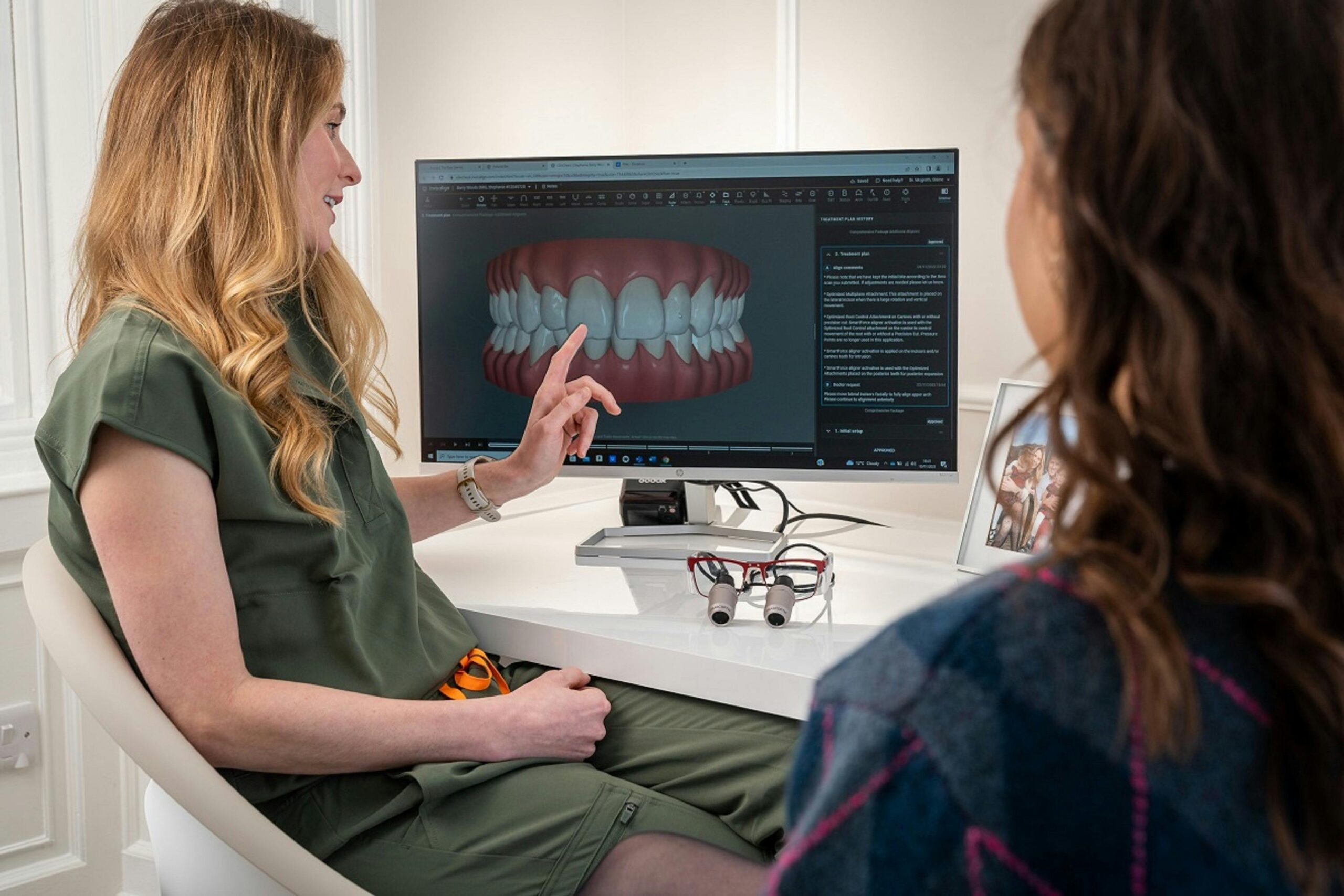
Treatment begins with digital 3D scanning of your teeth. The scan is used to plan every stage of tooth movement, and you can view a simulation of your projected result before committing to treatment.
Who Is a Good Candidate?
Mild to Moderate Crowding
Teeth that overlap or are rotated can typically be corrected with Invisalign without the need for metal brackets or wires.
Spacing Issues
Gaps between teeth can be closed predictably with clear aligners, improving both appearance and gum health.
Bite Problems
Overbite, underbite, crossbite, and open bite can all be addressed with Invisalign, though more complex bite issues may require additional appliances.
Adults and Teens
Invisalign works for most adults and teenagers. The Invisalign Teen system includes compliance indicators and accommodation for erupting teeth.
Previous Orthodontic Relapse
Patients whose teeth have shifted after previous braces treatment are often excellent Invisalign candidates for a shorter correction course.
Discretion Is Important
Patients who need orthodontic treatment but prefer that treatment not be visible at work or in social settings consistently choose Invisalign.
Invisalign vs. Traditional Braces
Invisalign
- + Nearly invisible during treatment
- + Removable for eating and brushing
- + No dietary restrictions
- + Smooth plastic, no wire irritation
- + Fewer emergency visits for broken brackets
- - Requires discipline to wear 20-22 hours/day
Traditional Braces
- + Effective for very complex cases
- + Compliance is automatic (fixed appliance)
- + Often lower upfront cost
- - Visible metal hardware
- - Food restrictions (sticky, hard foods)
- - Harder to clean around brackets and wires
Want a deeper comparison? See our full Invisalign vs. Braces guide.
The Invisalign Process at SmileScience
- Step 1
We take a 3D digital scan of your teeth. No uncomfortable impressions. The scan takes about five minutes.
Consultation and Digital Scan
ClinCheck Treatment Preview
Step 2Your doctor reviews the virtual treatment plan with you, showing exactly how your teeth will move. You approve the plan before aligners are fabricated.
- Step 3
Your first set of aligners arrives within a few weeks. Your doctor shows you how to insert and remove them and answers any questions.
Aligner Delivery
Progress Checkups
Step 4You return every 6 to 10 weeks so we can confirm teeth are tracking correctly and provide your next sets of aligners.
- Step 5
After your final aligner, we provide a custom retainer to hold your new smile in place. Wearing your retainer as directed is the most important step for keeping your results long-term.
Retainer Phase

What Our Patients Say
4.9 (437 reviews)
I recently had the pleasure of visiting Smile Science Dental Spa, and I couldn't be more impressed with the level of care and service provided by the entire team. Dr. Dawson and Dr. Turke are both incredibly skilled and made me feel completely at ease throughout my procedures. Their professionalism, combined with their gentle approach, made me feel comfortable and well-informed every step of the way. I was especially impressed that I was able to get a same-day crown(apparently their first ever!), which exceeded my expectations. I couldn’t believe how quick and seamless the process was. It really saved me time and made the experience even more convenient. Cindiray and Angeles, the dental assistants, were equally wonderful. They were not only friendly and attentive but also thorough in explaining everything and made sure I was relaxed during each phase of my visit. Lastly, a big thank you to Litzy at the front desk, who greeted me with a smile and helped with scheduling and any questions I had. She made the entire check-in process a breeze. From start to finish, my experience at Smile Science Dental Spa was exceptional. I'll be returning for sure. I highly, highly, highly recommend them for anyone looking for high-quality dental care.
View Full Review on GoogleDusty

Honestly I’ve never been so happy to go to the dentist. I came in (late due to Lyft) and was still taken care of and treated with care. Even without insurance (kicking in within the next month) prices for an extraction on my infected tooth were more than reasonable. I was able to get more than expected done in the same visit. Dr. Dawson and his team made me feel so comfortable and taken care of. Won’t go anywhere else.
View Full Review on GoogleCherish B

I recently started as a patient after leaving our long-time family Dentist and couldn’t be happier! Marcela is AMAZING and a FANTASTIC hygienist!!!! 😃 Dr Dawson is great too! Every time I visit, they make me feel like family.
View Full Review on GoogleTJ Winzeler

Myself and my family had previously gone to Dr. Turk at another dental office that he worked at. He had relocated and we did not know where he had gone to until this week. Today I got in with Dr. Turk and he took the time to look at my x-rays carefully . I was having pain from a tooth and some other issues. The previous Dentist I went to that I saw just a few days earlier, he did not find any issues with my tooth which I had pain in. Dr. Turk identified infection and referred me to an endodontist. He is very gentle as a wonderful disposition and my self and my family are thrilled to be able to get back with him. The office is lovely, relaxing music, heat and massage chair.I have always been very nervous and some anxiety going to dentist as I have had bad reactions with the anesthesia. I am confident that Dr. Kirk will help me get through my next appointment just fine. “The staff are very kind and attentive. I am looking forward as I have quite a bit of work to be done, and I know I’m in good hands with Dr. Turk and his staff. Five stars!⭐️ Sherry
View Full Review on GoogleSherry Redmond

I recently moved to Arizona and had an issue with a tooth repair from 15 years back. Not knowing anyone here in my new home, I searched dentists close to me. I chose Smile Science much like pinning the tail on the donkey and my selection couldn't have been better! What a terrific staff! Dr. Turke was concerned the tooth would need to be extracted, but said he wanted to take a shot at saving it..and that's just what he did! After setting a temporary crown, I was on my way with an appointment to install the permanent crown in the following two weeks. That evening I received a call I've never received from a dentist. Dr. Turke had taken the time to follow up with me to make sure I wasn't in any discomfort..I was completely caught off guard by this kind of attention to detail and caring for my well being. The permanent crown is now in place, it fits and feels fantastic, the job and treatment are first class! Thank you, Dr. Turke and staff for taking in this stray and giving me a home dentist! I'd like to say that I'm just good at selecting blindly, but the truth is I am very lucky..and I'll take lucky over being good any day of the week! Thank you, again and Happiest of New Year's in 2026, Science Smile!!
View Full Review on GoogleEddy

The Technology Behind Your Treatment
SmileScience uses the same digital scanning and planning tools found at dedicated orthodontic practices. That means more precise results, greater comfort during records, and a clear picture of your outcome before treatment begins.
Trios 5 & iTero Lumina Scanners
We use two of the most advanced intraoral scanners available -- the 3Shape Trios 5 and the iTero Lumina. Either produces a highly detailed 3D model of your teeth and bite in minutes, with no trays and no impression material.
ClinCheck 3D Treatment Simulation
ClinCheck is Invisalign's proprietary planning software. Your scan is used to map every stage of tooth movement from your current position to your final result. You can view the projected outcome on screen before a single aligner is manufactured.
Digital Progress Monitoring
At each progress visit we can take a new digital scan and compare it directly to your original plan. If teeth aren't tracking exactly as intended, we catch it early -- before it compounds into a longer refinement stage later.
Invisalign Cost
Fixed-tier pricing. No itemized surprises. Your exact tier is confirmed after your free 3D scan.
Invisalign Lite
$2,500
Minor crowding & spacing
Invisalign Moderate
$4,499
Most adult cases
Comprehensive
$5,999
Complex alignment cases
Most orthodontic insurance benefits apply. We verify your coverage before your appointment. Flexible payment plans through CareCredit, Cherry, Sunbit, and Proceed Finance.
See Pricing & FinancingReal Results
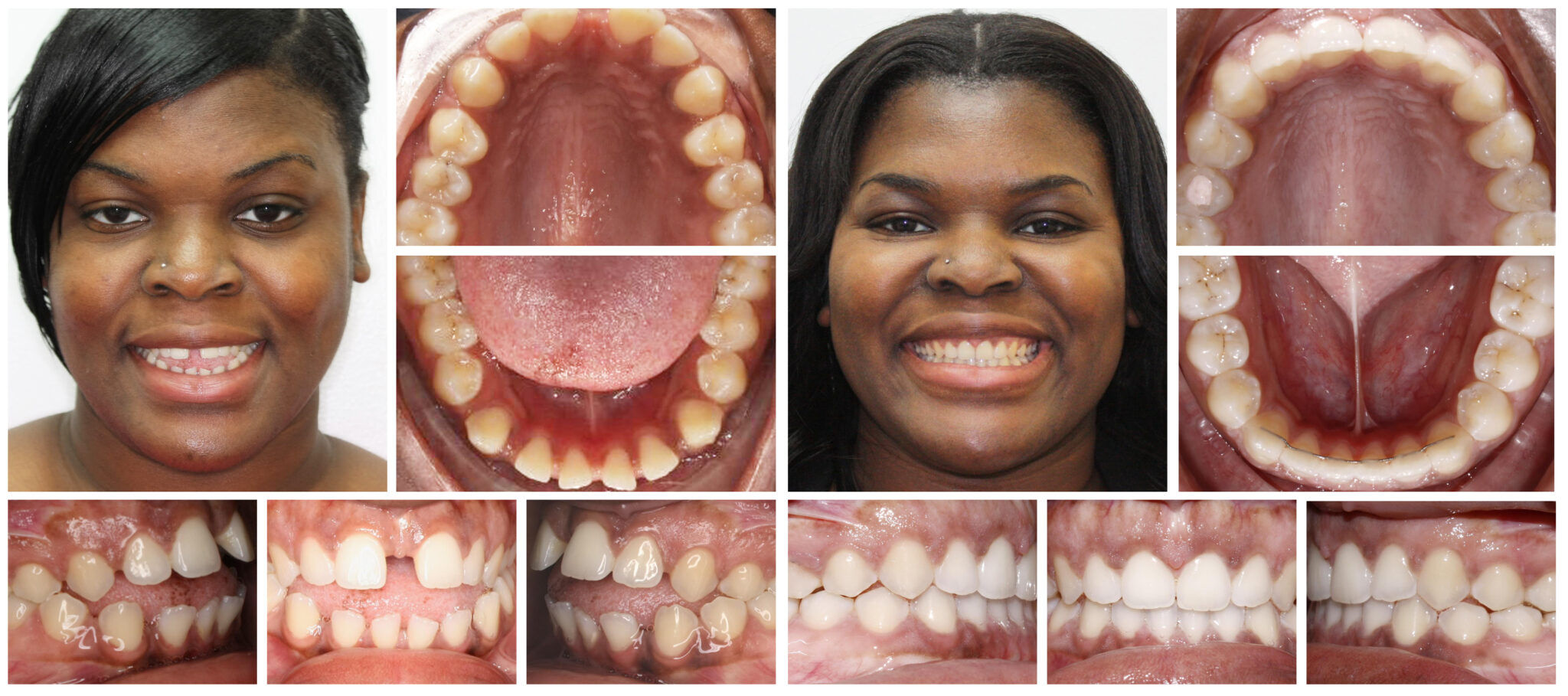
Patient Results at SmileScience
Cases completed at our Glendale office. Individual outcomes vary based on case complexity and treatment adherence.


Complete Invisalign Guide
Explore every aspect of Invisalign treatment at SmileScience.
Invisalign Pricing & Financing
Detailed cost breakdown, insurance coverage, and monthly payment options.
Invisalign vs. Traditional Braces
Head-to-head comparison of cost, comfort, appearance, and results.
Invisalign for Adults
Discreet treatment for professionals, relapse cases, and cosmetic combinations.
Invisalign for Teens
Teen-specific features: compliance indicators and free replacement aligners.
Medical Review & Evidence
Invisalign clear aligner therapy is supported by over 20 years of published clinical research and more than 15 million treated patients worldwide.
- Invisalign achieves equivalent orthodontic outcomes to fixed appliances for mild-to-moderate crowding and spacing cases, per systematic review evidence.[1]
- Patient-reported quality of life during Invisalign treatment is significantly higher than during fixed-appliance treatment, primarily due to comfort and aesthetics.[2]
- iTero digital scanning eliminates traditional impression material and provides greater dimensional accuracy than alginate impressions for orthodontic models.[3]
- ClinCheck treatment simulation enables clinicians to visualize and adjust tooth movement staging prior to aligner fabrication, improving treatment predictability.[4]
- Ke Y, et al. A comparison of treatment effectiveness between clear aligner and fixed appliance therapies. BMC Oral Health. 2019;19(1):24.
- Pacheco-Pereira C, et al. Factors associated with patient and parent satisfaction after orthodontic treatment. Am J Orthod Dentofacial Orthop. 2015;148(4):652–659.
- Wiranto MG, et al. Validity, reliability, and reproducibility of the iTero intraoral scanner to measure tooth dimensions. Am J Orthod Dentofacial Orthop. 2013;143(2):194–199.
- Kravitz ND, et al. How well does Invisalign work? A prospective clinical study evaluating the efficacy of tooth movement. Am J Orthod Dentofacial Orthop. 2009;135(1):27–35.
This page is reviewed periodically for clinical accuracy. Individual treatment outcomes vary. Consult your SmileScience provider for a personalized assessment.
4.9 (437 reviews)
I recently had the pleasure of visiting Smile Science Dental Spa, and I couldn't be more impressed with the level of care and service provided by the entire team. Dr. Dawson and Dr. Turke are both incredibly skilled and made me feel completely at ease throughout my procedures. Their professionalism, combined with their gentle approach, made me feel comfortable and well-informed every step of the way. I was especially impressed that I was able to get a same-day crown(apparently their first ever!), which exceeded my expectations. I couldn’t believe how quick and seamless the process was. It really saved me time and made the experience even more convenient. Cindiray and Angeles, the dental assistants, were equally wonderful. They were not only friendly and attentive but also thorough in explaining everything and made sure I was relaxed during each phase of my visit. Lastly, a big thank you to Litzy at the front desk, who greeted me with a smile and helped with scheduling and any questions I had. She made the entire check-in process a breeze. From start to finish, my experience at Smile Science Dental Spa was exceptional. I'll be returning for sure. I highly, highly, highly recommend them for anyone looking for high-quality dental care.
View Full Review on GoogleDusty
Honestly I’ve never been so happy to go to the dentist. I came in (late due to Lyft) and was still taken care of and treated with care. Even without insurance (kicking in within the next month) prices for an extraction on my infected tooth were more than reasonable. I was able to get more than expected done in the same visit. Dr. Dawson and his team made me feel so comfortable and taken care of. Won’t go anywhere else.
View Full Review on GoogleCherish B
I recently started as a patient after leaving our long-time family Dentist and couldn’t be happier! Marcela is AMAZING and a FANTASTIC hygienist!!!! 😃 Dr Dawson is great too! Every time I visit, they make me feel like family.
View Full Review on GoogleTJ Winzeler
Myself and my family had previously gone to Dr. Turk at another dental office that he worked at. He had relocated and we did not know where he had gone to until this week. Today I got in with Dr. Turk and he took the time to look at my x-rays carefully . I was having pain from a tooth and some other issues. The previous Dentist I went to that I saw just a few days earlier, he did not find any issues with my tooth which I had pain in. Dr. Turk identified infection and referred me to an endodontist. He is very gentle as a wonderful disposition and my self and my family are thrilled to be able to get back with him. The office is lovely, relaxing music, heat and massage chair.I have always been very nervous and some anxiety going to dentist as I have had bad reactions with the anesthesia. I am confident that Dr. Kirk will help me get through my next appointment just fine. “The staff are very kind and attentive. I am looking forward as I have quite a bit of work to be done, and I know I’m in good hands with Dr. Turk and his staff. Five stars!⭐️ Sherry
View Full Review on GoogleSherry Redmond
I recently moved to Arizona and had an issue with a tooth repair from 15 years back. Not knowing anyone here in my new home, I searched dentists close to me. I chose Smile Science much like pinning the tail on the donkey and my selection couldn't have been better! What a terrific staff! Dr. Turke was concerned the tooth would need to be extracted, but said he wanted to take a shot at saving it..and that's just what he did! After setting a temporary crown, I was on my way with an appointment to install the permanent crown in the following two weeks. That evening I received a call I've never received from a dentist. Dr. Turke had taken the time to follow up with me to make sure I wasn't in any discomfort..I was completely caught off guard by this kind of attention to detail and caring for my well being. The permanent crown is now in place, it fits and feels fantastic, the job and treatment are first class! Thank you, Dr. Turke and staff for taking in this stray and giving me a home dentist! I'd like to say that I'm just good at selecting blindly, but the truth is I am very lucky..and I'll take lucky over being good any day of the week! Thank you, again and Happiest of New Year's in 2026, Science Smile!!
View Full Review on GoogleEddy
Frequently Asked Questions
Most adult cases are completed in 12 to 18 months. Minor corrections such as post-braces relapse may be done in 6 to 9 months. Complex cases can take up to 24 months. Your ClinCheck plan will show an estimated timeline before you begin.
Some patients notice mild pressure or soreness for one to two days after switching to a new aligner. This is a sign the aligners are working. The discomfort is generally much less than what patients report with traditional braces adjustments.
You should remove aligners before eating anything and before drinking anything other than plain water. This protects the aligners from staining and damage and keeps food from being trapped against your teeth.
Attachments are small tooth-colored composite bumps bonded to teeth to help aligners grip and rotate teeth more precisely. Not everyone needs them. If your treatment plan includes attachments, they are barely noticeable and are removed when treatment is complete.
Yes. Both Dr. Dawson and Dr. Turke are Invisalign providers. Either doctor can manage your Invisalign case from scan to retainer, so you have flexible scheduling across our full appointment calendar.
Most patients notice a very slight lisp for the first few days as their tongue adjusts to the feeling of the aligners. This typically resolves within a week as you become accustomed to wearing them. Reading aloud for short periods during the first days can help speed up the adjustment.
Contact our office as soon as possible. Depending on where you are in your series, we will either have you move on to the next aligner or order a replacement. This is why it helps to keep a case with you at all times -- removing aligners into a napkin at meals is the most common way they get accidentally discarded.
Rinse your aligners under lukewarm water every time you remove them. Brush them gently with a soft toothbrush and a small amount of clear, unscented soap -- avoid toothpaste, which can be abrasive and cause cloudiness. Invisalign also makes cleaning crystals designed specifically for aligners. Never use hot water, which can warp the plastic.
Your SmileScience provider determines the right tier during your free consultation using a 3D iTero digital scan and ClinCheck analysis. Lite is appropriate for minor crowding or small gaps (typically 3 -- 6 months). Moderate covers most everyday cases (6 -- 18 months). Comprehensive handles complex crowding, bite corrections, or cases requiring extensive movement with no aligner limit.
Smile Science is 100% owned by Dr. Dawson and Dr. Turke, two practicing dentists. There are no outside investors, no private equity involvement, and no management company directing clinical decisions. Both owners practice here full time. The doctors making your treatment decisions are the same people whose names are on the practice.
4.9 (437 reviews)
I recently had the pleasure of visiting Smile Science Dental Spa, and I couldn't be more impressed with the level of care and service provided by the entire team. Dr. Dawson and Dr. Turke are both incredibly skilled and made me feel completely at ease throughout my procedures. Their professionalism, combined with their gentle approach, made me feel comfortable and well-informed every step of the way. I was especially impressed that I was able to get a same-day crown(apparently their first ever!), which exceeded my expectations. I couldn’t believe how quick and seamless the process was. It really saved me time and made the experience even more convenient. Cindiray and Angeles, the dental assistants, were equally wonderful. They were not only friendly and attentive but also thorough in explaining everything and made sure I was relaxed during each phase of my visit. Lastly, a big thank you to Litzy at the front desk, who greeted me with a smile and helped with scheduling and any questions I had. She made the entire check-in process a breeze. From start to finish, my experience at Smile Science Dental Spa was exceptional. I'll be returning for sure. I highly, highly, highly recommend them for anyone looking for high-quality dental care.
View Full Review on GoogleDusty
Honestly I’ve never been so happy to go to the dentist. I came in (late due to Lyft) and was still taken care of and treated with care. Even without insurance (kicking in within the next month) prices for an extraction on my infected tooth were more than reasonable. I was able to get more than expected done in the same visit. Dr. Dawson and his team made me feel so comfortable and taken care of. Won’t go anywhere else.
View Full Review on GoogleCherish B
I recently started as a patient after leaving our long-time family Dentist and couldn’t be happier! Marcela is AMAZING and a FANTASTIC hygienist!!!! 😃 Dr Dawson is great too! Every time I visit, they make me feel like family.
View Full Review on GoogleTJ Winzeler
Myself and my family had previously gone to Dr. Turk at another dental office that he worked at. He had relocated and we did not know where he had gone to until this week. Today I got in with Dr. Turk and he took the time to look at my x-rays carefully . I was having pain from a tooth and some other issues. The previous Dentist I went to that I saw just a few days earlier, he did not find any issues with my tooth which I had pain in. Dr. Turk identified infection and referred me to an endodontist. He is very gentle as a wonderful disposition and my self and my family are thrilled to be able to get back with him. The office is lovely, relaxing music, heat and massage chair.I have always been very nervous and some anxiety going to dentist as I have had bad reactions with the anesthesia. I am confident that Dr. Kirk will help me get through my next appointment just fine. “The staff are very kind and attentive. I am looking forward as I have quite a bit of work to be done, and I know I’m in good hands with Dr. Turk and his staff. Five stars!⭐️ Sherry
View Full Review on GoogleSherry Redmond
I recently moved to Arizona and had an issue with a tooth repair from 15 years back. Not knowing anyone here in my new home, I searched dentists close to me. I chose Smile Science much like pinning the tail on the donkey and my selection couldn't have been better! What a terrific staff! Dr. Turke was concerned the tooth would need to be extracted, but said he wanted to take a shot at saving it..and that's just what he did! After setting a temporary crown, I was on my way with an appointment to install the permanent crown in the following two weeks. That evening I received a call I've never received from a dentist. Dr. Turke had taken the time to follow up with me to make sure I wasn't in any discomfort..I was completely caught off guard by this kind of attention to detail and caring for my well being. The permanent crown is now in place, it fits and feels fantastic, the job and treatment are first class! Thank you, Dr. Turke and staff for taking in this stray and giving me a home dentist! I'd like to say that I'm just good at selecting blindly, but the truth is I am very lucky..and I'll take lucky over being good any day of the week! Thank you, again and Happiest of New Year's in 2026, Science Smile!!
View Full Review on GoogleEddy
Ready for a Straighter Smile?
Book an Invisalign consultation at SmileScience Dental Spa in Glendale, AZ. We will scan your teeth and show you your projected result before you make any decision.