
All-on-6 Dental Implants in Glendale, AZ
Premium Support, Permanent Smile
Free consultations include same-day CBCT scan, photography, & treatment planning.
Your new smile is only one click away
Select From The Following Options to Learn More
What is All-on-6?
All-on-6 is a full-arch dental implant treatment that replaces all the teeth in one arch using six strategically placed implants and a fixed, permanent bridge. The implants act like artificial roots, supporting a custom full-arch prosthesis that restores function, stability, and esthetics.
Compared to removable dentures, All-on-6 does not come in and out, does not rely on adhesive, and provides a solid biting surface. It is designed for patients who want a stable, long-term solution that feels as close as possible to natural teeth.
Why Six Implants?
Placing six implants provides additional support and load distribution across the jaw. This is especially helpful when:
- The patient has strong chewing forces or a heavy bite
- The arch has wider dimensions requiring reinforcement
- The goal is maximum long-term durability
- Bone volume allows for more implant sites without advanced grafting
More implants increase the overall stability of the restoration, reduce stress on each individual implant, and can improve how the prosthesis feels and functions day-to-day.
How it Differs From All-on-4®
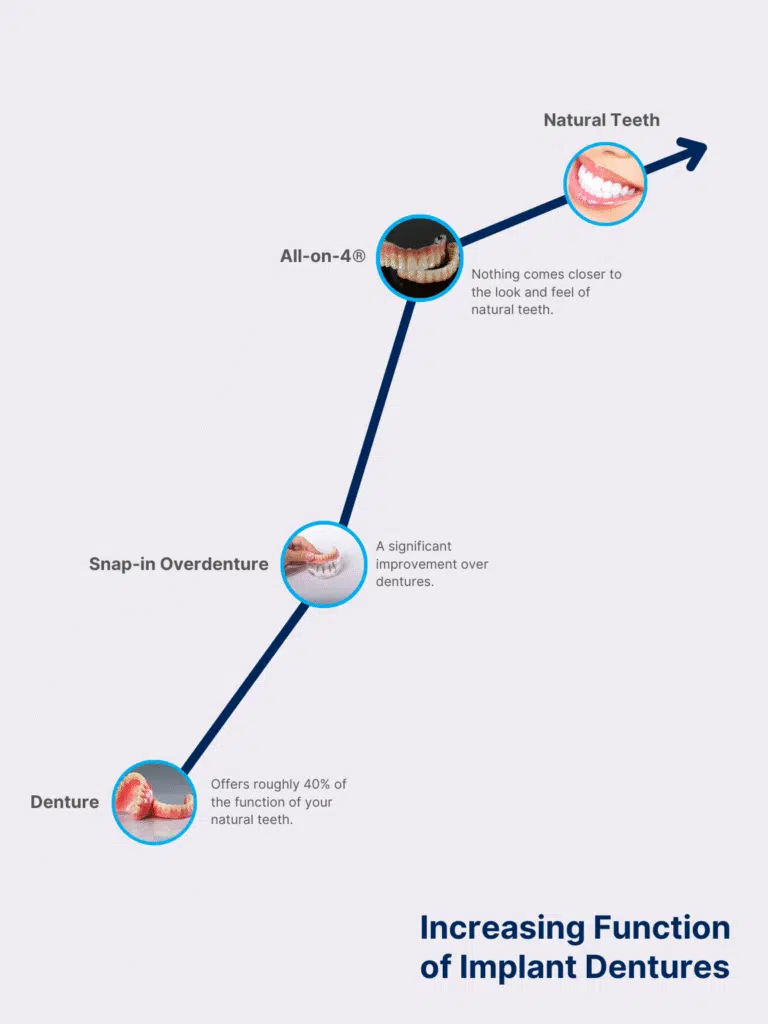
All-on-4® and All-on-6 are both full-arch solutions. The difference is structural:
- All-on-4Snap-in overdentures may not be suitable for patients who: uses four implants to support a full arch
- All-on-6 uses six implants for added support and force distribution
Both treatments are valid depending on bone quality, bite force, and restorative goals. Some patients are better suited for All-on-4®, while others benefit from the increased stability of All-on-6. We determine this with CBCT imaging, digital planning, and a full clinical evaluation.
The Goal
The purpose of All-on-6 is simple:
- Replace a full arch of missing or failing teeth
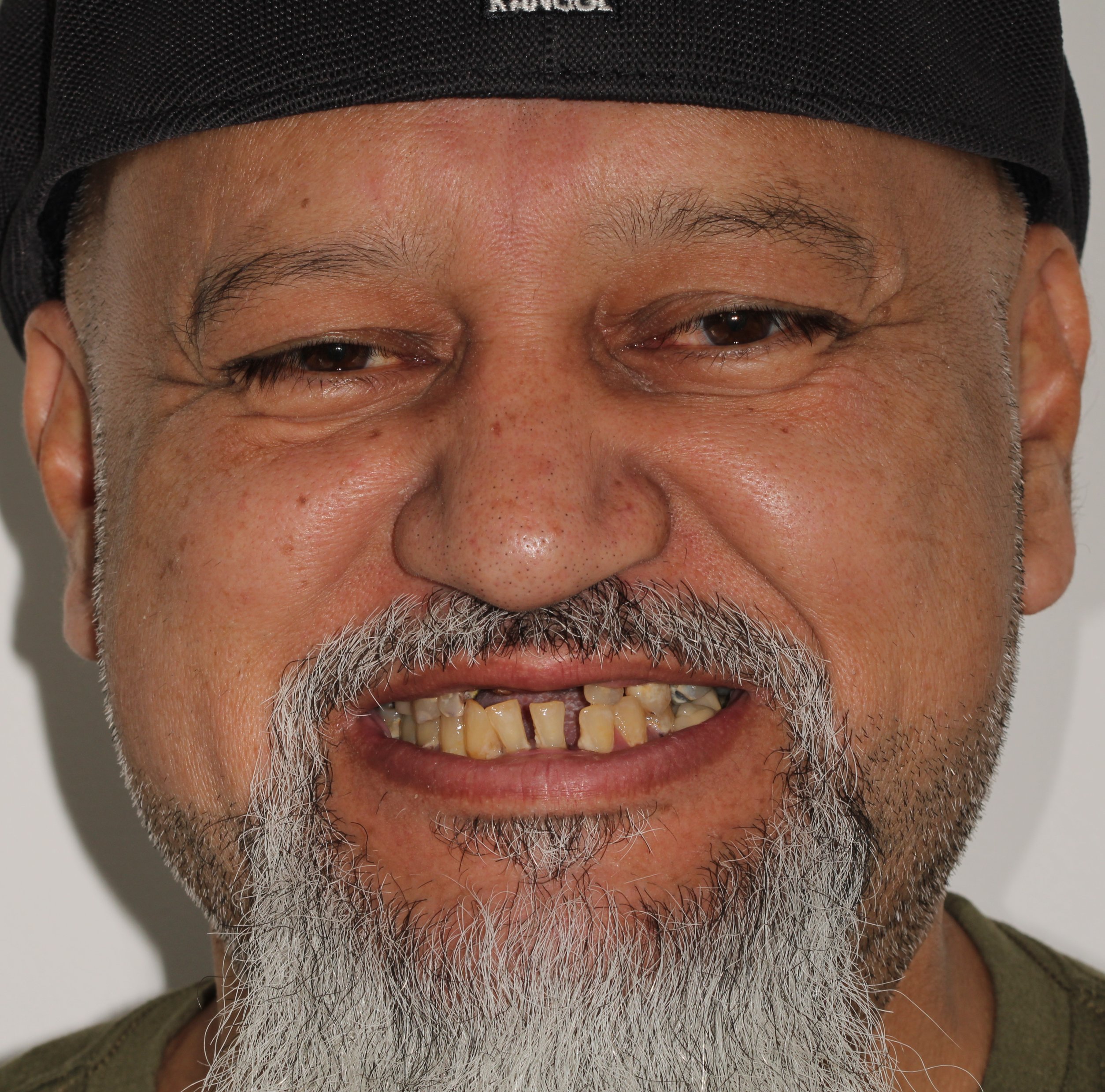
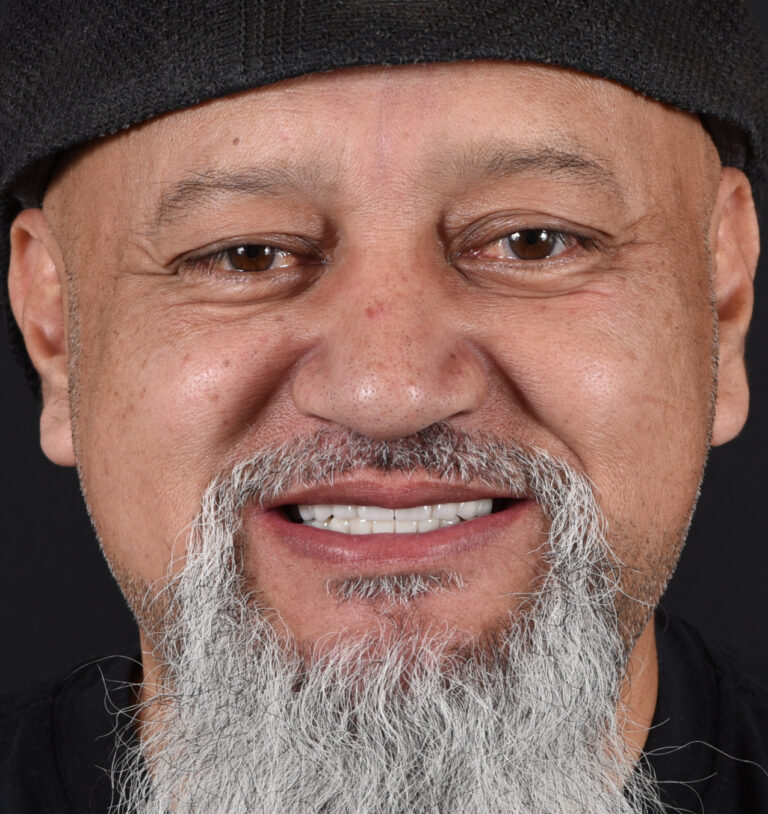
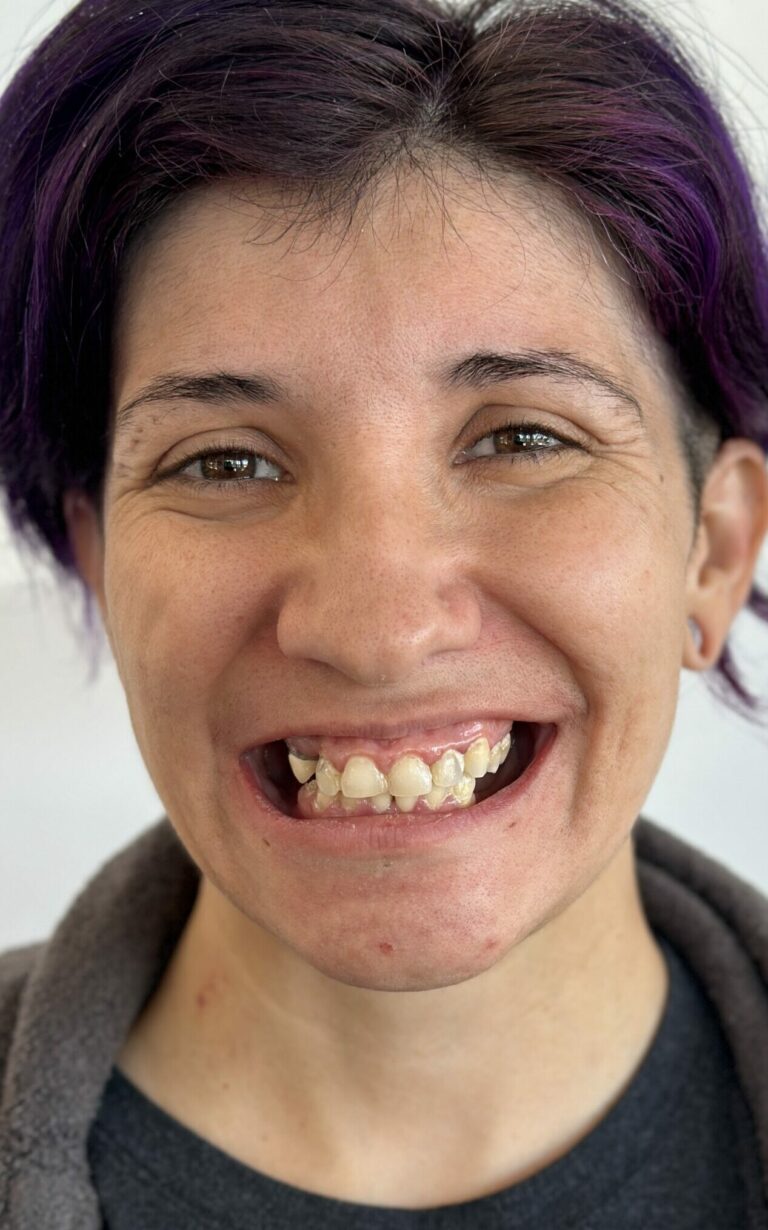
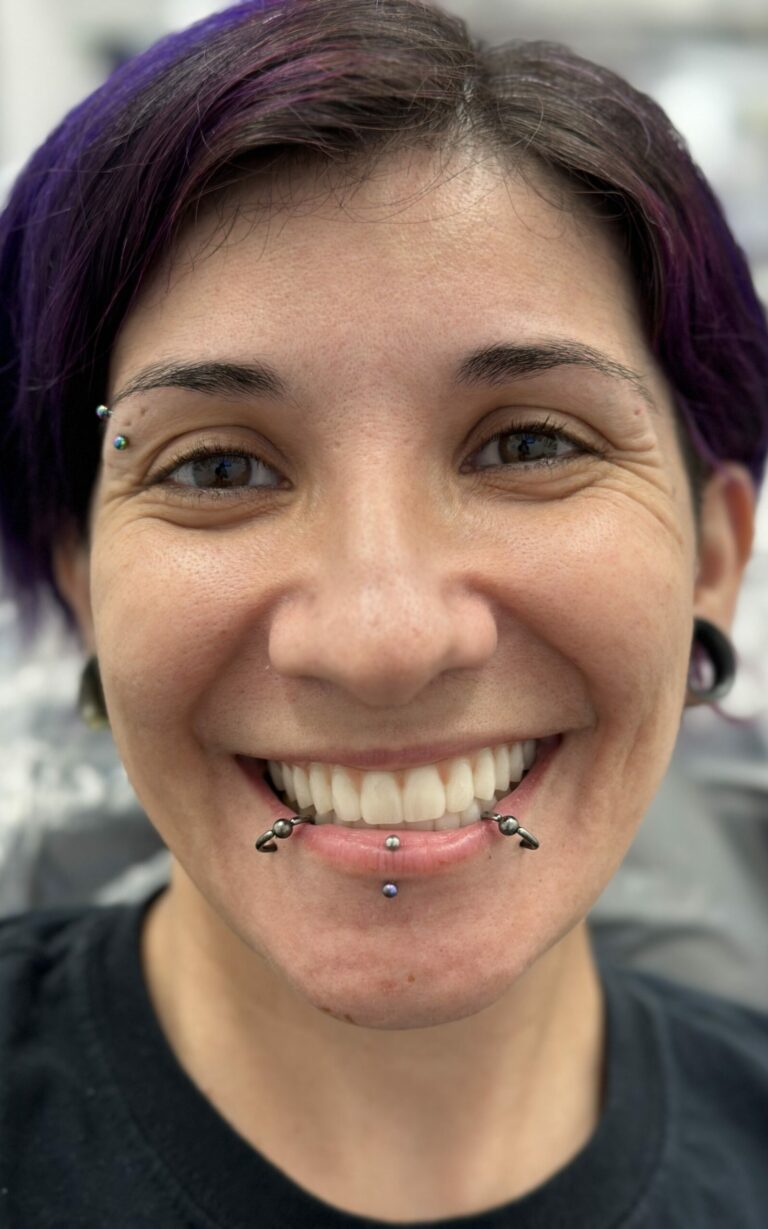
- Create a strong, comfortable, natural-looking smile
- Provide a fixed solution that supports everyday speaking, eating, and confidence
Why Choose All-on-6 at Smile Science Dental Spa?
Full-arch implant treatment is only as strong as its planning and execution. At Smile Science Dental Spa, All-on-6 is handled by a team that focuses heavily on implant dentistry, digital planning, and long-term restorative outcomes. The goal is not just to replace teeth, but to build a stable, functional, and attractive smile that performs well under daily use.
- Expertise in full mouth rehabilitation
- State-of-the-art technology
- Personalized care tailored to your needs
- Experienced oral implantologists
- Board certified dental anesthesiologists
- Comprehensive treatment planning
- A commitment to achieving the best possible outcomes
Digital Planning Comes First
We begin every full-arch case with:
- CBCT 3-D imaging
- Intraoral scanning
- Bite analysis
- Esthetic and facial proportion evaluation
This allows precise implant positioning and prosthetic design before any treatment begins. We do not guess. Every millimeter is planned.
Sedation Options for Comfort
Our in-house anesthesia partnership allows patients to choose the level of sedation that matches their needs and comfort. Most full-arch patients choose IV sedation so treatment feels relaxed, controlled, and predictable.
Immediate Function, Stabilized by Six Implants
By placing six implants, we distribute bite forces across the arch. This is particularly valuable for:
- Patients with strong chewing habits
- Patients who want the most stable long-term solution
- Patients who require greater reinforcement due to arch shape or occlusion
The prosthesis is secured the same day, so patients leave with a fixed smile rather than a removable denture.
Custom Prosthetics Designed for Your Face, Not Templates
We do not use generic shapes. Your provisional and final teeth are designed to fit:
- Your lip support
- Your facial structure
- Your bite and speaking patterns
- The esthetic look you want, whether natural or bold
This is where most full-arch cases succeed or fail. The prosthesis has to look right and function comfortably.
Materials Built for Longevity
We offer multiple final prosthesis options, including high-strength milled zirconia and titanium-reinforced frameworks. These materials are chosen for their durability, precision, and wear resistance. They are engineered to handle real-world function, not showroom photos.
Follow-Through and Maintenance
Full-arch treatment is not a one-day event. We guide patients through healing, restoration, and long-term maintenance. You are not left to figure it out alone. Our team monitors function, tissue health, occlusion, and prosthetic integrity over time.
Considering a Second Opinion?
Full-arch treatment is significant and permanent. It is reasonable to compare recommendations before you decide. We frequently provide second opinions for patients who have been told they need full extractions, grafting, or a specific implant approach.
If you would like another perspective, bring your treatment plan or previous imaging. If you don’t have a CBCT yet, we will take one here and review your options together. No pressure. No obligation. Just clarity and a plan that makes sense.
| Treamtent | Implants per Arch | Fixed or Removable | Typical Price | Our Price | Best for |
|---|---|---|---|---|---|
| All-on-6 | 6 | Fixed | $25,000+ | $14,999 | Patients who want maximum long-term stability, stronger bite support, or have uneven bone distribution. Ideal when we want to future-proof the restoration. |
| All-on-4® | 4 | Fixed | $20,000+ | $14,999 | Patients with adequate bone volume where four implants still provide full support and immediate loading. |
| Snap-in overdenture | 2–4 | Removable (snaps on implants) | $12,000+ | $5,995 | Patients who prefer a removable solution or want a lower-cost option with some added stability. |
The best treatment depends on your bone anatomy, bite forces, medical history, and esthetic goals. We determine this with CBCT imaging and a full clinical assessment.
How All-on-6 Works
Consultation and 3-D Evaluation
~30 minutes
We review your medical history and current oral condition, take digital impressions and a CBCT scan, and evaluate your bite and facial support. We determine whether All-on-6 is the most stable long-term option for your case.
Anesthesia and Comfort
10–20 minutes
Based on your treatment plan, we use local anesthesia, oral sedation, or IV sedation. Most full-arch patients choose IV sedation for a calm, comfortable experience. You are monitored throughout.
Implant Placement
1–2 hours per arch
We remove non-restorable teeth (if present), prepare the bone, and place six implants in strategic support zones. Posterior implants may be angled to maximize bone contact. We verify primary stability for immediate loading.
Provisional Fixed Teeth (Same Day)
45–90 minutes
A custom provisional bridge is secured to the implants. This is non-removable and allows you to speak, smile, and eat soft foods the same day. It maintains esthetics and function while your implants heal.
Recovery from Anesthesia
20–45 minutes onsite
You’ll rest in our recovery area until stable, then return home with a responsible adult. Expect mild pressure and temporary grogginess if sedated. Most patients resume daily activities within a few days.
Healing and Osseointegration
3–6 months
Your implants integrate with bone while you wear your provisional bridge. We monitor tissue response, bite function, phonetics, and comfort. This step ensures long-term stability before the final prosthesis is made.
Final Prosthesis Design and Delivery
2–3 appointments
We take refined scans and finalize tooth shape, bite, and esthetics. Your long-term prosthesis may be zirconia or titanium-reinforced depending on your goals and bite forces. The final bridge is secured to the implants for lasting strength.
Maintenance and Follow-Up
Every 6–12 months
We evaluate the implants, prosthesis, bite, and soft tissues at routine intervals. This maintains long-term comfort, function, and implant health.
Consultation and 3-D Evaluation
~30 minutes
We review your medical history and current oral condition, take digital impressions and a CBCT scan, and evaluate your bite and facial support. We determine whether All-on-6 is the most stable long-term option for your case.
Anesthesia and Comfort
10–20 minutes
Based on your treatment plan, we use local anesthesia, oral sedation, or IV sedation. Most full-arch patients choose IV sedation for a calm, comfortable experience. You are monitored throughout.
Implant Placement
1–2 hours per arch
We remove non-restorable teeth (if present), prepare the bone, and place six implants in strategic support zones. Posterior implants may be angled to maximize bone contact. We verify primary stability for immediate loading.
Provisional Fixed Teeth (Same Day)
45–90 minutes
A custom provisional bridge is secured to the implants. This is non-removable and allows you to speak, smile, and eat soft foods the same day. It maintains esthetics and function while your implants heal.
Recovery from Anesthesia
20–45 minutes onsite
You’ll rest in our recovery area until stable, then return home with a responsible adult. Expect mild pressure and temporary grogginess if sedated. Most patients resume daily activities within a few days.
Healing and Osseointegration
3–6 months
Your implants integrate with bone while you wear your provisional bridge. We monitor tissue response, bite function, phonetics, and comfort. This step ensures long-term stability before the final prosthesis is made.
Final Prosthesis Design and Delivery
2–3 appointments
We take refined scans and finalize tooth shape, bite, and esthetics. Your long-term prosthesis may be zirconia or titanium-reinforced depending on your goals and bite forces. The final bridge is secured to the implants for lasting strength.
Maintenance and Follow-Up
Every 6–12 months
We evaluate the implants, prosthesis, bite, and soft tissues at routine intervals. This maintains long-term comfort, function, and implant health.
Check-in & Final Review
~30 minutes
We confirm your medical history and consent forms, verify your customized plan, and take any final photos/scans. You’ll meet the surgical and prosthetic team, review expectations, and ask last-minute questions.
Anesthesia & Comfort
10-20 minutes
Based on your plan, we’ll use local anesthesia, oral sedation, or IV sedation. We monitor you throughout. You’ll be comfortable and won’t feel pain during the procedure.
Implant Placement
1-2 hours per arch
Using your CBCT and digital guide, we remove any non-restorable teeth (if needed), prepare the sites, and place 4–6 implants (tilted posterior implants if appropriate). We confirm primary stability and position for the future bridge.
Recovery from Anesthesia
20-30 minutes
You’ll rest in our recovery area until you’re stable, then head home with a responsible adult (no driving after oral/IV sedation for 24 hours). Expect grogginess if sedated; numbness from local anesthesia wears off in ~2–6 hours.
Provisional Try-in & Bite Check
30-60 minutes
We fit your same-day provisional (PMMA) or an immediate healing prosthesis, check your bite/occlusion, and make comfort/phonetic adjustments. If we’re doing upper + lower, we balance your bite so chewing forces are distributed evenly.
Post-Op Instructions & Kit
~15 minutes
You’ll receive written instructions, medication guidance, a soft-diet guide, and hygiene tips for the first weeks. We schedule your first check-in visit and answer any final questions.
Head Home!
Most patients leave the same day with a fixed provisional and a soft-diet plan while the implants integrate (you’ll still smile and speak normally).
Important: same-day delivery depends on start time, case complexity, implant stability, and in-house lab capacity. When same-day isn’t feasible, we deliver your provisional within 24–48 hours—you’ll never be left without teeth.
Am I a Candidate For All-on-6?
All-on-6 is designed for patients who are missing most or all teeth in an arch or have teeth that cannot be predictably restored. The key is having enough bone support for six implants to be placed in stable positions.
You may be a candidate if you:
- Have multiple failing teeth, widespread decay, or periodontal bone loss.
- Want a fixed (non-removable) full-arch solution.
- Prefer a more stable and durable alternative to traditional dentures.
- Have moderate to strong bite forces and want long-term reinforcement.
- Have uneven bone distribution and would benefit from wider implant support.
- Are in generally good health and a candidate for outpatient oral surgery or sedation.
Not Sure About Bone Levels?
A 3-D CBCT scan is used to evaluate bone volume, density, and implant placement sites. Some patients who were told they are not candidates elsewhere are candidates with proper digital planning.
When All-on-4 May Be More Appropriate
All-on-4® is sometimes used when:
- Bone density is sufficient only in specific anterior or angled support zones.
- The goal is a streamlined surgery with fewer implant sites.
Both treatments are valid. The difference is how forces are distributed over time and what best protects the final prosthesis.
The Only Way to Know for Certain
We confirm candidacy through:
- CBCT imaging
- Digital implant planning
- Bite and occlusal analysis
- Medical screening for sedation
If you’d like to confirm whether All-on-6 is the right fit, schedule a consultation and 3-D scan. We’ll review your options together and give you a clear, personalized plan.
Life-Changing Results
Smile transformations from our actual patients
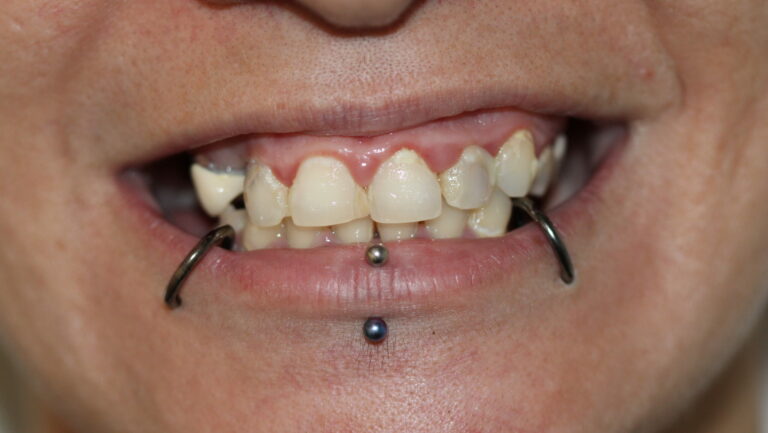
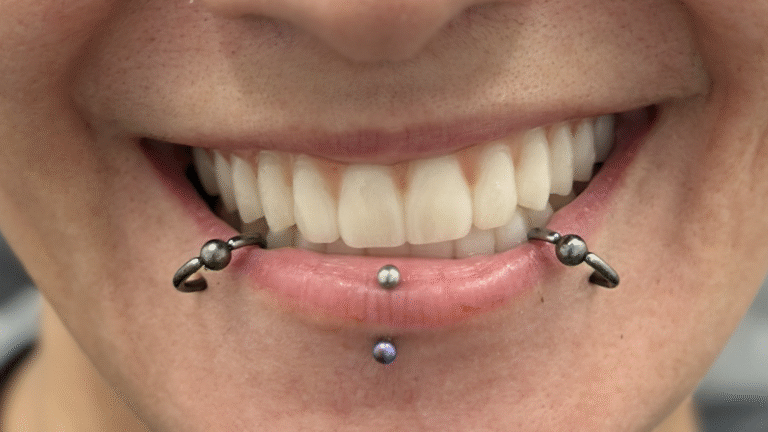
All-on-4® with monolithic zirconia upper and lower.
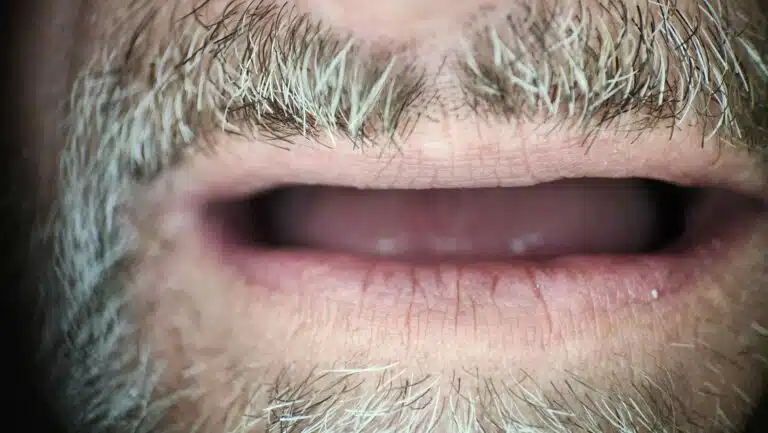
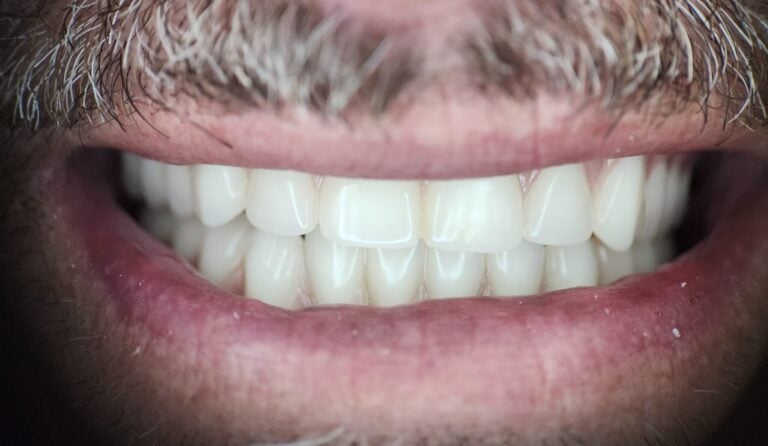
Snap-in acrylic implant overdentures.
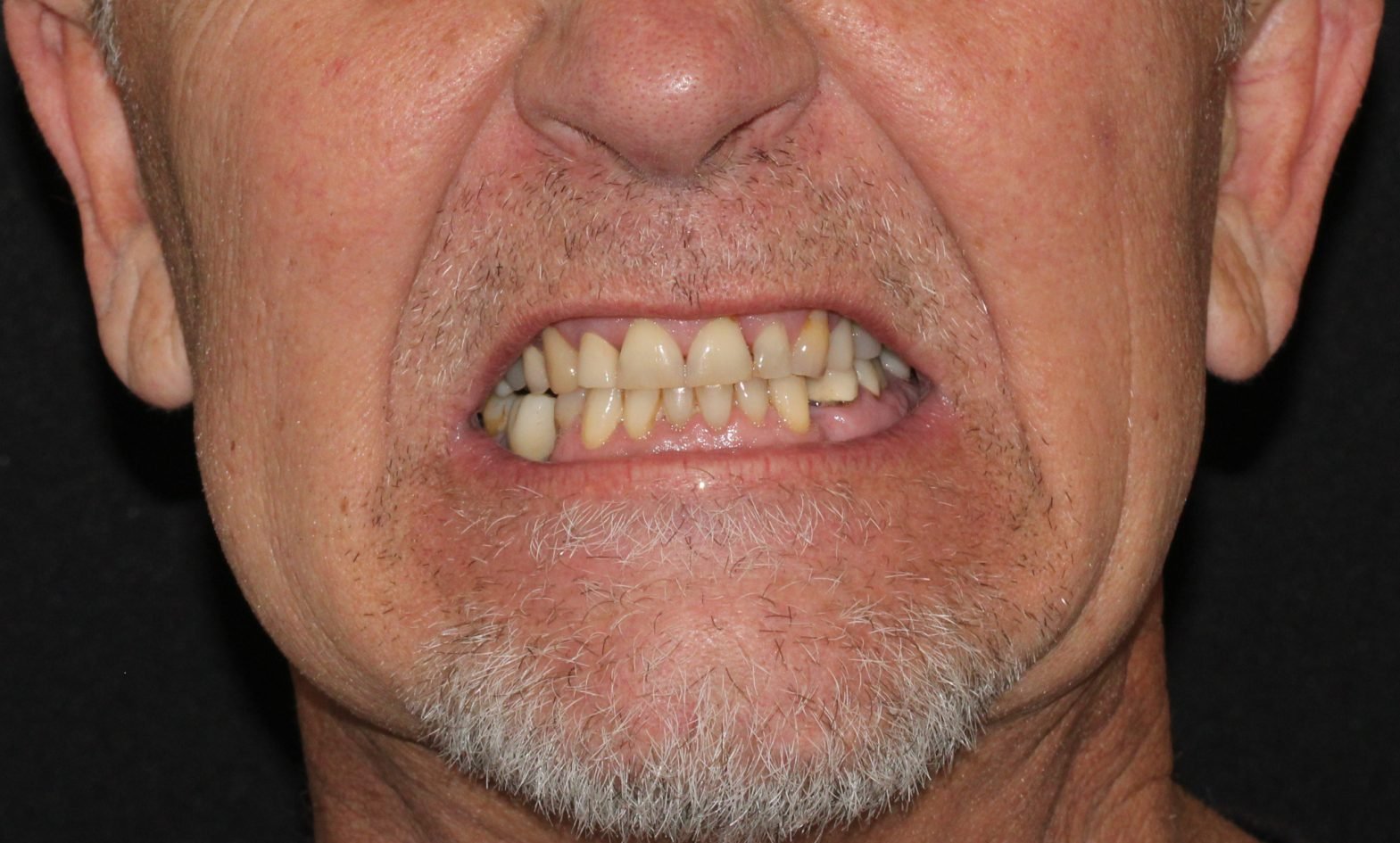
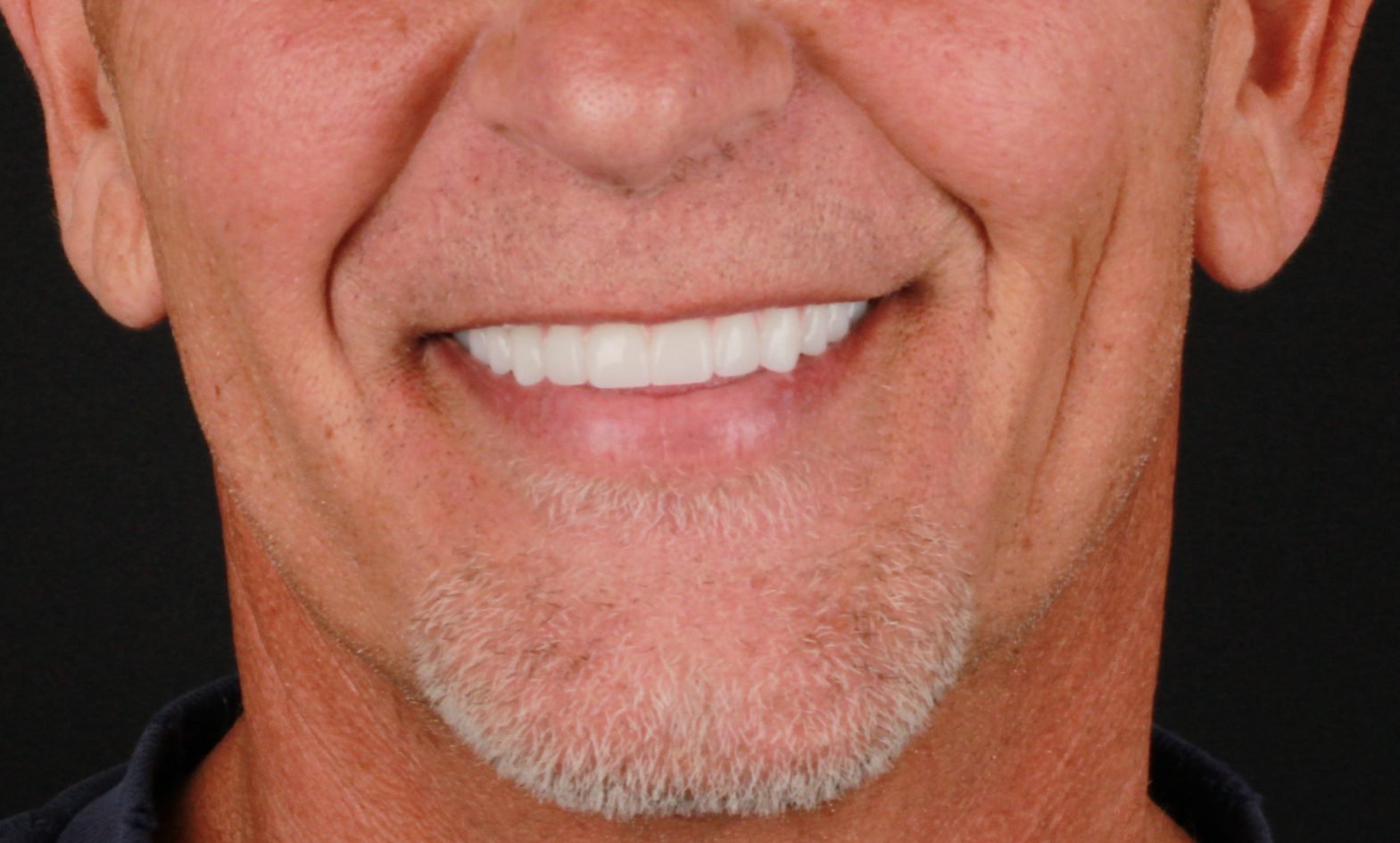
All-on-4® with monolithic zirconia upper and lower.
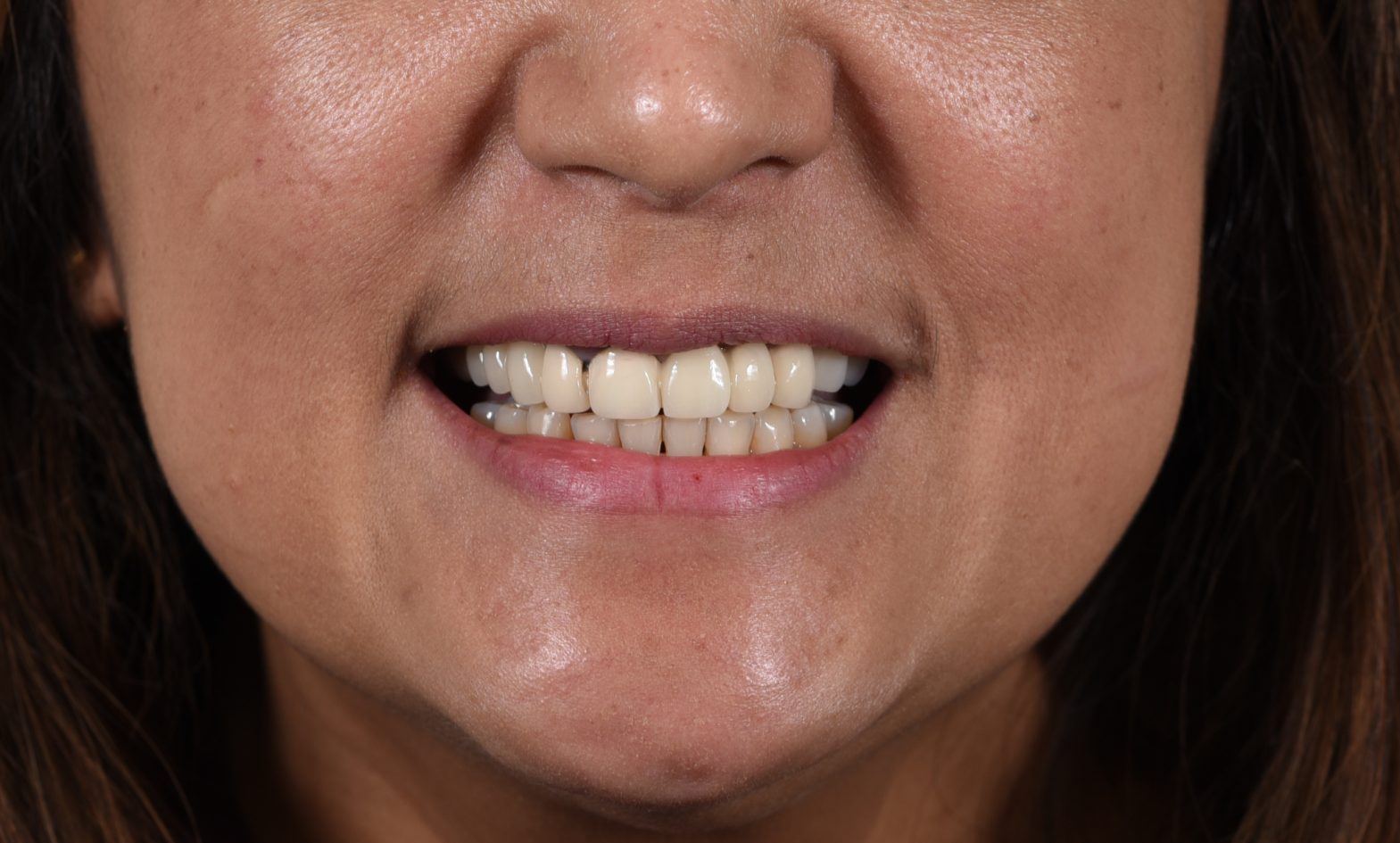
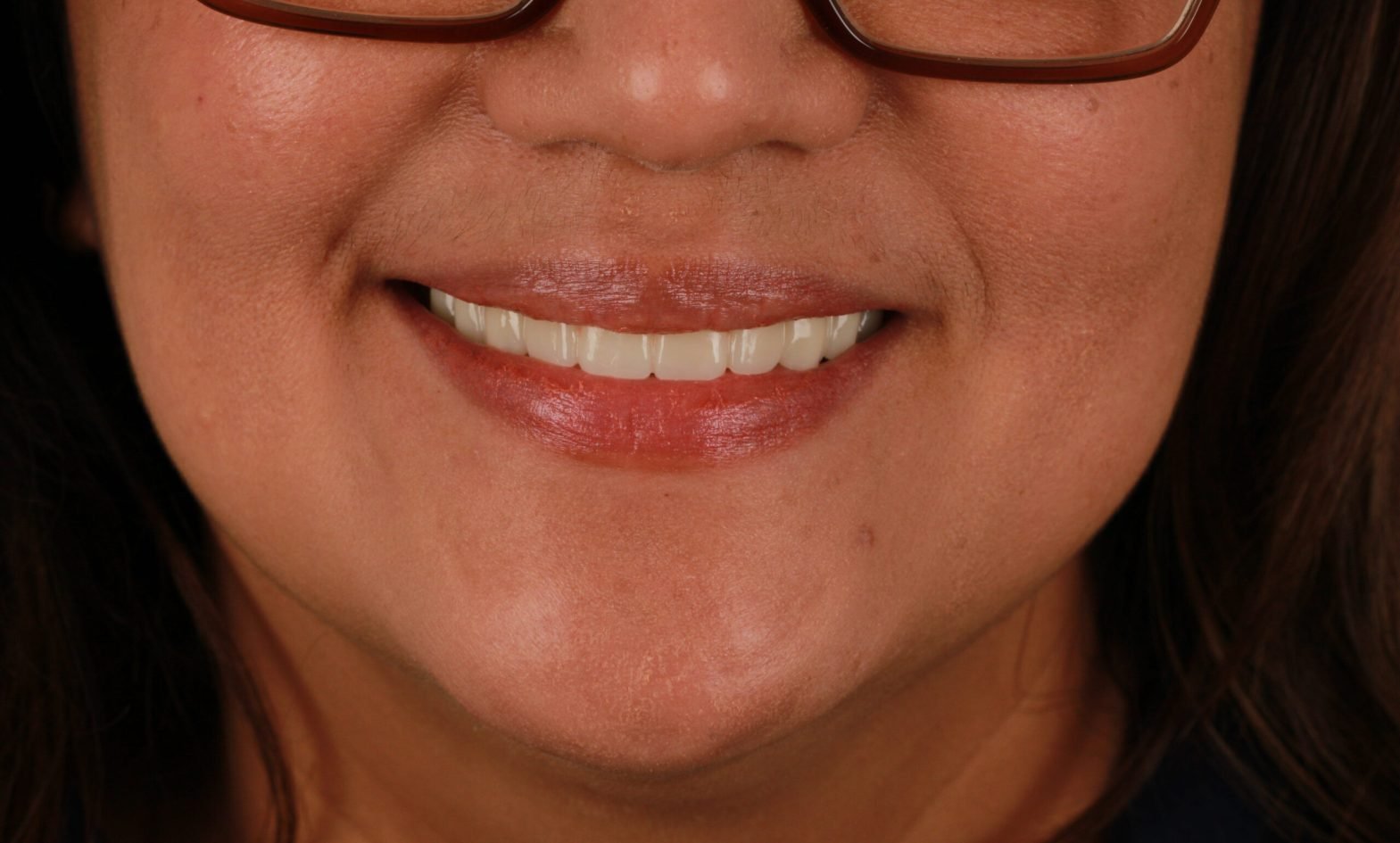
All-on-4® with monolithic zirconia upper prosthesis.
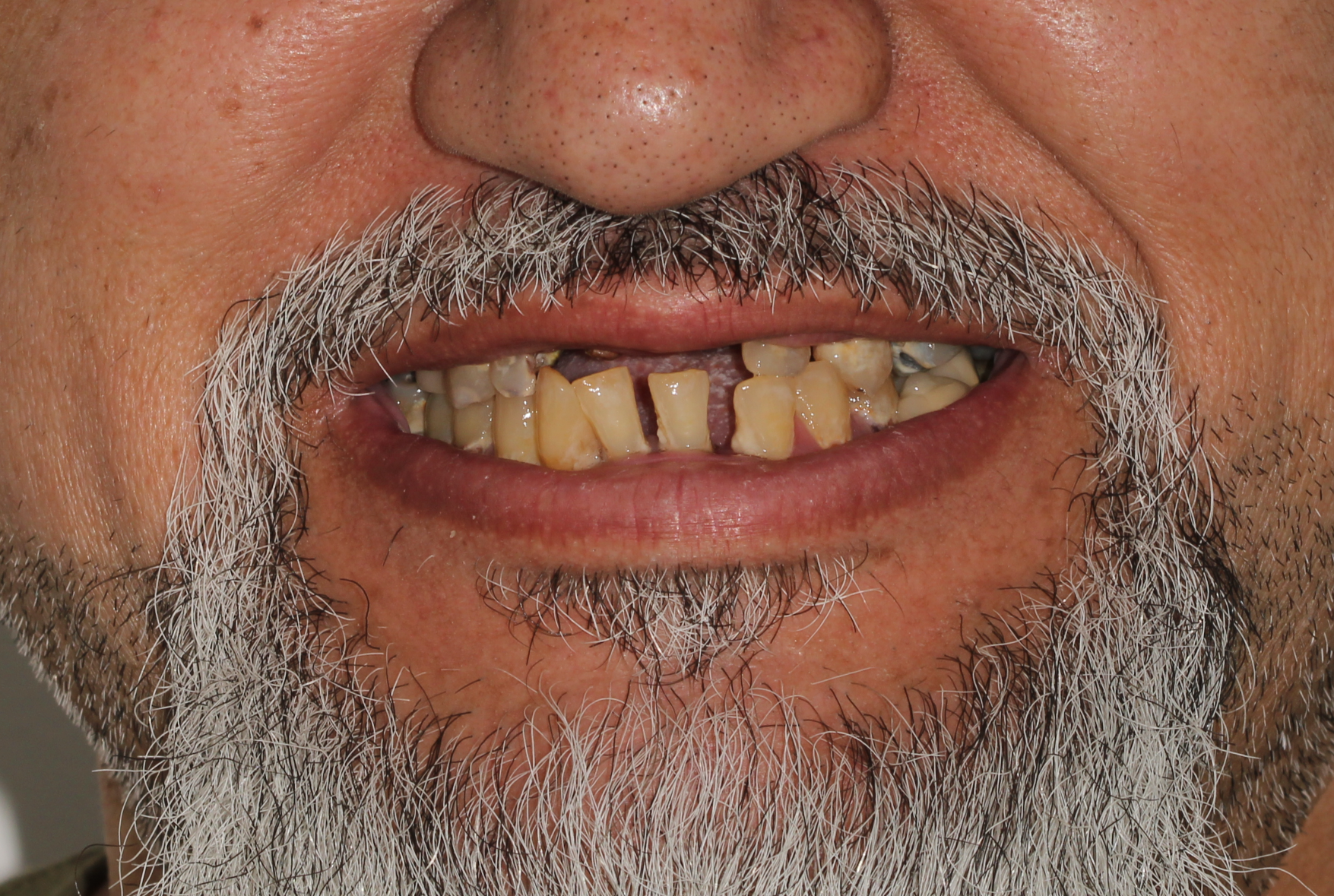
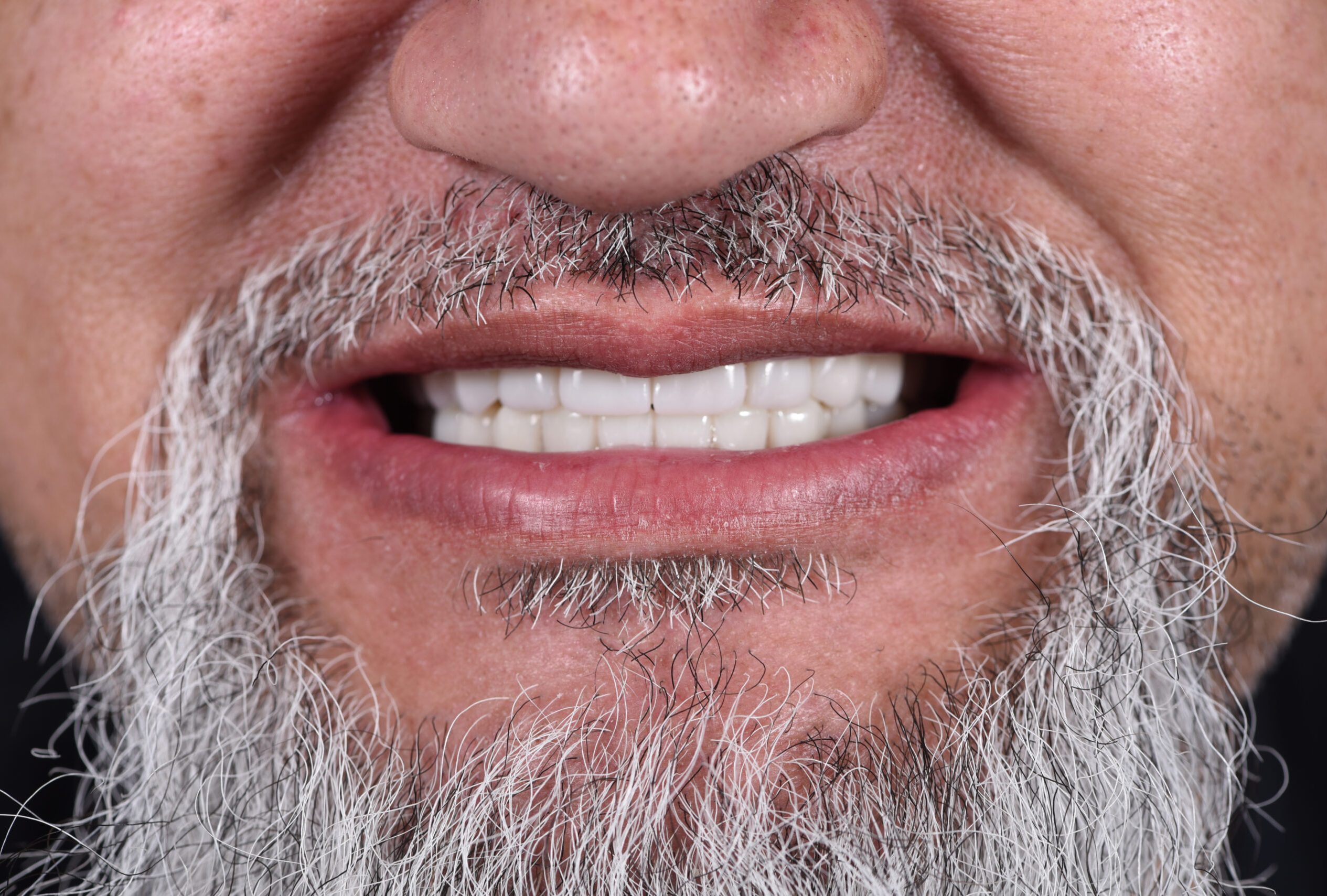
All-on-6 with zygomatic and pterygoid implants with zirconia on titanium.
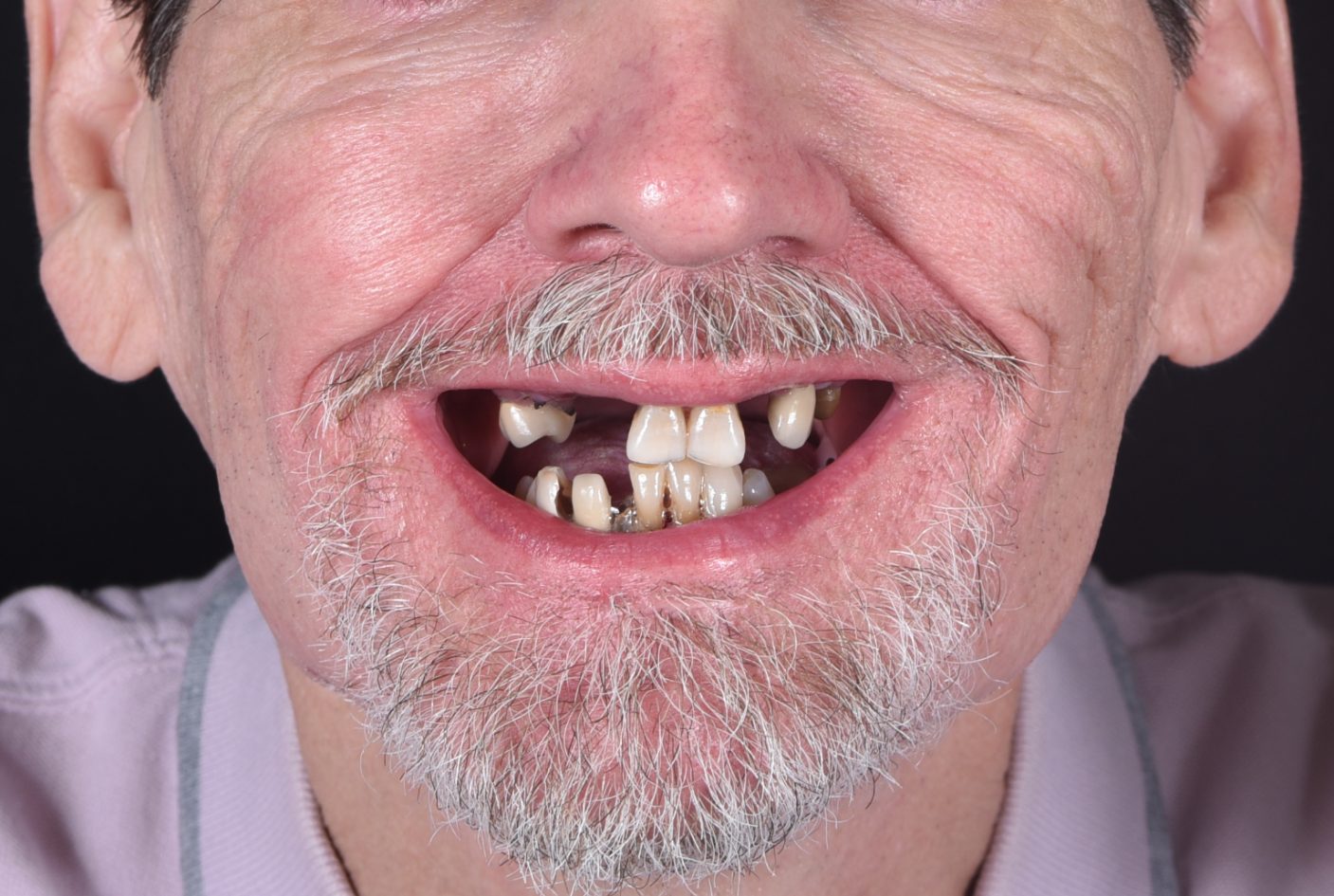
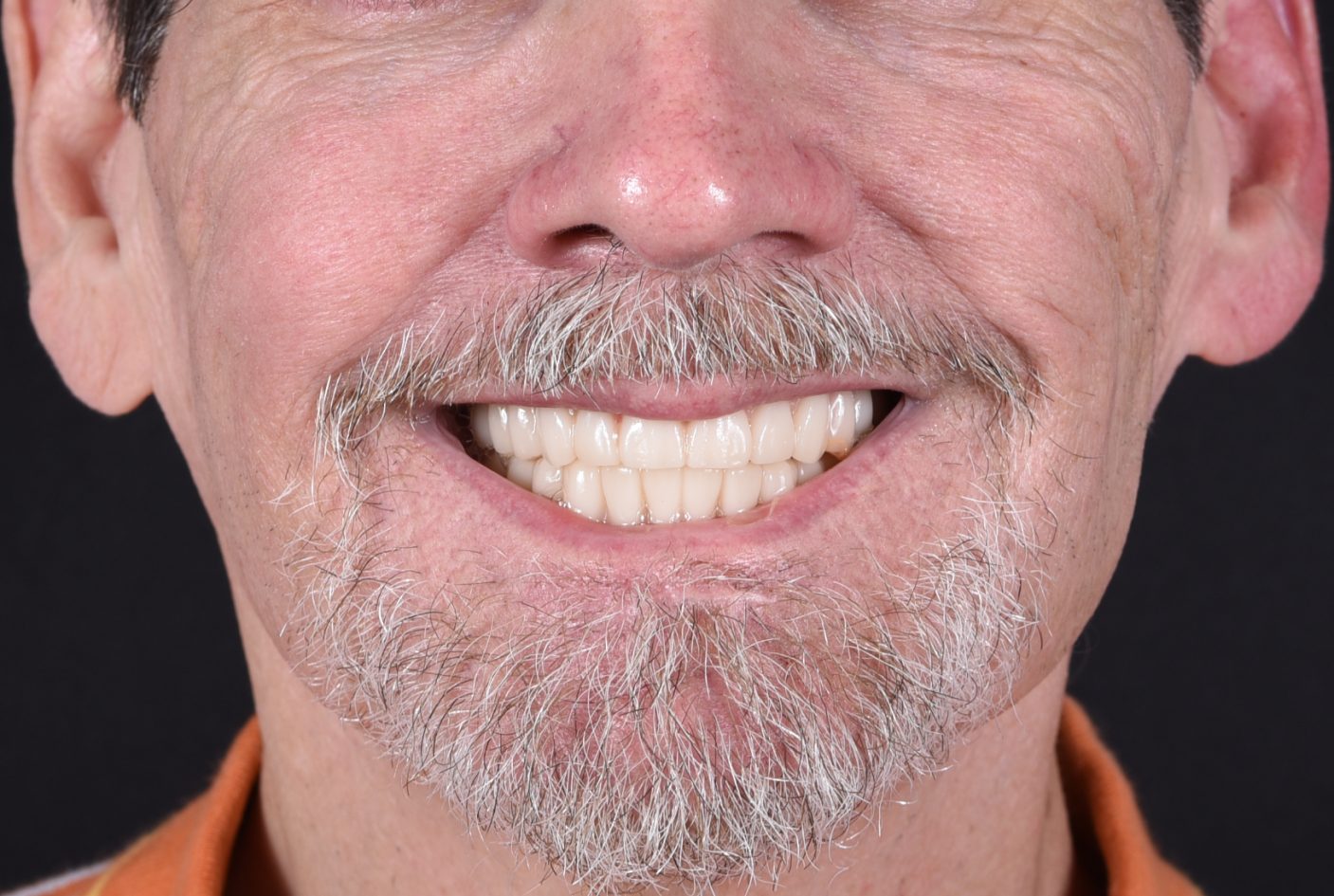
All-on-6 with zygomatic and pterygoid implants upper, all-on-4® lower, with monolithic zirconia.



See What Our Patients are Saying
4.9 ★ (350+ reviews)
Risks & Benefits of All-on-6
Like any implant procedure, All-on-6 comes with benefits and risks. Understanding both helps you make a well-informed decision.
| Benefits | Risks / Considerations |
|---|---|
| Fixed, non-removable teeth for daily function and speaking. | Surgical recovery includes temporary soreness, swelling, and bruising. |
| Wider force distribution across six implants may improve long-term stability. | Implant failure can occur if bone does not integrate as expected. |
| Helps maintain bone levels where implants are placed. | Additional procedures may be needed if bone or gum support is insufficient. |
| Improved chewing function compared to dentures or snap-in overdentures. | Provisional bridge may require adjustment or repair during healing. |
| Custom smile design tailored to facial proportions and esthetic goals. | Final prosthesis will require maintenance and periodic evaluation over time. |
| Typically allows for same-day fixed provisional teeth. | Not all patients are candidates; suitability is confirmed through CBCT and clinical planning. |
How We Work to Reduce Risk
- Every case is planned digitally using CBCT imaging and implant simulation.
- Implant stability is verified before attaching same-day teeth.
- We monitor bite, tissue health, and healing at scheduled intervals.
- The provisional stage allows refinement before the final prosthesis is made.
Materials & Prosthesis Options
All-on-6 treatment involves two phases:
A provisional (temporary) bridge worn during healing.
A final prosthesis designed for long-term strength, esthetics, and comfort.

Provisional Bridge
- Made from high-strength PMMA
- Worn for 3 to 6 months during osseointegration
- Allows us to refine bite alignment, lip support, speech patterns, and esthetics.
- Designed to be strong enough for daily function during healing
This stage is intentional. It ensures your final prosthesis fits correctly and feels natural.
Final Prosthesis
When choosing the right final prosthesis, we consider:
- Bite force and parafunctional habits
- Bone support and implant distribution
- Facial esthetics and smile line position
- Desired tooth shape, shade, and texture
- Long-term maintenance expectations
There is no single “best” material.
The correct choice depends on your functional needs and esthetic goals, which we plan during the healing phase.
| Material Option | What It Is | Strength / Durability | Esthetics | Best For |
|---|---|---|---|---|
|
Full-Contour Zirconia |
A single block of milled ceramic | Very high strength and fracture resistance | Natural translucency and polish | Patients who want a durable, highly esthetic long-term result |
|
Titanium-Reinforced Hybrid
(Zirconia or Nano-Ceramic layered over a titanium bar) |
A titanium framework with an esthetic outer layer | Excellent structural stability and load distribution | Highly customizable esthetics | Patients with strong bite forces or parafunction who need additional reinforcement |
| Acrylic or PMMA Hybrid | Reinforced acrylic over a metal bar | Lower long-term wear resistance | Acceptable esthetics | Patients seeking a lower-cost final prosthesis or planning future upgrade |
We will review material options in detail during your design appointments and help you choose the prosthesis that supports both function and esthetics long term.
Maintenance and Long-Term Care
Routine Checkups
A full-arch implant restoration is a long-term treatment. Like natural teeth, it requires ongoing care to protect the implants, prosthesis, and surrounding tissues. Proper maintenance ensures comfort, function, and stability over time.
We schedule maintenance visits at regular intervals to evaluate:
- Implant stability
- Tissue health and inflammation
- Bite alignment and wear patterns
- Prosthesis integrity
These visits help prevent small issues from developing into larger problems.
Professional Cleaning
The prosthesis does not decay, but plaque and biofilm can still accumulate around the implants.
Not all dental offices are equipped to clean full-arch restorations correctly.
At Smile Science Dental Spa:
- We have a hygiene team specifically trained in maintaining All-on-6 and full-arch prostheses.
- We use implant-safe instrumentation and protocols to protect the prosthesis and the implant surfaces.
- Our hygiene team routinely cares for full-arch patients who were treated at other implant centers that do not offer ongoing maintenance.
This is a meaningful part of your long-term outcome.
Home Care
Your daily routine will include:
- Brushing twice per day with a soft brush
- Using a water flosser to clean under the prosthesis
- Rinsing with a non-alcohol antimicrobial rinse as recommended
These steps reduce inflammation and support long-term implant health.
Monitoring and Adjustment
Over time, we may make small adjustments to your bite or prosthesis. This is normal. These adjustments help distribute forces evenly and maintain comfort.
Replacement Expectations
A final prosthesis is long-term, but not permanent in the same sense as natural enamel. Materials can wear or chip over many years of use. With proper care, full-arch restorations are designed to function for many years before any component needs repair or replacement.
A confident smile starts with a single consultation.
Frequently Asked Questions
How much do All-on-6 dental implants cost?
The cost depends on the number of arches treated, the type of final prosthesis selected, and whether any additional procedures (such as grafting or extractions) are needed. Most patients choose to review pricing options and monthly payment plans during the consultation after a 3-D scan and full treatment plan are completed. We provide clear, written fees before treatment begins. Typically, All-on-6 costs the same as All-on-4 in our practice, unless special implants or advanced procedures are required.
Is All-on-6 worth it?
For patients who want a fixed, non-removable full-arch solution, All-on-6 can provide strong chewing function, stable support, and long-term durability. The additional implants help distribute force more evenly than fewer-implant designs, which can be beneficial for patients with stronger bite forces or uneven bone distribution. Whether it is “worth it” depends on your goals, anatomy, and long-term expectations, which we evaluate during a full consultation.
Which is better: 3-on-6, All-on-4, or All-on-6?
These are different treatment philosophies:
| Treatment | Description | Best For |
|---|---|---|
| 3-on-6 | Three separate bridges supported by six implants | Patients who want individual segment bridges and have good bone distribution and hygiene capability |
| All-on-4 | One full-arch bridge supported by four implants | Patients with limited bone volume or when fewer implant sites are available |
| All-on-6 | One full-arch bridge supported by six implants | Patients seeking greater load distribution and long-term stability |
The best option is determined by CBCT evaluation, bite forces, bone anatomy, and restorative goals.
What are the cons of All-on-6 dental implants?
All-on-6 is a surgical treatment and requires healing time. Some patients may need bone augmentation if support areas are limited. The provisional bridge worn during healing is designed for function but is not the final prosthesis. Long-term success requires consistent home hygiene and routine maintenance visits. Like all implants, there is a risk of implant loss or prosthetic wear over time.
Does Medicare cover All-on-6 dental implants?
Medicare generally does not cover dental implants, including All-on-6. Some Medicare Advantage (Part C) plans may include limited dental benefits, but coverage is usually partial and varies widely. We verify benefits and review expected out-of-pocket costs during the consultation.
How long do All-on-6 implants last?
Implants are designed to function for many years when maintained. The final prosthesis will also wear and may eventually need repair or replacement, similar to any long-term dental restoration. Regular hygiene visits, professional maintenance, and home care are essential for longevity.
How long does the All-on-6 process take?
Most patients receive a fixed provisional bridge the same day as implant placement, then heal for about 3 to 6 months before receiving the final prosthesis. The exact timeline depends on healing, soft tissue response, and any preliminary procedures that may be needed.
Is bone grafting always required for All-on-6?
Not always. Whether grafting is needed depends on your bone volume, bone density, and implant site positioning. A CBCT scan is used to determine this precisely. We only recommend grafting when it supports long-term stability.
Can my All-on-6 be cleaned at any dental office?
Not all offices have the training or instrumentation to clean full-arch bridges safely. Our hygiene team is specifically trained in full-arch maintenance protocols, and we regularly care for patients who received implants at other centers. Proper maintenance protects the implants and soft tissues long term.
Frequently Asked Questions
How much do All-on-6 dental implants cost in Glendale?
Fees vary by jaw (upper vs lower), materials (PMMA hybrid vs zirconia), extractions, sedation, and any grafting. We review itemized options during your consultation and provide financing with payment plans that can cover part or all of treatment.
Is All-on-6 worth it?
For many patients it provides a strong, fixed full-arch solution with excellent chewing function and esthetics. Six implants can improve load distribution and future serviceability compared with fewer implants, especially in higher bite-force cases.
All-on-4® vs All-on-6 — which is better for me?
We decide after a 3-D CBCT evaluation. Factors include bone volume and quality, sinus or nerve proximity, bite forces, bruxism, and restorative goals. Some anatomies benefit from six implants; others are well-served with four. We individualize the plan.
What are the cons of All-on-6 dental implants?
Higher upfront cost and a longer surgical visit than some alternatives. As with any implant procedure, risks include soreness, swelling, and uncommon complications such as infection or early implant loss. We review risks, benefits, and alternatives at consult.
How long does the All-on-6 process take?
Many cases receive a same-day fixed provisional. Full healing and refinement to the final bridge typically spans several months as bone integrates with the implants and the bite is fine-tuned.
Does Medicare or dental insurance cover All-on-6?
Traditional Medicare generally does not cover dental implants. Some dental plans contribute to parts of care such as extractions, imaging, or sedation. Our team verifies benefits and discusses financing options.
What materials do you use for the final bridge?
Options include a titanium framework with high-strength acrylic or PMMA, or monolithic/stacked zirconia. We discuss strength, esthetics, wear, and maintenance to choose the best option for your bite and smile goals.
Am I a candidate for All-on-6 if I have bone loss or a strong bite?
Often yes. Six implants can improve load sharing in strong/para-functional bites and help in areas of limited bone. A CBCT exam determines whether standard, tilted, pterygoid, or other strategies are appropriate.
What is maintenance like after All-on-6?
You’ll have scheduled checkups for professional cleaning of the prosthesis and implant surfaces. Daily home care includes brushing the bridge, cleaning under the intaglio with aides (e.g., floss threaders, water flossers), and wearing a nightguard if indicated.
Do you offer sedation for All-on-6 surgery?
Yes. Based on your medical history and preferences, options include oral sedation, IV sedation, or general anesthesia provided by our in-house anesthesia team.
Glossary & Terms
A full-arch implant treatment that uses six implants to support a fixed, non-removable bridge. The additional implants can improve support, load distribution, and long-term stability in certain patients.
A full-arch treatment using four implants. Often used when bone volume is limited or surgical access is simplified. Both All-on-4 and All-on-6 are full-arch, fixed implant solutions.
The temporary fixed prosthesis placed on the day of surgery. It is worn during healing to allow refinement of bite, speech, and esthetics before the final prosthesis is made.
The long-term bridge secured to the implants after healing. Common materials include zirconia or a titanium-reinforced hybrid. Designed for strength, esthetics, and daily function.
The biological process where bone bonds to the implant surface. This allows implants to function like artificial tooth roots. It occurs over 3–6 months.
A 3-D imaging scan used to evaluate bone structure, implant placement sites, and anatomical considerations for precise digital planning.
The vertical and horizontal space required to design a durable, functional, and esthetic full-arch bridge. Evaluated during planning.
How the teeth meet when biting and chewing. Proper occlusal design helps distribute forces evenly and protects the prosthesis over time.
The process of shaping and stabilizing the gum tissues around the prosthesis for comfort and hygiene access.
The condition of the tissues surrounding implants. Proper home care and professional cleanings are required to maintain long-term health.
The portion of a bridge that extends beyond the last implant. Longer cantilevers increase mechanical stress. Using six implants often helps shorten or eliminate cantilevers.
How biting and chewing forces are spread across implants. More implants can reduce stress on individual implants and components over time.
The mechanical stability of an implant at the time of placement. Required for same-day fixed provisionals to be safely attached.
Attaching a fixed provisional bridge the day of surgery, provided implant stability passes threshold criteria. Not performed unless conditions are met.
Digital impressions captured with a handheld scanner (no trays/goop).
How your teeth contact when biting. Proper occlusion protects implants and the prosthesis. This is adjusted throughout healing.
The periodic professional removal of the prosthesis for deep cleaning and inspection. Performed in office, not by the patient at home.
Protective appliance to reduce bite forces for grinders/clenchers.
Scheduled checks and professional cleanings to protect implants and bridge.
Medical Review & Evidence
-
Author: Richard Dawson, DMD
- Medically Reviewed by: Dr. Richard Dawson, DMD
- Last Updated: November 13, 2025
- 11:40 am
The patient education on this page is aligned with current literature on full-arch, immediate-load implant therapy, maintenance, and advanced anchorage options (e.g., zygomatic implants). Key references:
Maló P, de Araújo Nobre M, Lopes A, Ferro A, Moss SM. All-on-4 immediate-function concept for completely edentulous maxillae: A longitudinal study with 10–18 years of follow-up. Clin Implant Dent Relat Res. 2019.
PubMed. https://pubmed.ncbi.nlm.nih.gov/30924309/de Araújo Nobre M, Lopes A, Antunes E. The 10-Year Outcomes of Implants Inserted with Dehiscence or Fenestrations in the Rehabilitation of Completely Edentulous Jaws with the All-on-4 Concept. J Clin Med. 2022;11(7):1939.
PubMed. https://pubmed.ncbi.nlm.nih.gov/35407547/
Open Access. https://www.ncbi.nlm.nih.gov/pmc/articles/PMC8999632/Froimovici FO, Butnărașu C, et al. Fixed Full-Arch Implant-Supported Restorations: Techniques Review and Proposal for Improvement. Dent J (Basel). 2024;12(12):408.
PubMed. https://pubmed.ncbi.nlm.nih.gov/39727465/
Open Access. https://www.ncbi.nlm.nih.gov/pmc/articles/PMC11674276/Araújo TG, et al. Long-term Implant Maintenance: A Systematic Review of Home and Professional Care. Braz Dent J. 2024.
PubMed. https://pubmed.ncbi.nlm.nih.gov/39476119/
Open Access. https://www.ncbi.nlm.nih.gov/pmc/articles/PMC11506129/Roper MB, et al. Long-term treatment outcomes with zygomatic implants: systematic review and meta-analysis. Clin Oral Implants Res. 2023.
PubMed. https://pubmed.ncbi.nlm.nih.gov/37405545/
Open Access. https://www.ncbi.nlm.nih.gov/pmc/articles/PMC10322814/Albaqawi AH, et al. “All-on-4” and “All-on-6” treatment concept applied using guided implant placement for full-arch rehabilitation: clinical outcomes. Clin Exp Dent Res. 2023.
Open Access. https://www.ncbi.nlm.nih.gov/pmc/articles/PMC10014524/American Academy of Implant Dentistry — Dental Implant Resources for Patients.
AAID. https://aaid-implant.org/dental-implant-resources/
This content was reviewed by licensed dentists to ensure accuracy and alignment with current implant dentistry literature.
Our Implant Warranty
Real Protection, Not Hype
You’ve probably seen other implant centers advertising “lifetime warranties.” The reality is that those promises often sound better than they actually are. Dental implants can last many years, but they are medical devices that require ongoing care, and no one can guarantee a prosthesis for life.
We prefer to be clear and honest with you up front.
| What's Covered | How Long | What it Means | Your Part |
|---|---|---|---|
|
Implant Fixture (the titanium implant in bone) |
10 years | If the implant fails under normal use, we will replace the fixture. | Regular hygiene visits, good home care, proper nightguard use, no nicotine use, and follow your maintenance plan. |
|
Prosthetic Restoration
(bridge, full arch, or crown) |
5 years | Covers fractures or failures under normal use. We’ll repair or replace as needed. | Routine scheduled checks, report issues early, wear a night guard as prescribed. |
| Surgical Complications | 3 years | If a fixture fails early despite proper healing, we’ll replace it at no fee. | Follow post-op instructions and attend follow-up appointments. |
Why we don’t say “lifetime warranty”
- No dental prosthesis lasts forever without maintenance.
- Most “lifetime” promises exclude common causes of failure.
- If a clinic is sold or closes, those warranties typically disappear.
- Because trust matters. We believe being honest and transparent with our patients is the foundation of a long-term relationship built on real care, not marketing tactics.
Our approach
- Clear coverage and responsibilities.
- No hidden fine print.
- The same high standard of care years after treatment.
Bottom Line
You deserve a warranty that’s clear, not just clever wording. We choose transparency over marketing gimmicks, so you know exactly what’s covered, how long it’s covered, and what’s expected to keep it valid. Our patients trust us because we make straightforward promises and keep them.