
Single-Tooth Dental Implants in Glendale, AZ
Definitive replacement for a missing tooth
Free consultations include same-day CBCT scan, photography, & treatment planning.
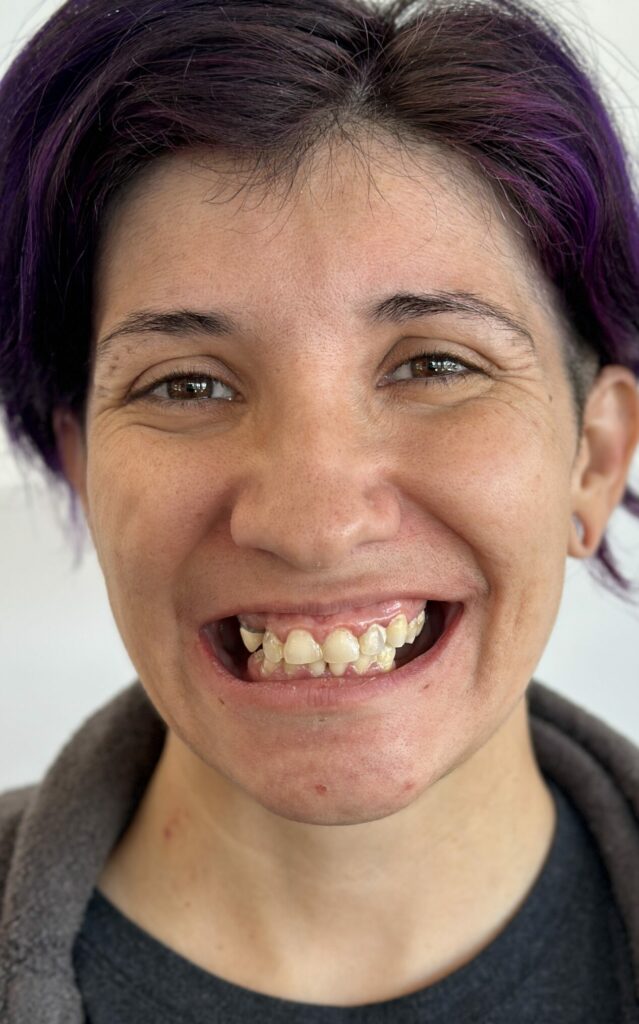
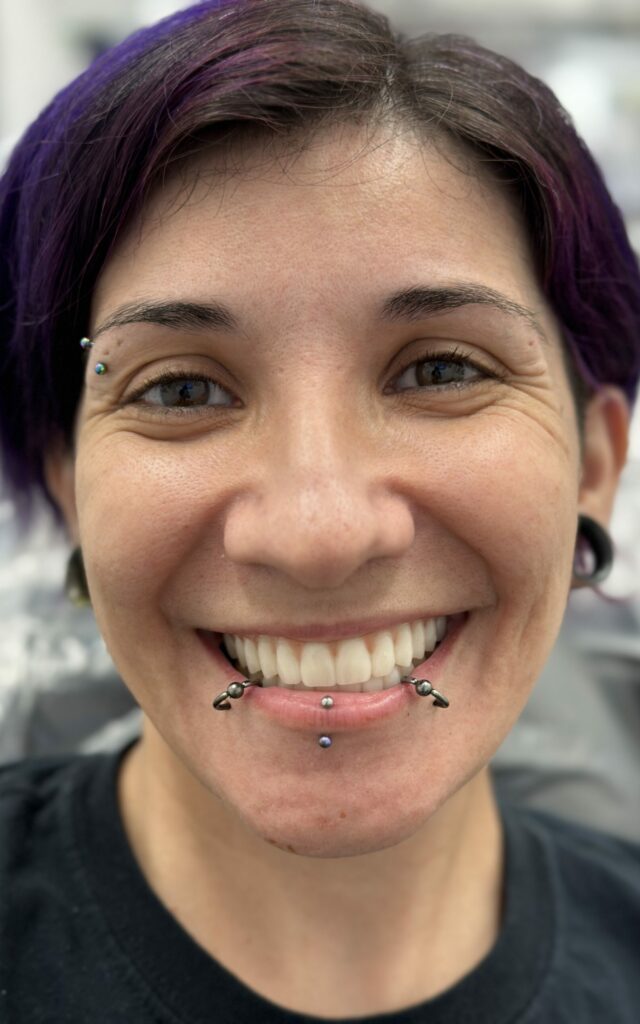
Select From The Following Options to Learn More
Is a single implant right for me?

Missing Tooth
When a single tooth is missing, a dental implant is often the most natural and long-lasting solution. It replaces the root and crown of the tooth, preserving your bone and bite alignment without affecting the teeth next to it.
• Helps maintain natural bone and gum contours.
• Does not require drilling or reshaping neighboring teeth.
• Feels and functions like your own tooth.
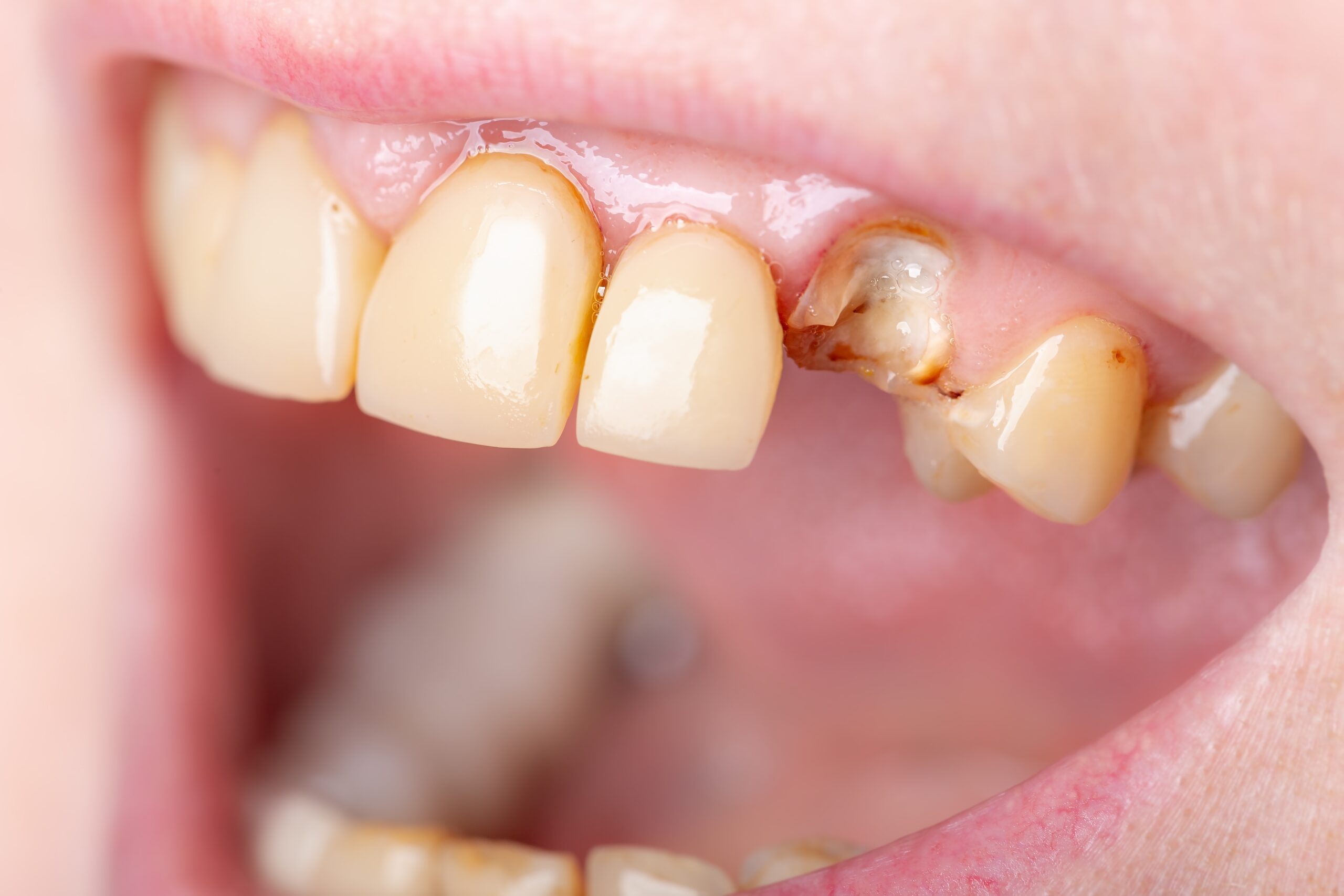
Broken Tooth
If a tooth is broken or cannot be saved, it can often be removed and replaced with an implant—sometimes in the same appointment. Planning carefully before removal protects the bone and makes the final result stronger and more predictable.
• Extraction and implant placement can often be done in one visit.
• Bone grafting may be used to stabilize the site for long-term success.
• Temporary tooth options can maintain your smile during healing.
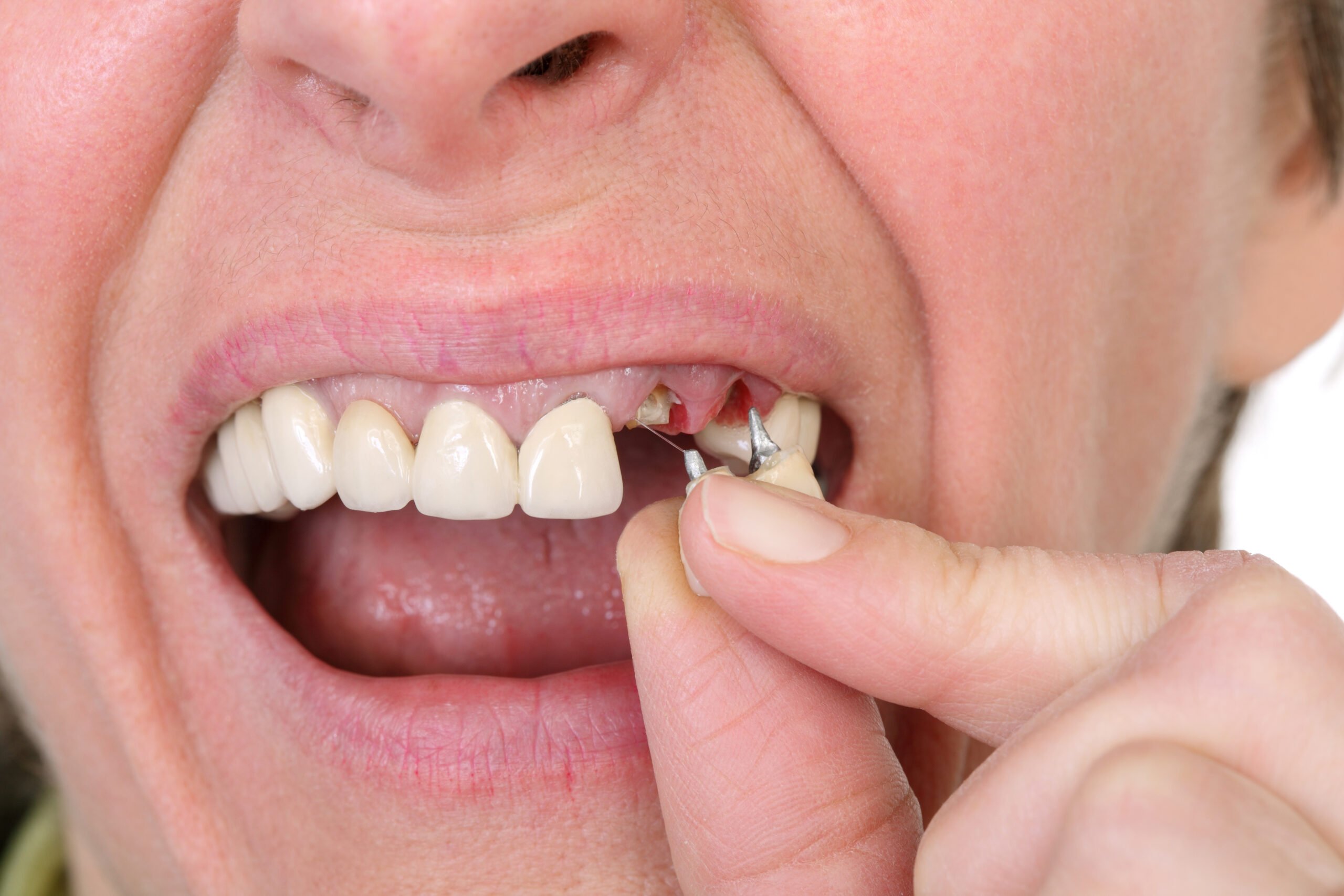
Failing Bridge
A failing bridge can weaken the supporting teeth and bone underneath. Replacing it with a single implant can restore stability, protect the remaining teeth, and eliminate the need for another bridge in the future.
• Implants support themselves, not your neighboring teeth.
• Helps stop bone loss under the old bridge.
• Provides a cleaner, easier-to-maintain solution.
What you get with a single implant
The look, feel, and function of a natural tooth
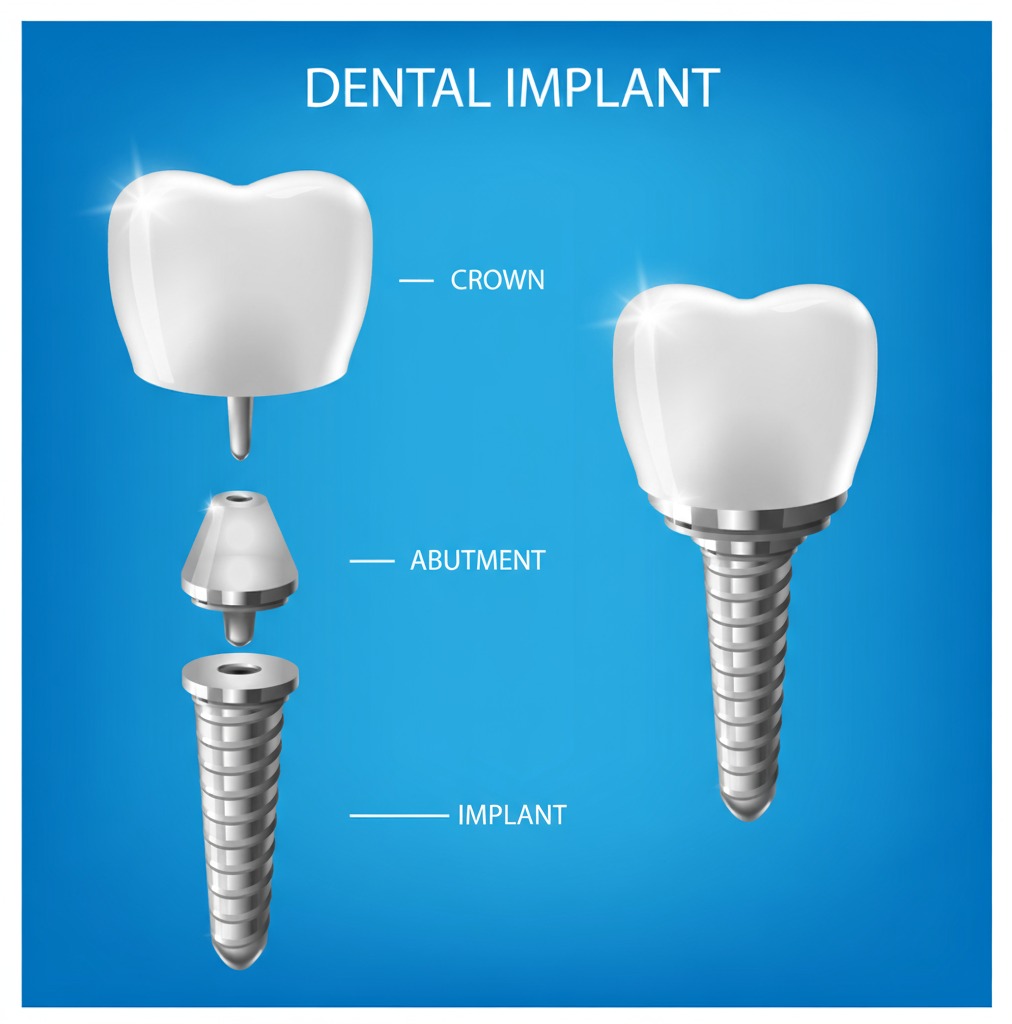
A dental implant is made up of three parts:
- The implant fixture, which acts like the tooth root.
- The abutment, which connects the implant to the crown.
- The crown, custom designed to match your smile.
Together, they create a strong, stable, and natural-looking replacement that preserves the health of the surrounding teeth and bone.
Screw-Retained Whenever Possible
We use screw-retained crowns when clinically appropriate. This makes future maintenance or adjustments easier without compromising the implant itself.
Why Choose a Dental Implant Instead of a Bridge
Restore your tooth without compromising the teeth around it
Biology
Unlike a bridge, a dental implant replaces the missing root and crown without touching neighboring teeth. It preserves your natural bone structure and keeps your other teeth intact.
Longevity
A well-maintained dental implant can last decades or even a lifetime. Bridges typically require replacement every 10–15 years and can weaken supporting teeth over time.
Maintenance
You brush and floss around an implant just like a natural tooth. Bridges require special floss threaders or tools, and are often harder to keep clean.
Who's a good candidate for dental implants?
- Good Candidates:
- Non-smoker or willing to stop before and after surgery
- Healthy gums and stable bone levels
- Controlled medical conditions such as diabetes (if present)
- Good oral hygiene and willingness to maintain follow-ups
- Bruxism managed with a night guard if needed
- May Need Alternative Treatment Options:
- Uncontrolled diabetes or other systemic health issues
- Active periodontal (gum) disease
- Heavy smoking or vaping
- Poor compliance with hygiene or maintenance visits
- Severe parafunctional habits not addressed
We evaluate every patient individually. If something increases your risk, we’ll create a plan to address it before treatment so your implant can succeed long term. To find out if you are a good candidate for dental implants, click the buttons below:
Your Dental Implant Timeline
Individualized care. Standardized Treatments.
Every smile is different, but most single-tooth implant treatments follow a predictable path. We build your plan around long-term stability, not shortcuts. Here’s what a typical timeline looks like from your first visit to your final crown.
Consult & CBCT
Assess suitability and plan your treatment
Your first visit includes a full exam, a 3D CBCT scan, and a personalized treatment plan. This allows us to evaluate bone quality, space, and your overall health before we begin.
Extraction & Site Prep (If Needed)
Remove the tooth and preserve bone for the future implant
If the tooth is still present, we remove it carefully and preserve the surrounding bone. If needed, a bone graft is placed to prepare the site for ideal implant stability.
Heal or Immediate Placement
Place the implant immediately or allow the site to heal first
If conditions are right, the implant can often be placed at the same visit as the extraction. If not, a short healing period ensures long-term strength and stability.
Uncovering & Scan
Prepare the implant for your final restoration
Once the implant has integrated with the bone, we gently uncover it and take a digital scan or impression. This step ensures your crown will fit with precision.
Crown Delivery
Place your custom crown for a natural look and feel
Your crown is custom designed to match your natural teeth in color, shape, and bite. Once placed, it looks and functions like a real tooth.
Consult & CBCT
Assess suitability and plan your treatment
Your first visit includes a full exam, a 3D CBCT scan, and a personalized treatment plan. This allows us to evaluate bone quality, space, and your overall health before we begin.
Extraction & Site Prep (If Needed)
Remove the tooth and preserve bone for the future implant
If the tooth is still present, we remove it carefully and preserve the surrounding bone. If needed, a bone graft is placed to prepare the site for ideal implant stability.
Heal or Immediate Placement
Place the implant immediately or allow the site to heal first
If conditions are right, the implant can often be placed at the same visit as the extraction. If not, a short healing period ensures long-term strength and stability.
Uncovering & Scan
Prepare the implant for your final restoration
Once the implant has integrated with the bone, we gently uncover it and take a digital scan or impression. This step ensures your crown will fit with precision.
Crown Delivery
Place your custom crown for a natural look and feel
Your crown is custom designed to match your natural teeth in color, shape, and bite. Once placed, it looks and functions like a real tooth.
If bone grafting is required, expect an additional 8–12 weeks of healing time before implant placement. We’ll explain your specific timeline clearly at your consultation.
What The Research Shows
| Outcome | Evidence Summary | Source |
|---|---|---|
| 95–98% 5–10 year survival for single-tooth implants in healthy non-smokers. | Stable long-term performance when hygiene and occlusion are maintained. | Jung et al., Clin Oral Implants Res, 2008 |
| Lower long-term failure rate than root canals or bridges in compromised teeth. | Implants avoid recurrent decay and retreatment. | Systematic reviews (PubMed/PMC) |
| Bone is preserved at the site of tooth loss. | Implants maintain natural contour vs. bridge resorption. | Multiple CBCT comparative studies |
| Titanium outperforms zirconia in strength and serviceability. | Zirconia is esthetic but brittle; titanium is repairable and customizable. | Materials / Eur J Med Res / BMC Oral Health |
Real Patients. Real Results.
Smile transformations from our actual patients
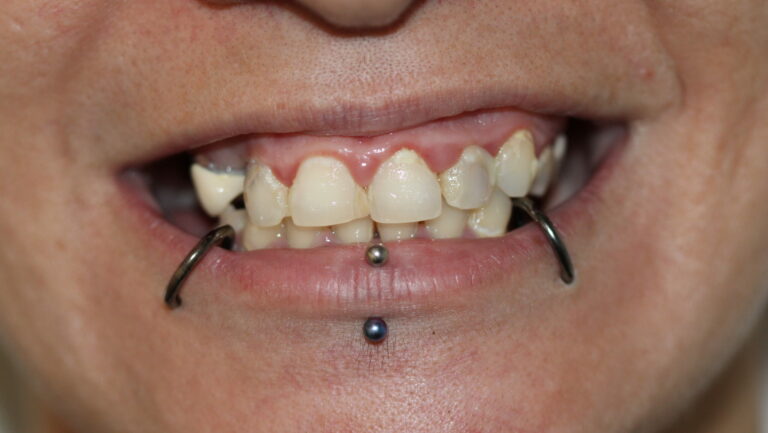
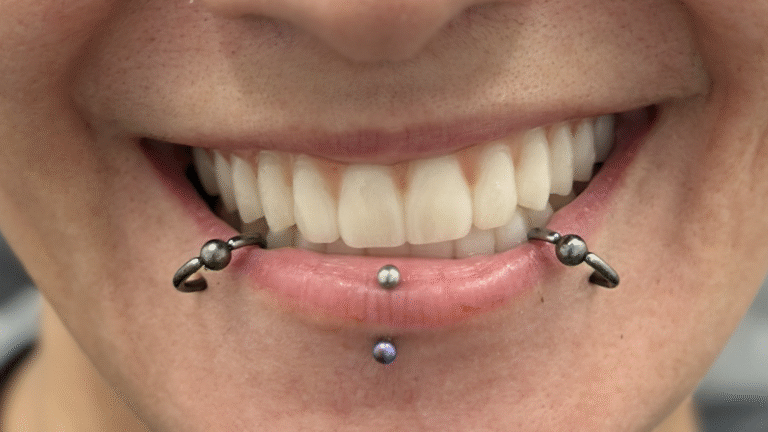
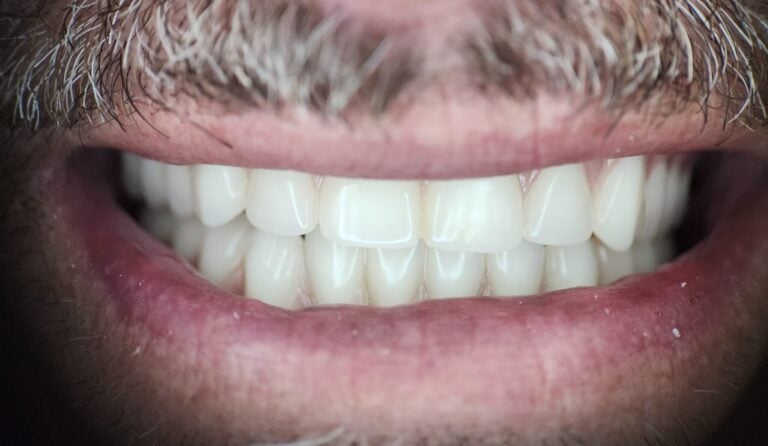
All-on-4® with monolithic zirconia upper and lower.
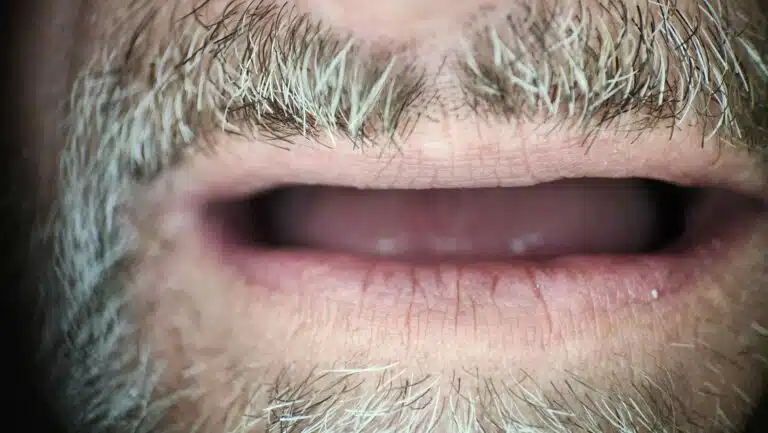
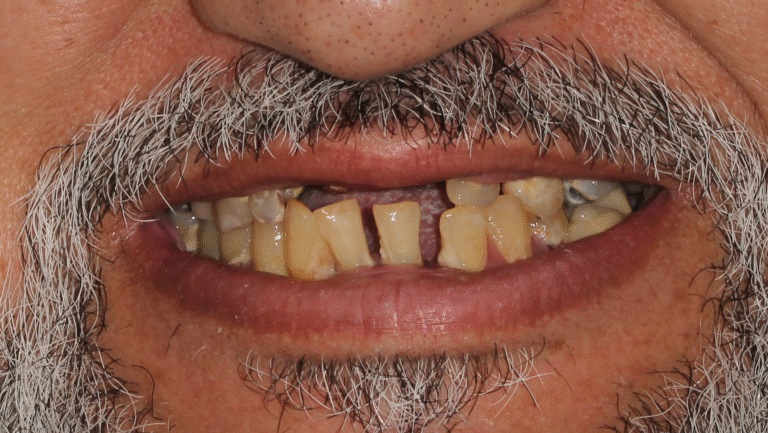
Snap-in acrylic implant overdentures.
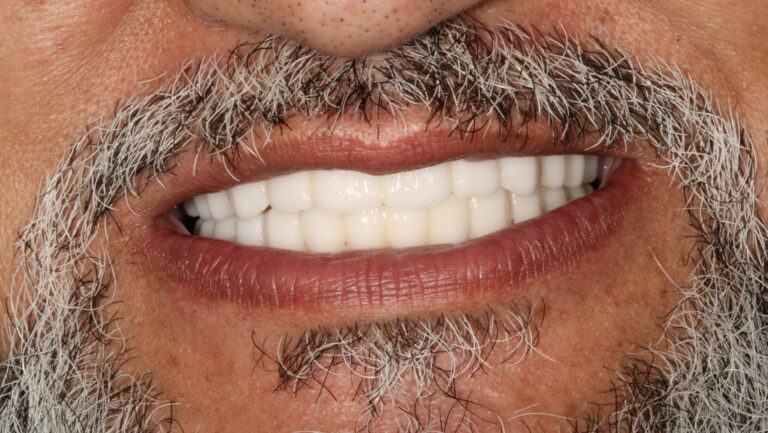
All-on-6 with zygomatic and pterygoid implants with zirconia on titanium.
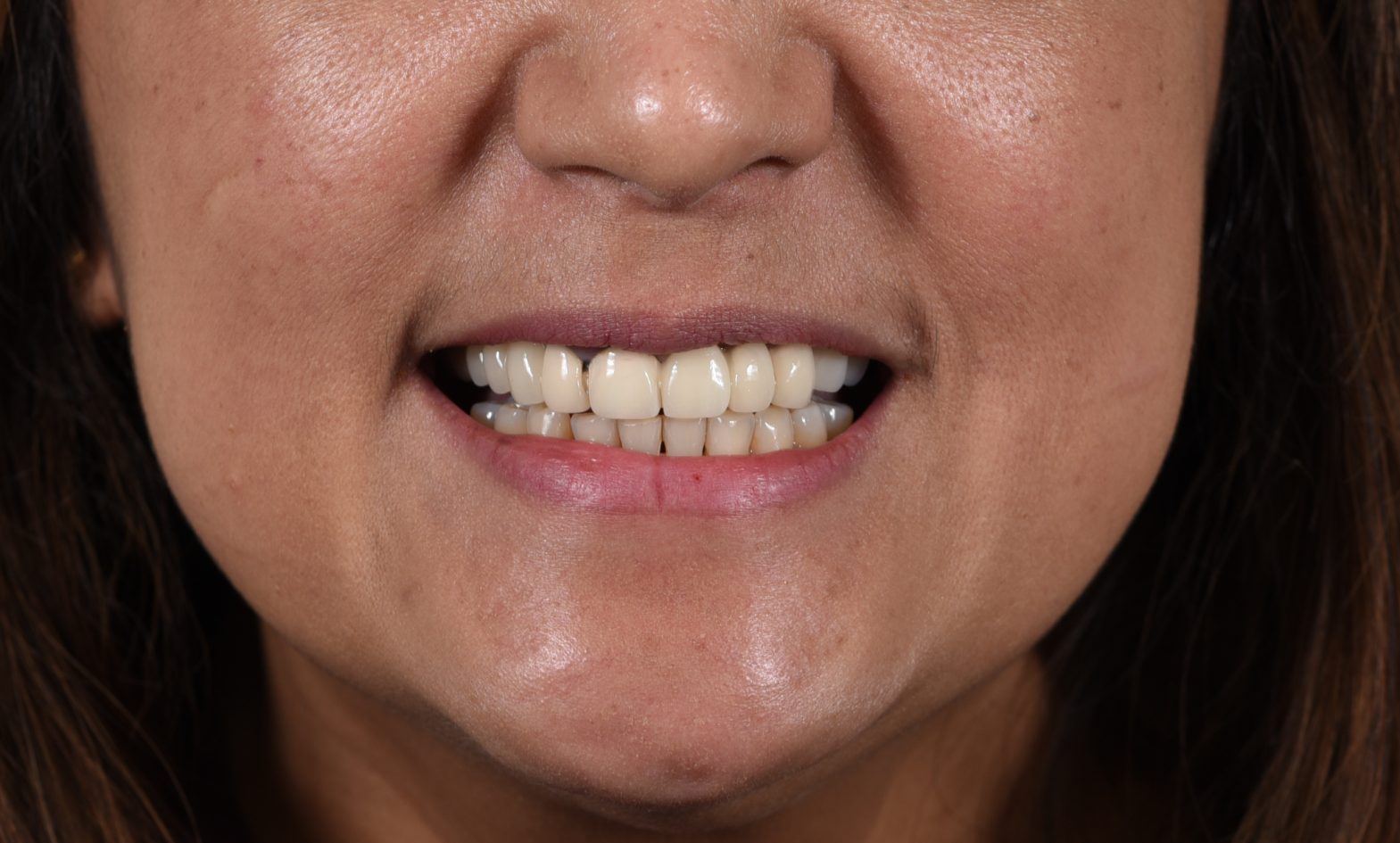
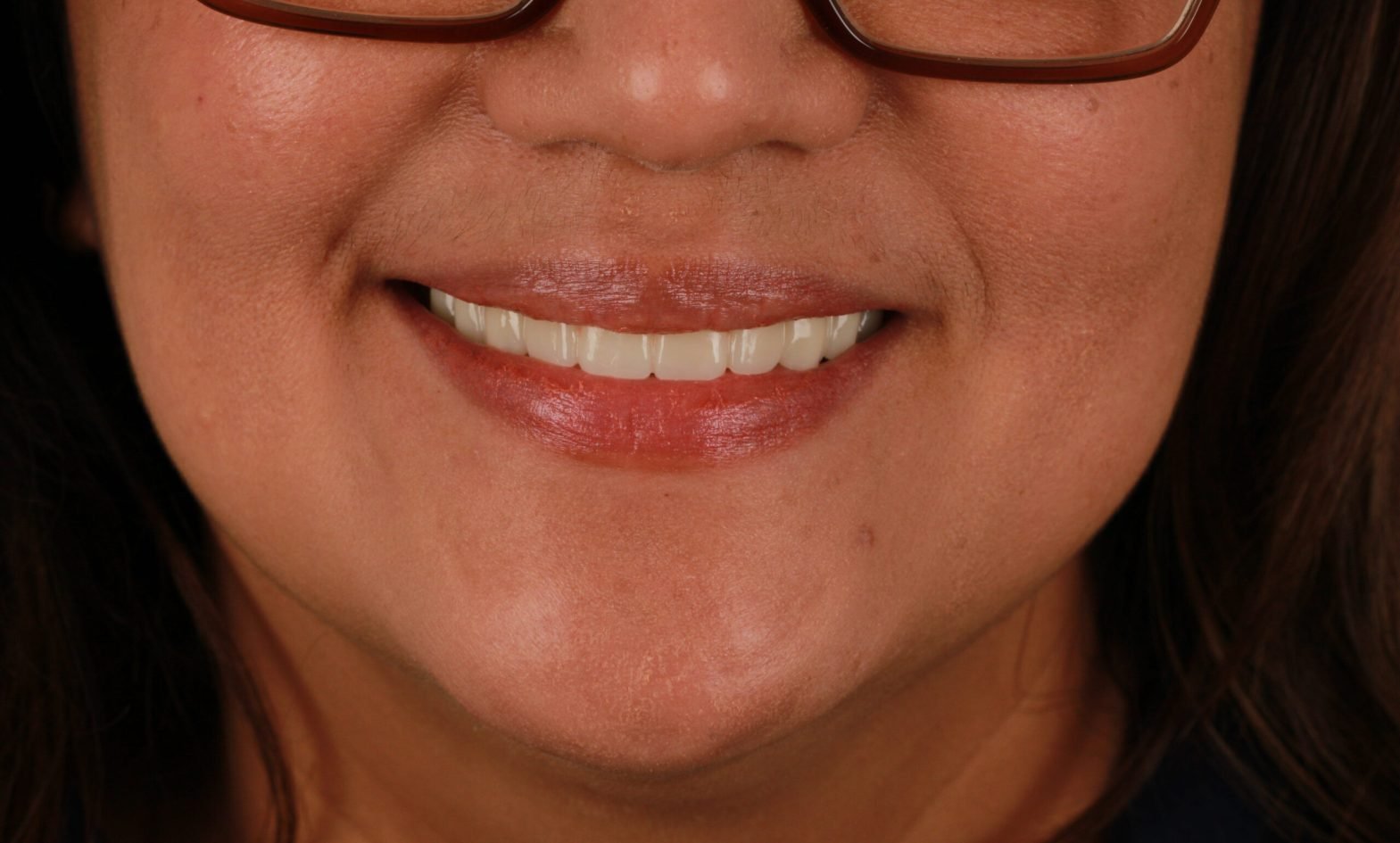
All-on-4® with monolithic zirconia upper prosthesis.
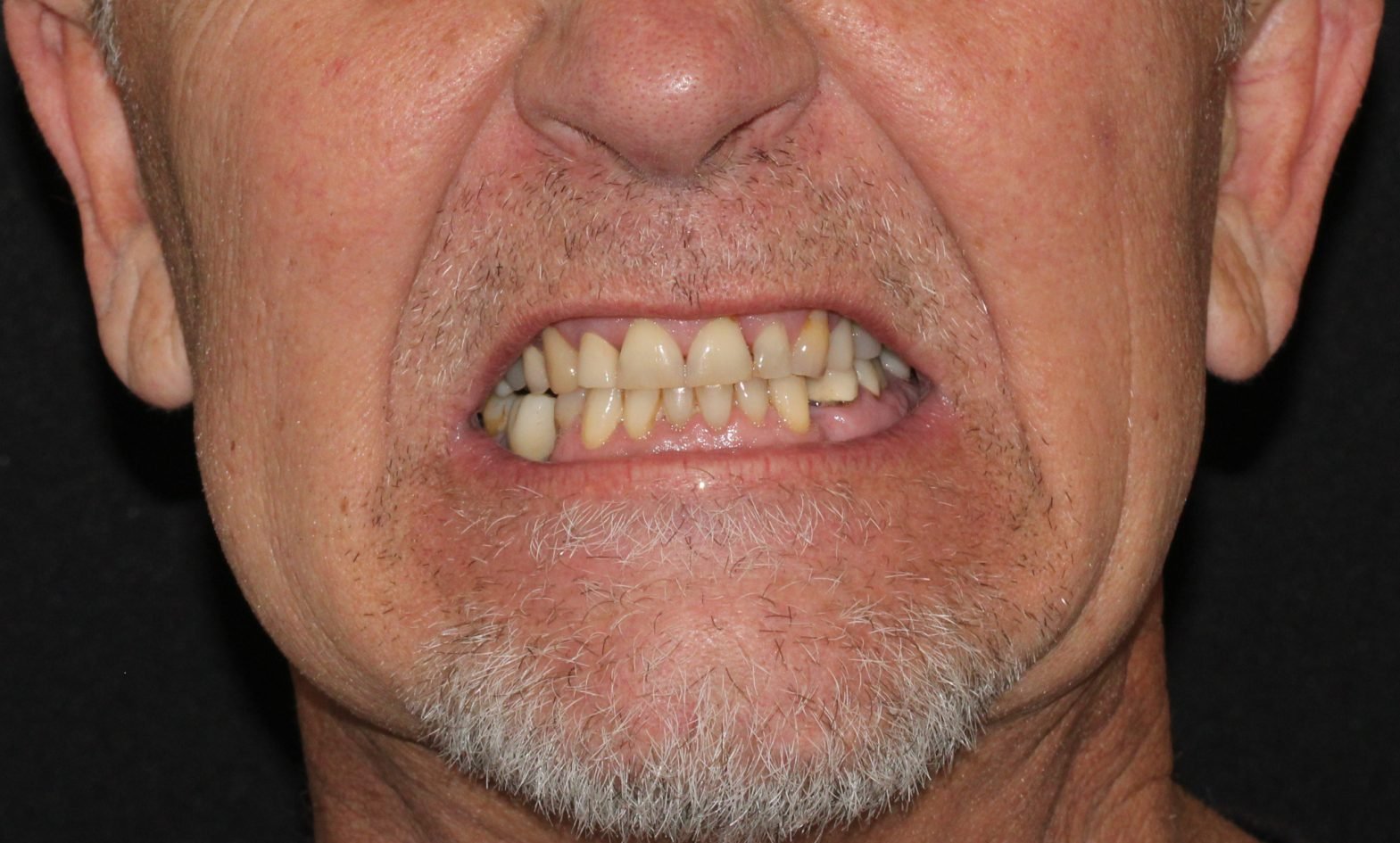
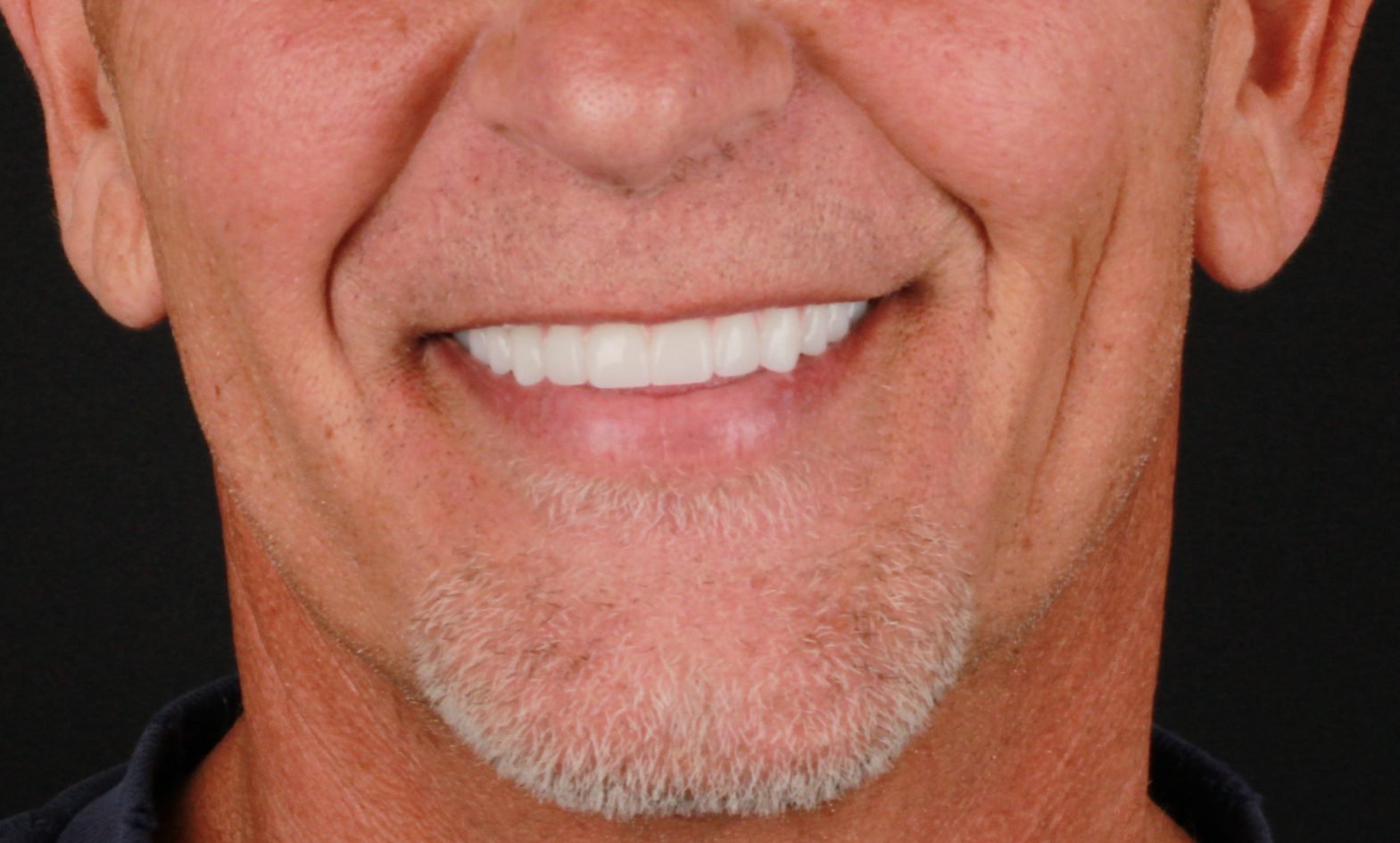
All-on-4® with monolithic zirconia upper and lower.
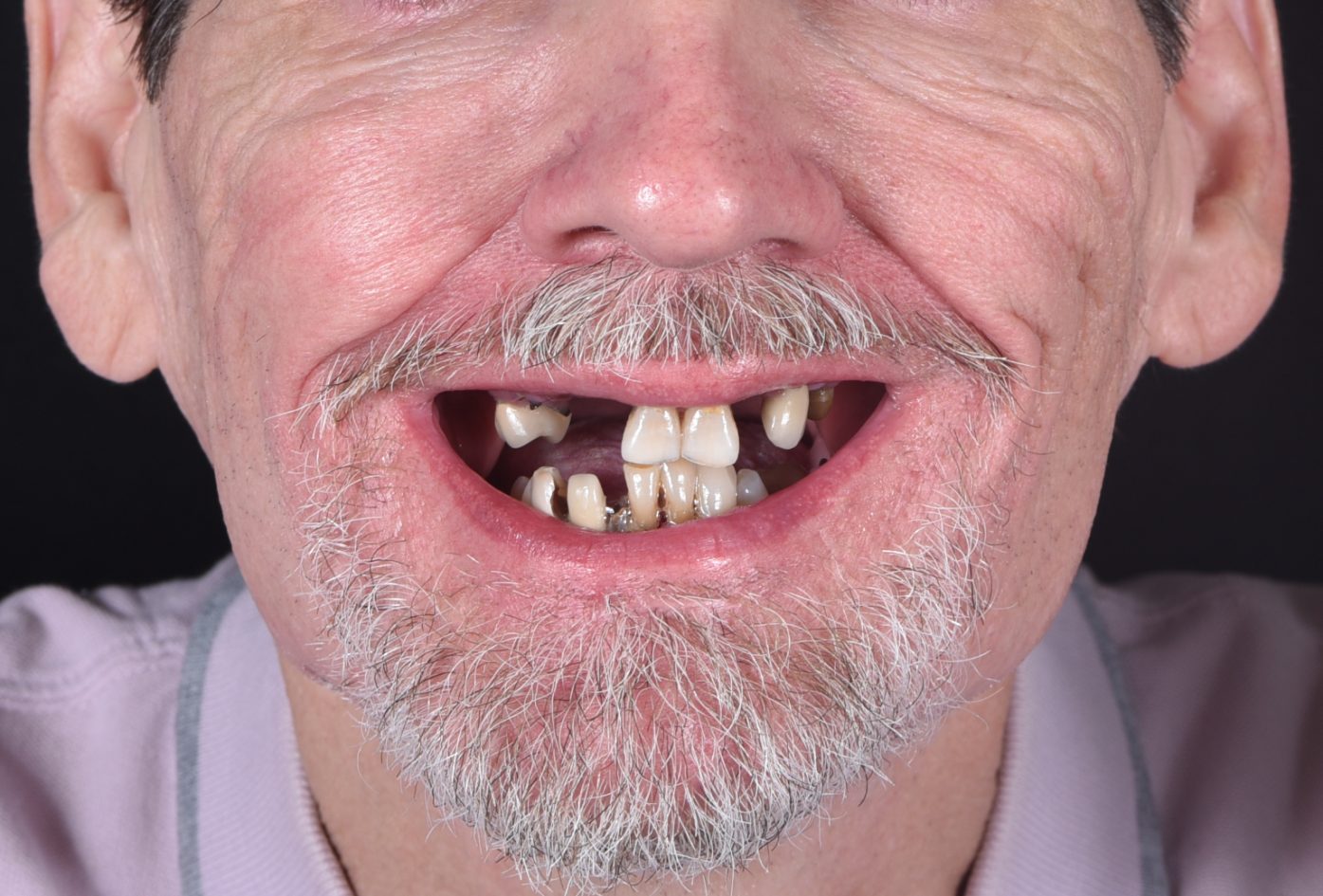
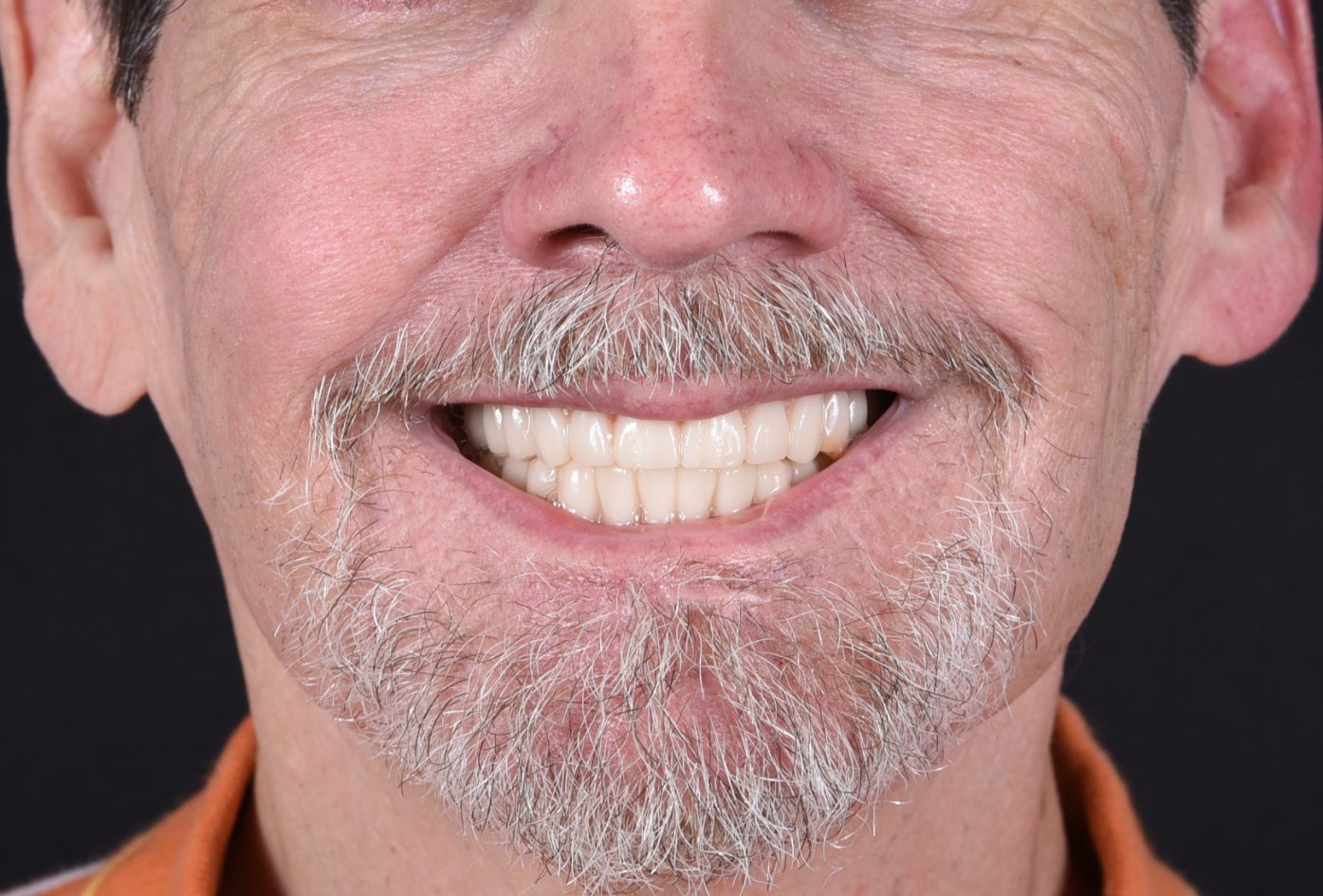
All-on-6 with zygomatic and pterygoid implants upper, all-on-4® lower, with monolithic zirconia.
Transparent Implant Pricing You Can Verify
We publish our implant fees and put them next to typical Glendale pricing so you can verify value. Estimates include implant, abutment, and crown unless noted. If grafting or sedation is required, it is itemized before you decide. Financing is available through CareCredit and Sunbit.
| Treatment | Our Price | Glendale Average | Savings | Benefits |
|---|---|---|---|---|
| Single Tooth Implant | $2,995 | $3,800–$4,500 | 20–30% | Permanent replacement, lifelike appearance, decades of durability |
| Multi-Tooth Implant Bridge | $5,995+ | $7,000–$9,000 | 25% | Replaces multiple teeth, non-removable, custom shade and contour |
| All-on-4® Full Arch | $10,999/arch | $13,000–$18,000 | 30–40% | Fixed, same-day prosthesis, designed and milled in-house |
| Porcelain (Zirconia) Upgrade | +$4,000/arch | +$6,000–$8,000 | 30% | Premium zirconia, enhanced esthetics, exceptional strength |
| Snap-In Implant Dentures | $5,995+ | $7,500–$10,000 | 25–35% | Removable overdenture, secure fit, easy maintenance |
| Zygomatic Implants | $25,000+ | $30,000–$40,000 | 15–25% | Anchored in cheekbones, for advanced bone loss cases |
*Local averages reflect quotes from West Valley providers and common national fee surveys. Your exact plan depends on bone, anatomy, and materials selected.
What's Included with your FREE Implant Consultation
- One-on-one consultation with one of our expert implantologists
- $390 Value, FREE for implant consultations
- Comprehensive financial planning
- Individual implant treatment plan custom tailored to your needs
- 3D x-rays of your jaws and teeth
- Expert guidance in discussing your options and answering your questions
See What Our Patients Are Saying
4.9 ★ (350+ reviews)
Affordable Financing Options
Dental implants are a significant investment in your health and self-confidence. Understanding the importance of this treatment, we offer the option to break down the investment into manageable monthly payments. This flexibility makes life-changing dental services more accessible, fitting comfortably into your budget. We collaborate with a range of financing providers to present payment plans that can cover the full or partial cost of your dental implant procedure. These options are particularly advantageous for all our patients, especially those managing a fixed income. With our flexible financing arrangements, you can achieve the benefits of a healthy, beautiful smile without financial stress.
Our Other Lending Partners



Replace your missing tooth with a stable, natural-looking implant. Book online or call us to schedule a consultation. We’ll review your scan, costs, and timing, then give you a clear plan.
Medical Review & Evidence
-
Author: Richard Dawson, DMD
- Medically Reviewed by: Dr. Richard Dawson, DMD
- Last Updated: November 8, 2025
- 9:00 am
The patient education on this page reflects current evidence for single-tooth implant therapy, including timing (immediate vs delayed), abutment and crown choices, esthetic-zone considerations, and maintenance.
Key references:
Jung RE, Pjetursson BE, Glauser R, Zembic A, Zwahlen M, Lang NP. A systematic review of the 5-year survival and complication rates of implant-supported single crowns. Clin Oral Implants Res. 2008;19(2):119-130. https://pubmed.ncbi.nlm.nih.gov/18067597/ PubMed+1
Abu Al-Faraj T M, Alsubhi B M, Almarhoon A N, et al. Comparison of Peri-Implant Soft Tissue Around Zirconia and Titanium Abutments in the Aesthetic Zone: A Narrative Review. Cureus. 2024;16(7):e65782. https://www.researchgate.net/publication/382703918_Comparison_of_Peri-Implant_Soft_Tissue_Around_Zirconia_and_Titanium_Abutments_in_the_Aesthetic_Zone?utm_source=chatgpt.com ResearchGate
The Fracture Resistance Comparison between Titanium and Zirconia Abutments on Single Implants. Materials. 2024; (PMC open-access). https://pmc.ncbi.nlm.nih.gov/articles/PMC11431843/ PubMed Central
Clinical effectiveness of Zirconia versus Titanium dental implants in single-unit or short-span prostheses: a systematic review and meta-analysis. Eur J Med Res. 2025; (Open-access). https://eurjmedres.biomedcentral.com/articles/10.1186/s40001-025-02488-5 BioMed Central
Survival and success of zirconia compared with titanium implants: a systematic review up to March 2022. (PMC open-access) https://pmc.ncbi.nlm.nih.gov/articles/PMC10630218/ PubMed Central
Clinical outcomes of zirconia implants: a systematic review and meta-analysis. Clin Oral Implants Res. 2023; (Springer). https://link.springer.com/article/10.1007/s00784-023-05401-8 link.springer.com
This content was reviewed by a licensed dentist to ensure accuracy and alignment with current implant dentistry literature.
Frequently Asked Questions
What is included in the $2,995 single-implant fee?
Implant fixture, stock or custom abutment when indicated, and a porcelain or zirconia crown. 3-D planning and CBCT are part of the exam phase; grafting or sedation, if needed, is itemized separately.
How long does a single implant take from start to finish?
Typical timelines are 3 to 6 months. Placement takes about 1 hour, the implant heals for 8 to 12 weeks on average, then we attach the abutment and crown after integration is confirmed.
Will I be without a tooth during healing?
Usually no. For front teeth we provide a cosmetic temporary option, such as an Essix or flipper. For molars we often leave the space during healing for strength and hygiene.
Do I always need bone grafting?
Not always. Many sites have enough bone for immediate placement. If the socket or ridge needs support, we add a small graft at placement or perform a minor ridge graft first.
How long do dental implants last?
With good hygiene and regular cleanings, implants have high long-term success. Many last decades. Risk increases with smoking, uncontrolled diabetes, and grinding without a guard.
What materials do you use for the implant and crown?
We place medical-grade titanium or titanium-alloy implants. Crowns are typically zirconia or porcelain fused to a strong substructure, selected for esthetics and bite forces.
Does it hurt? What anesthesia do you offer?
Placement is done with local anesthesia. Nitrous oxide, oral sedation, IV sedation, and general anesthesia are available based on your preference and medical history.
What are the risks or complications?
Infection, implant non-integration, nerve or sinus proximity issues, and peri-implantitis are possible but uncommon. We reduce risk with 3-D planning, guided surgery when indicated, and strict hygiene protocols.
Will insurance cover part of the implant?
Many plans contribute to the crown and abutment. Some contribute to the implant itself. We verify benefits up front and provide a written estimate with your out-of-pocket and financing options.
What are the different types of dental implants?
Modern care uses endosteal implants (titanium screws in bone) for single teeth and bridges. For severe bone loss, zygomatic or pterygoid implants anchor in cheekbone or posterior maxilla. Subperiosteal frames are rarely used now.
What is recovery like after implant surgery?
Mild soreness for 24–72 hours, usually managed with OTC pain control. Soft diet for a few days, normal brushing with care around the site, and a follow-up check in 1–2 weeks.
How do I care for a dental implant?
Brush twice daily, clean around the implant with floss or interdental brushes, wear a night guard if you grind, and keep 3–6 month maintenance visits. Tobacco and poor hygiene raise failure risk.
What are the benefits of a dental implant?
Fixed, natural look and feel, preserves bone where the tooth was lost, does not involve adjacent teeth, high long-term success with proper care.
How much will dental implants cost me?
A single tooth is $2,995 here at Smile Science Dental Spa. Multi-tooth bridges start at $5,995+. Snap-in overdentures start at $5,995+. Zygomatic solutions begin around $25,000+. Your written plan will itemize any grafting or sedation.
What do dental implants cost “per tooth”?
One implant with abutment and crown here is $2,995. Replacing three teeth with a two-implant bridge is usually more cost-effective per tooth than three separate implants.
Can I get “dental implants near me”?
We treat patients across Glendale and the West Valley. We offer free consultations for dental implants.
What about getting implants in Mexico to save money?
Prices can be lower, but factor in continuity of care, travel for adjustments, component compatibility, and warranty logistics. We offer fair, local pricing with clear follow-up and parts support.
What financing options are available?
Most patients use Cherry or Proceed Finance, some use Care Credit. We help you compare monthly payments vs paying in stages, with no surprises.
What is the average cost of a set of dental implants?
For full-arch fixed teeth, our fee is $10,999 per arch at Smile Science Dental Spa. Both arches are typically $21k–$26k depending on materials and case complexity. Your written plan will outline any grafting or sedation.
What is the downside to dental implants?
Upfront cost is higher than partials, and implants require excellent home care. Surgical risks include infection, non-integration, and peri-implant inflammation. Careful planning and maintenance keep risks low for most patients.
Do you have dental implant before-and-after photos?
Yes. See our implant case gallery for real patient results, including interim healing photos. We review similar cases during your consultation.
What are dental implants made of?
Most modern implants are made from medical-grade titanium, a biocompatible metal that bonds directly with bone through osseointegration. It’s been used safely in millions of patients worldwide for over 40 years.
Are there alternatives to titanium implants?
Yes. Zirconia implants are an all-ceramic, metal-free option designed for patients with metal sensitivities or strong esthetic preferences. They’re naturally white, making them appealing for front-tooth cases with thin gum tissue.
Which is better, titanium or zirconia implants?
For most patients, titanium is superior because it’s stronger under bite forces, less brittle, and offers more flexibility for restoration and maintenance. Titanium implants can be serviced if a screw loosens or a component wears, while zirconia implants are usually one-piece and harder to repair if damaged.
Why do dentists still prefer titanium implants?
Titanium has the most long-term clinical research, the broadest range of component options, and the lowest fracture rate. It integrates reliably even in softer bone and allows for two-piece designs, which means angled abutments and screw-retained crowns are possible.
When is zirconia a good choice?
Zirconia can be appropriate when:
The patient requests a metal-free implant after informed consent.
The soft tissue is very thin and could show a gray hue from titanium.
There’s a documented history of titanium sensitivity (very rare).
In most cases, a zirconia abutment on a titanium implant gives the same esthetic benefit with better strength and flexibility.
Are zirconia implants as strong as titanium?
Zirconia is extremely hard but brittle. It performs well in compression but can fracture under bending or twisting loads—especially in molar regions or full-arch applications. Titanium, by contrast, bends before it breaks and holds up better to long-term occlusal stress.
Can I have a reaction to titanium?
True titanium allergy is extremely uncommon. Most people who think they’re allergic to “metal” are reacting to nickel, cobalt, or chromium, not titanium. Still, if you’re concerned, patch testing or MELISA testing can help confirm.
Do zirconia implants look more natural?
Only in certain cases. Titanium implants already sit below the gum line, so the metal itself isn’t visible. In thin-tissue biotypes, using a zirconia abutment (the connector between implant and crown) provides the same natural translucency without switching to an all-zirconia fixture.
Are zirconia implants as customizable as titanium?
Not yet. Titanium systems come in many diameters, lengths, and connection types—including guided, short, and zygomatic options. Zirconia systems are newer and more limited in size, angulation correction, and prosthetic compatibility.
Which type does Smile Science Dental Spa use?
Dr. Dawson and Dr. Turke primarily place titanium implants for their proven strength and reliability. For patients requesting metal-free dentistry, Smile Science offers select zirconia implant systems when the case allows, ensuring both function and esthetics meet long-term standards.
Can I still get dental implants if I don’t have enough bone?
Yes, in most cases. At Smile Science Dental Spa, we perform bone grafting, sinus augmentation, and advanced implant techniques that rebuild or bypass areas of bone loss. Modern imaging allows us to measure bone density precisely and plan implants that are stable from day one.
What are my options if I was told I don’t have enough bone for implants?
Several proven solutions exist:
Bone grafting using natural or synthetic materials to rebuild volume.
Sinus lifts to create space for implants in the upper back jaw.
Zygomatic or pterygoid implants that anchor into the cheekbone, avoiding the need for grafts altogether.
All-on-4 or All-on-6 full-arch systems, which angle implants into denser bone and can support a full set of teeth even in severe bone loss.
How long after bone grafting can I get implants?
That depends on the graft type and area. Minor socket grafts may heal in 3–4 months, while larger ridge or sinus grafts often need 6–9 months for full integration. In some cases, we can place implants and grafts simultaneously if the bone is stable enough.
Are bone grafts safe?
Yes. Grafts are biocompatible materials—either processed donor bone, synthetic substitutes, or small samples from your own jaw. They’re sterilized and FDA-approved, and your body gradually replaces them with natural bone during healing.
What happens if I do nothing about bone loss?
Bone loss continues where teeth are missing, which can change facial contours and make future implant placement harder. Early grafting or implant placement helps preserve bone structure and facial support, reducing the need for more complex procedures later.
A confident smile starts with a single consultation.
Glossary & Terms
The connector that joins the implant fixture (in the bone) to the crown or bridge above the gums.
A full-arch restoration using four strategically angled implants to support a complete set of teeth without bone grafting.
A surgical procedure that adds or rebuilds bone to support dental implants.
The visible, tooth-shaped part placed over an implant or natural tooth for function and esthetics.
3-D imaging that lets your dentist measure bone density and plan precise implant placement.
The titanium or zirconia post surgically placed into the jawbone; the foundation of the implant.
The top surface of the implant fixture where the abutment connects.
An implant that receives a temporary crown on the same day it’s placed.
The biological process where bone cells attach directly to the implant surface, creating a stable bond.
An inflammatory condition around an implant that can lead to bone loss if untreated.
A long implant anchored into the pterygoid plate of the upper jaw for patients with extreme bone loss.
An implant that anchors into the cheekbone (zygoma) instead of the maxilla, often used when upper jaw bone is insufficient.
Accordion Content
A bone-grafting procedure that raises the sinus floor to allow implant placement in the upper back jaw.
Computer-aided implant placement using 3-D printed surgical guides for precision and reduced healing time.
A metal implant known for strength, reliability, and long-term success rates over decades of clinical use.
A metal-free, ceramic implant chosen for esthetics or metal sensitivity, though less flexible and more brittle.
A small screw that fastens the abutment to the implant; it can be replaced if worn or loose.
A design where the abutment is slightly narrower than the implant platform, reducing bone stress and improving soft-tissue stability.
A temporary crown or bridge placed on an implant during healing before the final prosthesis.
The amount of rotational force used when securing an implant or screw to ensure stability without over-tightening.
Our Implant Warranty
Real Protection, Not Hype
You’ve probably seen other implant centers advertising “lifetime warranties.” The reality is that those promises often sound better than they actually are. Dental implants can last many years, but they are medical devices that require ongoing care, and no one can guarantee a prosthesis for life.
We prefer to be clear and honest with you up front.
| What's Covered | How Long | What it Means | Your Part |
|---|---|---|---|
|
Implant Fixture (the titanium implant in bone) |
10 years | If the implant fails under normal use, we will replace the fixture. | Regular hygiene visits, good home care, proper nightguard use, no nicotine use, and follow your maintenance plan. |
|
Prosthetic Restoration
(bridge, full arch, or crown) |
5 years | Covers fractures or failures under normal use. We’ll repair or replace as needed. | Routine scheduled checks, report issues early, wear a night guard as prescribed. |
| Surgical Complications | 3 years | If a fixture fails early despite proper healing, we’ll replace it at no fee. | Follow post-op instructions and attend follow-up appointments. |
Why we don’t say “lifetime warranty”
- No dental prosthesis lasts forever without maintenance.
- Most “lifetime” promises exclude common causes of failure.
- If a clinic is sold or closes, those warranties typically disappear.
- Because trust matters. We believe being honest and transparent with our patients is the foundation of a long-term relationship built on real care, not marketing tactics.
Our approach
- Clear coverage and responsibilities.
- No hidden fine print.
- The same high standard of care years after treatment.
Bottom Line
You deserve a warranty that’s clear, not just clever wording. We choose transparency over marketing gimmicks, so you know exactly what’s covered, how long it’s covered, and what’s expected to keep it valid. Our patients trust us because we make straightforward promises and keep them.