
Glendale, Arizona
Traditional Dentures & Partials in Glendale, AZ
Services provided by an Arizona licensed general dentist.
Traditional dentures and partial dentures remain a reliable, affordable option for replacing missing teeth. SmileScience also offers implant-supported alternatives for patients who want a more secure, permanent solution.
Your Options for Replacing Missing Teeth
Every patient's situation is different. SmileScience presents every relevant option at your consultation -- including cost, timeline, and the honest trade-offs -- so you can make an informed decision.
Conventional Full Dentures
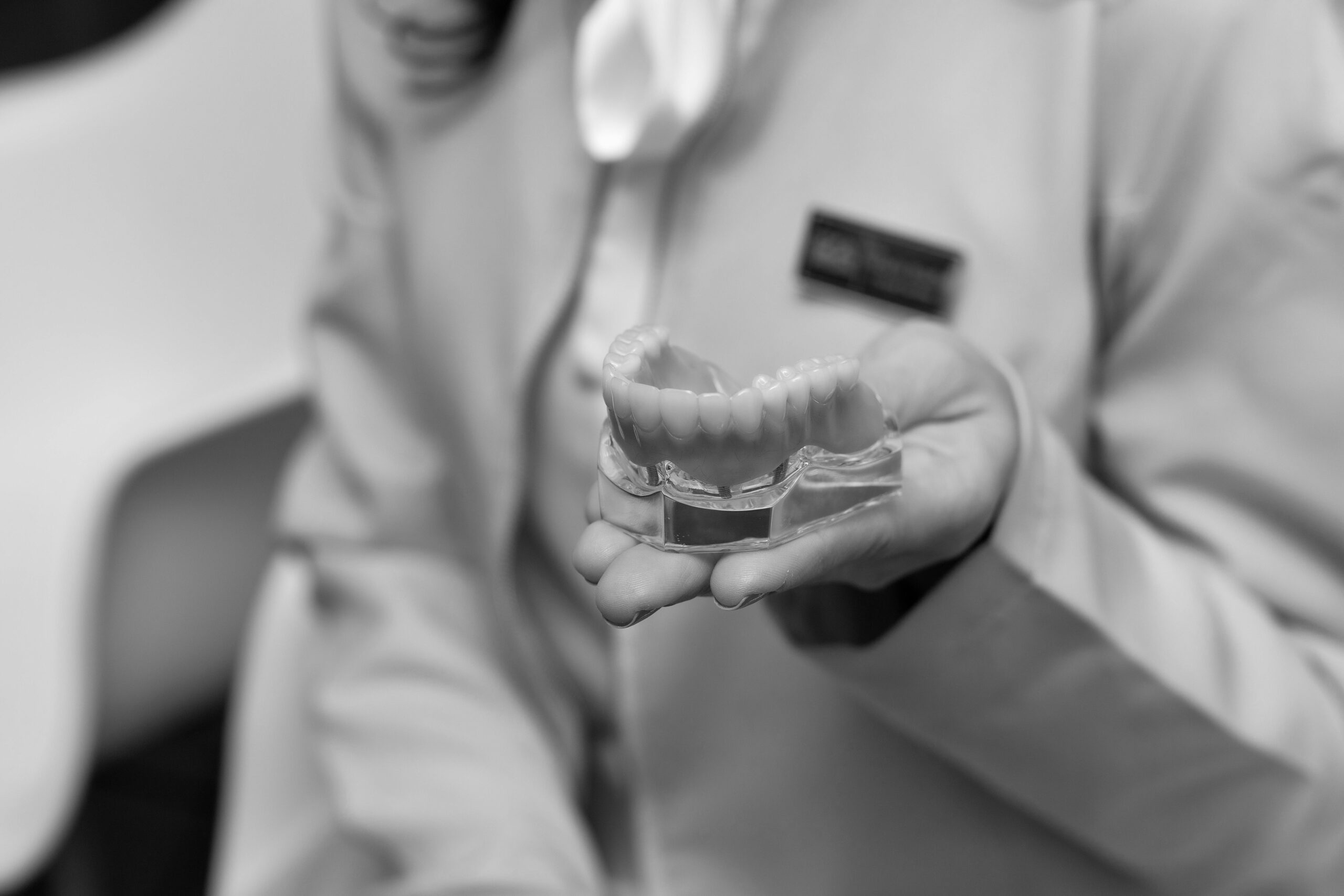
Custom-fabricated removable prosthetic that replaces an entire arch. Rests on the gum tissue. Most affordable option. Requires periodic adjustment as the jaw ridge changes over time. Best for patients who are not candidates for implants or who prefer the lower upfront cost.
Partial Dentures
Removable appliance that fills in the gaps left by several missing teeth while preserving the remaining natural teeth. Metal or acrylic framework. A practical solution when only some teeth are missing and existing healthy teeth are worth keeping.
Implant-Supported Options
Snap-in overdentures, fixed All-on-4, or All-on-6 restorations that attach to dental implants for stability and bone preservation. No slipping, no adhesives. Patients consistently report dramatically better confidence and chewing ability compared to conventional dentures. Higher upfront cost; lower long-term maintenance.
Conventional Dentures vs. Implant-Supported Dentures
What Conventional Dentures Don't Tell You About Your Bone
This is not a sales pitch -- it's clinical information every denture patient deserves to understand before making a long-term decision.
When teeth are lost, the bone that once supported those roots begins to resorb. A conventional denture rests on the gum tissue, providing no mechanical stimulus to prevent this process. Over years and decades, the ridge flattens and shrinks. This is why dentures lose their fit over time and why long-term denture wearers often develop a distinctive change in facial appearance -- the lower third of the face collapses inward as the bone support disappears.
This progression is not a reason to avoid conventional dentures when they are appropriate -- but it is a reason to understand the full picture, plan ahead, and know that your options narrow as bone loss advances.
With a Conventional Denture
- Bone continues to resorb beneath the denture
- Fit requires relining every 2-3 years
- Full replacement typically needed every 5-10 years
- Long-term bone loss can limit implant options later
- Denture adhesives may become necessary over time
With Implant-Supported Options
- Implants stimulate bone and prevent further resorption
- Stability does not depend on adhesives
- Long-term maintenance is lower-cost than repeated relines
- Facial support is preserved over time
- Snap-in overdentures starting from $5,995/arch
The bottom line: If you are choosing a conventional denture because of budget or health reasons today, that is a completely valid choice. If you are choosing it because you think implants are out of reach, we encourage you to ask us about financing at your consultation. Many patients are surprised by how affordable snap-in overdentures are on a monthly payment basis -- particularly when weighed against a decade of relines and replacements.
Step 1: Consultation & Records
Step 2: Impressions & Bite Registration
Step 3: Try-In Appointment
Step 4: Processing & Fabrication
Step 5: Delivery & Adjustment
Step 6: Ongoing Maintenance
Ongoing

Ready for Something More Permanent?
Conventional dentures are a reliable foundation -- but many patients eventually upgrade to implant-supported options for better stability, bone preservation, and confidence. SmileScience offers all three levels as part of our implant dentistry program.
Snap-In Overdentures
Removable denture that locks onto 2-4 implants. Dramatically more stable than a conventional denture. Most affordable implant option. Starting from $5,995/arch.
Learn MoreAll-on-4 Fixed Bridge
Fixed, non-removable full arch on four implants. Feels and functions like natural teeth. Milled zirconia bridge. Starting from $10,999/arch.
Learn MoreAll-on-6 Fixed Bridge
Six implants for added support and distribution of bite forces. Preferred when bone volume allows maximum stability. Starting from $12,999/arch.
Learn MoreMedical Review & Evidence

Conventional dentures and partial dentures remain evidence-supported solutions for tooth replacement when implant therapy is not indicated or when patients prefer a lower upfront cost. Understanding the clinical trade-offs helps patients make informed decisions.
- Conventional dentures provide functional restoration of chewing and speech for the majority of edentulous patients, with patient satisfaction rates above 70% in population studies -- though satisfaction with stability and comfort is significantly higher with implant-supported alternatives.[1]
- Bone resorption under a conventional denture continues at a rate of approximately 0.5-1mm per year in the first decade. This progressive ridge change is the primary driver of declining fit and the need for periodic relining and eventual replacement.[2]
- Immediate dentures placed on the day of extraction allow patients to avoid an edentulous period entirely, with reline or replacement typically required at 6-12 months once ridge remodeling stabilizes.[3]
- Implant-supported overdentures (snap-in dentures using 2-4 implants) demonstrate statistically significant improvements in quality of life, chewing efficiency, and patient satisfaction compared to conventional complete dentures in multiple randomized controlled trials.[4]
- Awad MA, et al. Implant overdentures versus conventional dentures: effect on patient satisfaction. J Dent. 2014;42(5):507-516.
- Tallgren A. The continuing reduction of the residual alveolar ridges in complete denture wearers. J Prosthet Dent. 1972;27:120-132.
- Saeidi Pour R, et al. Immediate denture prosthetics: clinical recommendations. J Prosthodont. 2019;28:e24-e37.
- Thomason JM, et al. Two implant retained overdentures -- a review of the literature supporting the McGill and York consensus statements. J Dent. 2012;40(1):22-34.
Individual treatment outcomes vary based on anatomy, bone quality, systemic health, and compliance with care protocols. A written treatment plan and cost estimate are provided at the free consultation.
4.9 (437 reviews)
I recently had the pleasure of visiting Smile Science Dental Spa, and I couldn't be more impressed with the level of care and service provided by the entire team. Dr. Dawson and Dr. Turke are both incredibly skilled and made me feel completely at ease throughout my procedures. Their professionalism, combined with their gentle approach, made me feel comfortable and well-informed every step of the way. I was especially impressed that I was able to get a same-day crown(apparently their first ever!), which exceeded my expectations. I couldn’t believe how quick and seamless the process was. It really saved me time and made the experience even more convenient. Cindiray and Angeles, the dental assistants, were equally wonderful. They were not only friendly and attentive but also thorough in explaining everything and made sure I was relaxed during each phase of my visit. Lastly, a big thank you to Litzy at the front desk, who greeted me with a smile and helped with scheduling and any questions I had. She made the entire check-in process a breeze. From start to finish, my experience at Smile Science Dental Spa was exceptional. I'll be returning for sure. I highly, highly, highly recommend them for anyone looking for high-quality dental care.
View Full Review on GoogleDusty

Honestly I’ve never been so happy to go to the dentist. I came in (late due to Lyft) and was still taken care of and treated with care. Even without insurance (kicking in within the next month) prices for an extraction on my infected tooth were more than reasonable. I was able to get more than expected done in the same visit. Dr. Dawson and his team made me feel so comfortable and taken care of. Won’t go anywhere else.
View Full Review on GoogleCherish B

I recently started as a patient after leaving our long-time family Dentist and couldn’t be happier! Marcela is AMAZING and a FANTASTIC hygienist!!!! 😃 Dr Dawson is great too! Every time I visit, they make me feel like family.
View Full Review on GoogleTJ Winzeler

Myself and my family had previously gone to Dr. Turk at another dental office that he worked at. He had relocated and we did not know where he had gone to until this week. Today I got in with Dr. Turk and he took the time to look at my x-rays carefully . I was having pain from a tooth and some other issues. The previous Dentist I went to that I saw just a few days earlier, he did not find any issues with my tooth which I had pain in. Dr. Turk identified infection and referred me to an endodontist. He is very gentle as a wonderful disposition and my self and my family are thrilled to be able to get back with him. The office is lovely, relaxing music, heat and massage chair.I have always been very nervous and some anxiety going to dentist as I have had bad reactions with the anesthesia. I am confident that Dr. Kirk will help me get through my next appointment just fine. “The staff are very kind and attentive. I am looking forward as I have quite a bit of work to be done, and I know I’m in good hands with Dr. Turk and his staff. Five stars!⭐️ Sherry
View Full Review on GoogleSherry Redmond

I recently moved to Arizona and had an issue with a tooth repair from 15 years back. Not knowing anyone here in my new home, I searched dentists close to me. I chose Smile Science much like pinning the tail on the donkey and my selection couldn't have been better! What a terrific staff! Dr. Turke was concerned the tooth would need to be extracted, but said he wanted to take a shot at saving it..and that's just what he did! After setting a temporary crown, I was on my way with an appointment to install the permanent crown in the following two weeks. That evening I received a call I've never received from a dentist. Dr. Turke had taken the time to follow up with me to make sure I wasn't in any discomfort..I was completely caught off guard by this kind of attention to detail and caring for my well being. The permanent crown is now in place, it fits and feels fantastic, the job and treatment are first class! Thank you, Dr. Turke and staff for taking in this stray and giving me a home dentist! I'd like to say that I'm just good at selecting blindly, but the truth is I am very lucky..and I'll take lucky over being good any day of the week! Thank you, again and Happiest of New Year's in 2026, Science Smile!!
View Full Review on GoogleEddy

Frequently Asked Questions
Conventional dentures typically require four to six weeks from impressions to delivery. This time allows for proper fitting appointments, bite adjustments, and laboratory fabrication. If extractions are needed first, additional healing time is required before the final denture is made. A temporary immediate denture can be placed the same day as extractions to avoid going without teeth during the healing period.
At Smile Science, conventional complete dentures start at $1,500 per arch and partial dentures start at $1,000. Snap-in implant overdentures start at $5,995 per arch and fixed All-on-4 bridges start at $14,999 per arch. Your exact cost depends on your specific anatomy, the type of denture selected, and whether any preparatory procedures are needed. A written cost estimate is provided at your free consultation before any work is scheduled.
A full denture replaces an entire arch of missing teeth and rests on the gum tissue. A partial denture fills in gaps left by several missing teeth while preserving remaining healthy natural teeth, using metal or acrylic clasps to anchor to adjacent teeth. Which type you need depends on how many teeth remain and whether those teeth are healthy enough to support a partial appliance.
Remove your dentures daily and clean them with a soft brush and denture cleaner -- regular toothpaste is too abrasive. Rinse thoroughly before reinserting. Store them in water or denture solution overnight to prevent warping. Clean your gums and remaining natural teeth with a soft brush. Regular professional cleanings and check-up appointments ensure proper fit over time.
Well-maintained conventional dentures typically last 5 to 10 years before needing replacement. Over time, the jawbone and gum ridge change shape due to bone resorption, causing the denture to lose fit. A denture reline -- adding material to the tissue side -- can restore fit and extend lifespan. Most patients need relining every 2 to 3 years and full replacement within a decade.
Most dentists recommend removing dentures at night to allow gum tissue to rest. Sleeping with dentures in for extended periods is associated with increased risk of gum irritation, pressure sores, and accelerated bone loss under the denture. If you are uncomfortable going without them at night, discuss this with Dr. Dawson -- there are solutions that protect tissue health while providing coverage.
An immediate denture is a temporary denture fabricated before your extractions so it can be placed the same day your teeth are removed. This means you never go without teeth during the healing period. Because the ridge changes shape significantly in the first months of healing, immediate dentures typically require relining or replacement with a permanent denture once healing is complete.
In many cases, yes -- but the timing matters. Bone loss begins immediately after teeth are removed and accelerates over time. Patients who delay implant placement for years may require bone grafting to create enough bone volume. If implants are on your long-term radar, starting the conversation early gives you more options and often lower cost.
Properly fitted dentures should not cause pain during normal use. New dentures often require an adjustment period of several weeks as the mouth adapts, and minor sore spots are common during this time. We schedule adjustment appointments as part of every denture delivery. If you experience persistent pain or pressure sores, please contact us -- most fit issues are easily resolved with a chairside adjustment.
No. Smile Science is 100% owned by Dr. Dawson and Dr. Turke, two practicing dentists. There are no outside investors, no private equity involvement, and no management company directing clinical decisions. Both owners practice here full time. In a DSO or corporate chain, treatment recommendations can be influenced by investor returns, production quotas, or rotating providers who do not know your history. At Smile Science, the people making your treatment decisions are the same people whose names are on the practice. They are the doctors you will see at your appointment.
Denture Pricing in Glendale, AZ
Transparent starting prices. Exact cost confirmed after your free consultation and evaluation.
Financing available through CareCredit, Cherry, Sunbit, and Proceed Finance. A written cost estimate is provided at your free consultation before any work is scheduled. For a full implant pricing breakdown, see our Implant Costs & Financing guide.
Free Consultation -- All Options Presented
We will review your bone, bite, and budget and present every option -- conventional, snap-in, and fixed implant -- with honest cost and outcome comparisons.