
Glendale, Arizona
Apicoectomy in Glendale, AZ
Services provided by an Arizona licensed general dentist.
When a root canal has not fully resolved an infection -- or when retreatment is not technically feasible -- an apicoectomy saves the tooth by surgically removing the infected root tip and sealing it from the outside. Dr. Dawson performs apicoectomies in-house at SmileScience, with CBCT imaging and sedation available for complex cases.
Root-End Surgery
What Is an Apicoectomy?
An apicoectomy is a minor surgical procedure that accesses the tip of a tooth root through the gum and bone, removes the infected root tip, and seals the canal from the outside with a biocompatible material.
The term comes from the Latin apex (root tip) and the Greek ektome (excision). During the procedure, typically 3mm of the root tip is removed along with the surrounding infected tissue. The canal is then cleaned ultrasonically and sealed with a material such as mineral trioxide aggregate (MTA) -- a biocompatible compound that promotes healing and provides a bacteria-resistant seal that works from the outside in.
The procedure is performed when conventional root canal treatment has not resolved periapical pathology and retreatment is not feasible or has already failed. The goal is to eliminate infection while preserving the tooth structure -- keeping your natural tooth in place rather than extracting it.
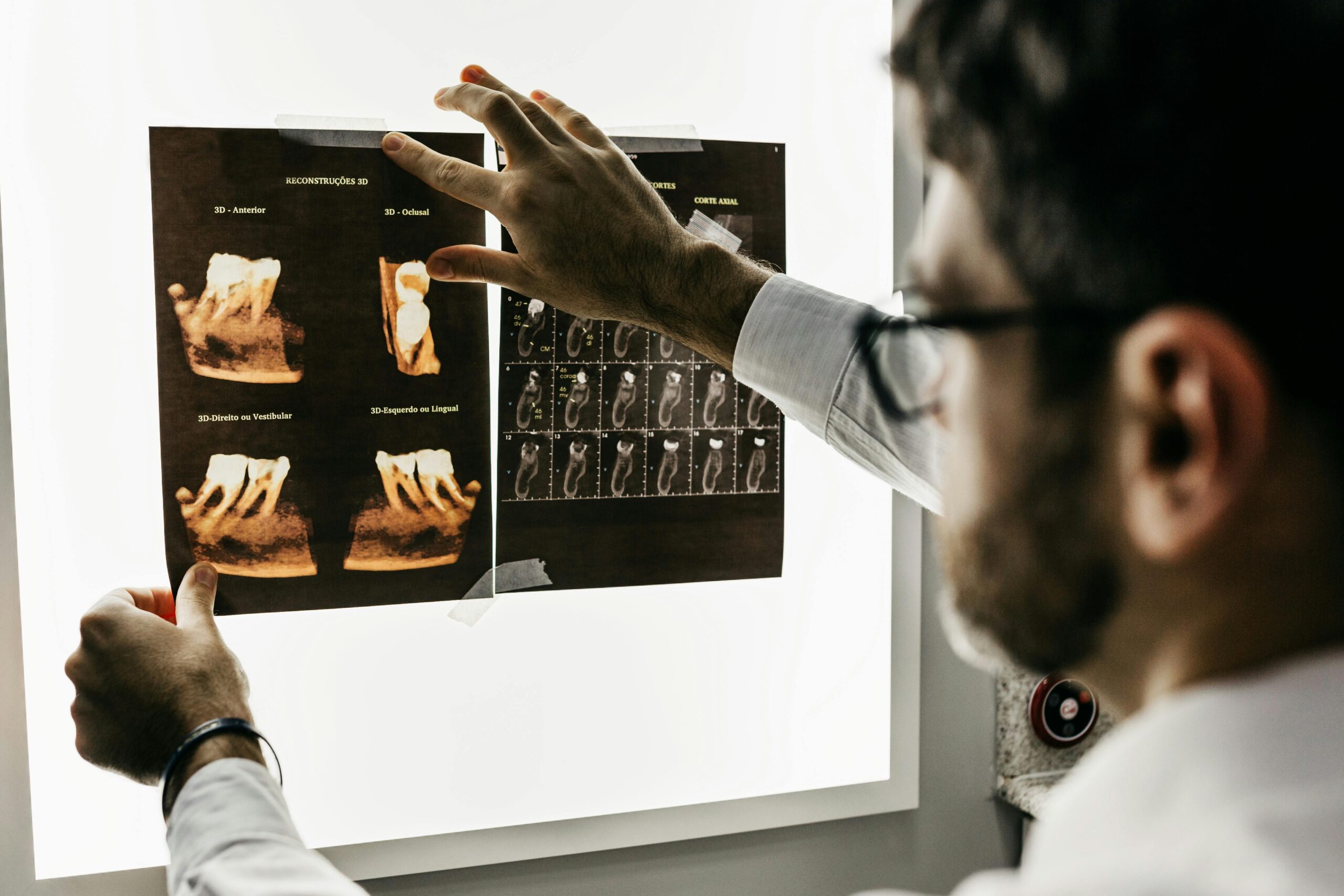
At SmileScience Dental Spa in Glendale, every apicoectomy case begins with a CBCT 3D scan to assess the root anatomy, the extent of the lesion, and the proximity to adjacent structures. Dr. Dawson reviews this imaging with you at the consultation and explains the treatment plan in detail before any procedure is scheduled.
An apicoectomy is often the last option before extraction for a tooth that has persistent infection despite endodontic treatment. When the anatomy or access makes retreatment impractical -- a post, calcified canal, complex curvature -- approaching the problem from the root tip directly is frequently the most predictable solution.
-- Richard Dawson, DMD
Indications for Surgery
When Is an Apicoectomy Needed?
These are the most common clinical scenarios that make an apicoectomy the recommended next step after initial root canal treatment.
Persistent Infection After Root Canal
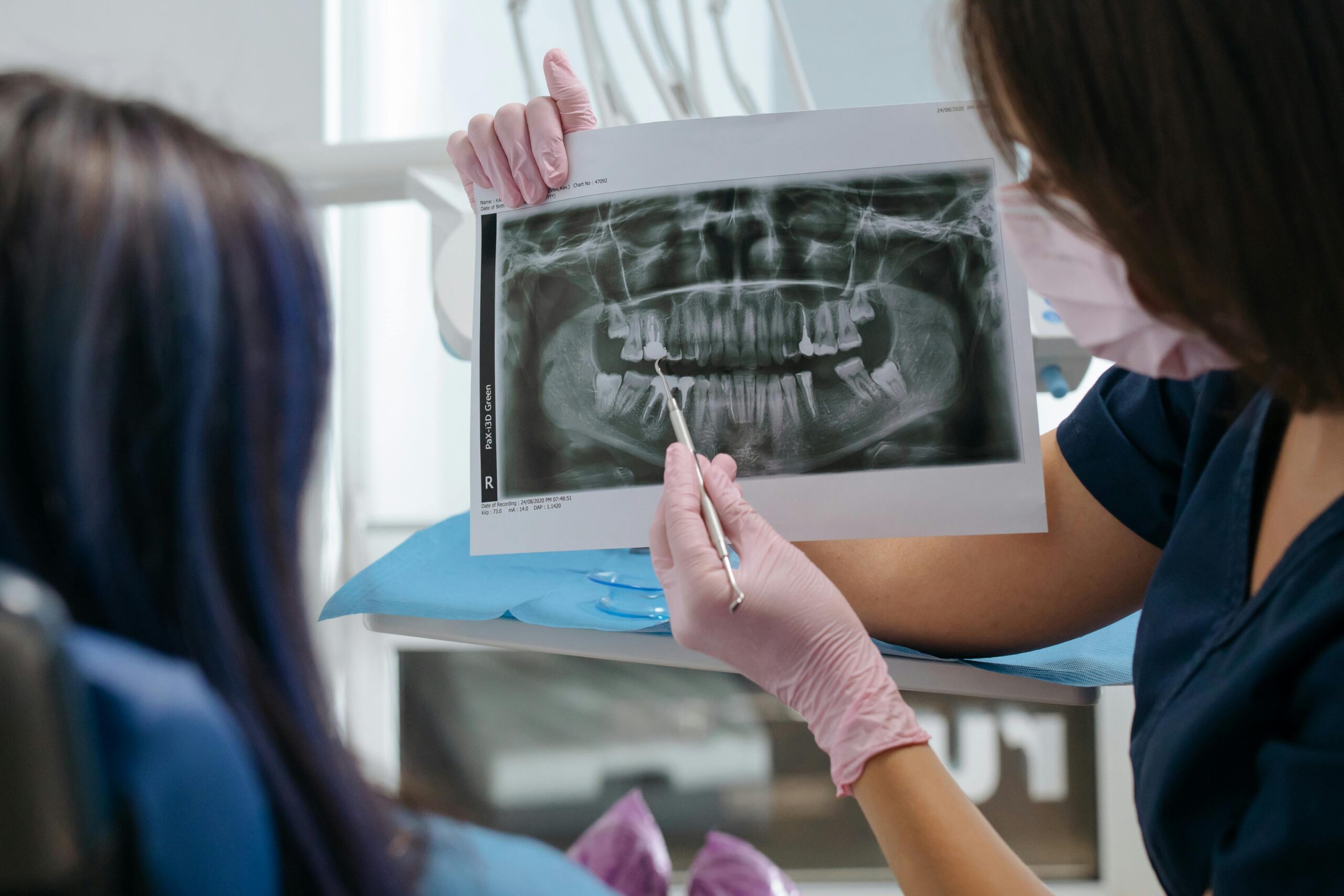
The most common indication. If periapical pathology (infection at the root tip, visible as a dark area on X-ray) does not resolve after root canal treatment or a first retreatment, surgical access to the root tip allows direct removal of infected tissue and a retrograde seal.
Retreatment Not Feasible
When a post or buildup prevents safe retreatment through the crown, when the canal is heavily calcified and cannot be negotiated again, or when the original root filling is adequate but a missed canal or lateral anatomy is the source of infection, apicoectomy allows targeted treatment without disturbing the existing restoration.
Root Fracture at the Tip
A vertical or horizontal fracture confined to the apical portion of the root can sometimes be addressed by resecting the fractured segment rather than extracting the tooth. Dr. Dawson uses CBCT imaging to assess fracture extent and determine whether resection alone will leave a structurally viable root.
Biopsy of Periapical Lesion
When imaging reveals a periapical lesion of uncertain nature, the apicoectomy approach allows simultaneous curettage and biopsy of the lesion. This provides both treatment and a tissue specimen for pathological evaluation -- important whenever a lesion does not have the typical appearance of a simple periapical granuloma or cyst.
Choosing the Right Approach
Apicoectomy vs. Root Canal Retreatment
Two surgical pathways exist for a tooth with persistent periapical infection. Dr. Dawson reviews your specific case and CBCT imaging to determine which approach offers the best outcome for your tooth.
Root Canal Retreatment
When preferred:
- ✓ No post or buildup blocking access through the crown
- ✓ Canal anatomy is accessible and negotiable
- ✓ First-time retreatment with a missed canal suspected
- ✓ Coronal seal failure is the likely cause of reinfection
- ✓ No complex apical curvatures or calcification
Retreatment works from the top down -- the existing filling material is removed, the canal is re-cleaned and re-shaped, and the tooth is resealed. It is the preferred first-line option when the canal can be safely renegotiated and the coronal access is not blocked.
Apicoectomy
When preferred:
- ✓ Post or crown makes retreatment through the crown too risky
- ✓ Canal is calcified and cannot be renegotiated
- ✓ Retreatment has already been attempted and failed
- ✓ Root fracture confined to the apical 3mm
- ✓ Periapical lesion requires biopsy for definitive diagnosis
Apicoectomy works from the bottom up -- the root tip is surgically accessed, the infected segment is removed, and the canal is sealed retrograde. It preserves the existing crown and post while addressing the source of infection directly.
Neither approach is universally superior. Dr. Dawson reviews your imaging and clinical history at the consultation and explains which option he recommends for your specific tooth -- along with the reasoning and expected success probability. You make the final decision with complete information.
What to Expect
An apicoectomy is an outpatient procedure. Here is the typical sequence at SmileScience Dental Spa in Glendale, AZ.
Dr. Dawson reviews your existing endodontic treatment history and takes a CBCT 3D scan to assess root anatomy, the extent of periapical pathology, proximity to adjacent structures, and the feasibility of surgical access. CBCT is standard for apicoectomy planning -- 2D periapical X-rays often underestimate lesion size and do not show anatomy in three dimensions. You review the images together and discuss the findings before any procedure is scheduled.
Consultation and Pre-Surgical Imaging
Treatment Planning and Sedation Selection
A surgical plan is created based on imaging findings, including which root(s) are involved, the resection length, and the retrograde seal approach. Most apicoectomies are performed comfortably under local anesthesia. IV sedation administered by a board-certified dental anesthesiologist is available for anxious patients or multi-rooted cases requiring more time. You choose your sedation preference at the consultation.
A small flap is made in the gum tissue adjacent to the affected tooth, and a small window is created in the overlying bone to access the root apex. The surrounding inflamed tissue and abscess (if present) are completely curetted from the site. The tissue is often sent for biopsy to confirm the nature of the lesion.
Surgical Access
Root Resection and Retrograde Seal
Approximately 3mm of the root tip is removed with a surgical bur -- this eliminates the most complex apical canal anatomy (deltas, lateral canals, fins) that conventional RCT cannot clean. The resected root face is prepared ultrasonically. The canal is sealed with MTA or biocompatible cement that seals against bacterial ingress from the outside and is well-tolerated by periapical tissue.
The flap is repositioned and sutured. You receive written post-operative instructions, analgesics if needed, and a prescription for chlorhexidine rinse. A follow-up appointment at 1 to 2 weeks confirms initial healing. Radiographic evidence of bone fill at the resection site is assessed at 6 months, with progressive healing visible over 12 to 18 months.
Closure, Instructions, and Follow-Up

After Your Procedure
Apicoectomy Recovery
Most patients manage recovery comfortably with over-the-counter analgesics and return to normal activity within 2 to 3 days.
- Mild swelling and bruising around the treated area for 2 to 4 days
- Ice packs in 20-minute intervals during the first 24 hours to control swelling
- Ibuprofen and acetaminophen alternated every 3 to 4 hours manages most discomfort
- Soft diet for 3 to 5 days -- avoid chewing on the treated side
- Sutures removed or self-dissolving at 1 to 2 weeks
- Avoid aggressive rinsing, spitting, or smoking for 48 to 72 hours
- Mild tenderness on biting the tooth may persist for several weeks -- this is normal and resolves
Radiographic healing (bone fill) takes 6 to 18 months. The tooth is considered successfully treated if symptoms resolve and imaging shows progressive bone fill at the resection site. Success rates for apicoectomy performed under appropriate indications exceed 90 percent in published literature.
When to call us: Contact SmileScience Dental Spa if you experience worsening pain after day 3 rather than improving, fever, pus or foul taste at the site, or facial swelling that is increasing. These require prompt evaluation and are uncommon but should not be ignored.
Pricing and Coverage
Apicoectomy Cost in Glendale, AZ
Apicoectomy fees depend on the tooth involved, the number of roots requiring treatment, the sedation option chosen, and the complexity of the pre-surgical imaging and planning. A complete written estimate is provided at your consultation.
What Drives Cost Variation
Single-rooted anterior teeth (incisors, canines) involve less surgical complexity than posterior multi-rooted teeth (premolars, molars). CBCT imaging is a separate fee when required for surgical planning. IV sedation adds cost for anesthesiologist time, monitoring, and medications. Cases requiring biopsy submission for pathological analysis add a laboratory fee. Dr. Dawson itemizes every component so you understand exactly what you are paying for before any treatment is confirmed.
Insurance Coverage
Most dental PPO plans that include oral surgery or endodontic surgery benefits cover apicoectomy. Coverage typically ranges from 50 to 80 percent of the allowed fee after your deductible. Some plans classify apicoectomy under endodontic surgery rather than surgical extractions -- the applicable provision matters for benefit calculation. We recommend requesting a pre-authorization from your insurer before scheduling. Our front desk handles this process and reviews both dental and medical benefits when applicable.
Financing available: CareCredit and Sunbit financing are accepted at SmileScience Dental Spa, offering extended payment plans for patients who want to spread the cost over time. Same-day approval is typically available. When you consider that the alternative to apicoectomy is often extraction followed by an implant -- a substantially higher cost -- many patients find that the investment in saving the natural tooth is straightforward to justify.
Medical Review & Evidence

Apicoectomy performed under appropriate indications has a well-documented success rate exceeding 90 percent. Outcome is influenced by tooth selection, quality of the retrograde seal, extent of pre-surgical pathology, and patient healing response. Use of MTA as a retrograde material and CBCT for pre-surgical planning improve outcomes compared to older techniques.
- Setzer FC, et al. Outcome of endodontic surgery: a meta-analysis of the literature -- Part 1: Comparison of traditional root-end surgery and endodontic microsurgery. J Endod. 2010. PubMed -- Meta-analysis showing success rates greater than 91% for modern microsurgical apicoectomy versus 59% for traditional techniques; demonstrates the benefit of ultrasonic retrograde preparation and MTA sealing.
- Kim S, Kratchman S. Modern endodontic microsurgery concepts and technology: A mini review. J Endod. 2006. PubMed -- Review of ultrasonic retrograde preparation and MTA as standard of care in contemporary apicoectomy; outcomes data supporting modern surgical techniques.
- Patel S, et al. New dimensions in endodontic imaging: Part 2. Cone beam computed tomography. Int Endod J. 2009. PubMed -- CBCT imaging for pre-surgical root anatomy assessment reduces complications and improves surgical planning accuracy compared to conventional periapical radiography.
Apicoectomy FAQs
A root canal treats the inside of the tooth -- the nerve and pulp tissue are removed through the crown, the canals are cleaned and shaped, and the tooth is sealed from the top down. An apicoectomy treats the outside -- a small incision is made in the gum, the root tip is surgically removed, and the canal is sealed from the bottom up. Apicoectomy is used when root canal treatment has not resolved infection or when retreatment through the crown is not feasible.
The procedure itself is not painful. The area is fully anesthetized before any instrument is used, and IV sedation administered by our board-certified dental anesthesiologist is available if you prefer deeper relaxation. Post-operative discomfort is typically mild to moderate -- similar to a surgical extraction -- and is managed well with ibuprofen and acetaminophen. Most patients are surprised that recovery is more manageable than expected given the surgical nature of the procedure.
Published success rates for apicoectomy performed with modern techniques -- ultrasonic retrograde preparation and MTA seal -- exceed 90 percent. The procedure has a well-established track record in the endodontic literature. Patient-specific factors that influence outcome include the extent of pre-surgical pathology, the quality of the existing root canal filling, and individual healing capacity. Dr. Dawson will give you an honest assessment of expected success based on your specific case and imaging findings.
If periapical pathology does not resolve after apicoectomy, the remaining options are typically observation with retreatment of the apicoectomy itself (uncommon), or extraction of the tooth followed by implant placement. Before recommending apicoectomy, Dr. Dawson evaluates whether the expected success probability justifies the procedure versus moving directly to implant replacement -- he will share his honest recommendation and explain the reasoning.
A single-rooted tooth (incisors, canines) typically takes 45 to 75 minutes. Multi-rooted teeth or cases with complex anatomy may take up to 90 to 120 minutes. You will receive a time estimate when you schedule, based on the specific tooth and imaging findings.
Most dental plans that include oral surgery or endodontic surgery benefits cover apicoectomy. Coverage typically ranges from 50 to 80 percent of the allowed fee after your deductible. We recommend requesting a pre-authorization from your insurance carrier before scheduling so you have a clear estimate of your out-of-pocket cost. Our front desk can assist with the pre-authorization process and will review both dental and any applicable medical benefits.
We do not quote fees without reviewing the specific tooth and CBCT findings, because the scope varies considerably between a single-rooted anterior tooth and a multi-rooted posterior case requiring IV sedation. A complete written estimate with every fee itemized is provided at your consultation before you make any decisions. Financing through CareCredit and Sunbit is available for patients who want to spread the cost over time.
Conventional 2D periapical X-rays show the tooth in one plane and often underestimate the size and true extent of periapical lesions. CBCT 3D imaging shows the root anatomy, the lesion dimensions, and the proximity to critical structures (adjacent roots, the maxillary sinus, the inferior alveolar canal) in all three dimensions. This information directly affects surgical planning -- which approach angle, how much bone to remove, and whether a particular tooth is a good candidate for apicoectomy versus extraction. At SmileScience, Dr. Dawson uses CBCT as a standard part of apicoectomy planning for all cases.
What Our Patients Say
4.9 (437 reviews)
I recently had the pleasure of visiting Smile Science Dental Spa, and I couldn't be more impressed with the level of care and service provided by the entire team. Dr. Dawson and Dr. Turke are both incredibly skilled and made me feel completely at ease throughout my procedures. Their professionalism, combined with their gentle approach, made me feel comfortable and well-informed every step of the way. I was especially impressed that I was able to get a same-day crown(apparently their first ever!), which exceeded my expectations. I couldn’t believe how quick and seamless the process was. It really saved me time and made the experience even more convenient. Cindiray and Angeles, the dental assistants, were equally wonderful. They were not only friendly and attentive but also thorough in explaining everything and made sure I was relaxed during each phase of my visit. Lastly, a big thank you to Litzy at the front desk, who greeted me with a smile and helped with scheduling and any questions I had. She made the entire check-in process a breeze. From start to finish, my experience at Smile Science Dental Spa was exceptional. I'll be returning for sure. I highly, highly, highly recommend them for anyone looking for high-quality dental care.
View Full Review on GoogleDusty

Honestly I’ve never been so happy to go to the dentist. I came in (late due to Lyft) and was still taken care of and treated with care. Even without insurance (kicking in within the next month) prices for an extraction on my infected tooth were more than reasonable. I was able to get more than expected done in the same visit. Dr. Dawson and his team made me feel so comfortable and taken care of. Won’t go anywhere else.
View Full Review on GoogleCherish B

I recently started as a patient after leaving our long-time family Dentist and couldn’t be happier! Marcela is AMAZING and a FANTASTIC hygienist!!!! 😃 Dr Dawson is great too! Every time I visit, they make me feel like family.
View Full Review on GoogleTJ Winzeler

Myself and my family had previously gone to Dr. Turk at another dental office that he worked at. He had relocated and we did not know where he had gone to until this week. Today I got in with Dr. Turk and he took the time to look at my x-rays carefully . I was having pain from a tooth and some other issues. The previous Dentist I went to that I saw just a few days earlier, he did not find any issues with my tooth which I had pain in. Dr. Turk identified infection and referred me to an endodontist. He is very gentle as a wonderful disposition and my self and my family are thrilled to be able to get back with him. The office is lovely, relaxing music, heat and massage chair.I have always been very nervous and some anxiety going to dentist as I have had bad reactions with the anesthesia. I am confident that Dr. Kirk will help me get through my next appointment just fine. “The staff are very kind and attentive. I am looking forward as I have quite a bit of work to be done, and I know I’m in good hands with Dr. Turk and his staff. Five stars!⭐️ Sherry
View Full Review on GoogleSherry Redmond

I recently moved to Arizona and had an issue with a tooth repair from 15 years back. Not knowing anyone here in my new home, I searched dentists close to me. I chose Smile Science much like pinning the tail on the donkey and my selection couldn't have been better! What a terrific staff! Dr. Turke was concerned the tooth would need to be extracted, but said he wanted to take a shot at saving it..and that's just what he did! After setting a temporary crown, I was on my way with an appointment to install the permanent crown in the following two weeks. That evening I received a call I've never received from a dentist. Dr. Turke had taken the time to follow up with me to make sure I wasn't in any discomfort..I was completely caught off guard by this kind of attention to detail and caring for my well being. The permanent crown is now in place, it fits and feels fantastic, the job and treatment are first class! Thank you, Dr. Turke and staff for taking in this stray and giving me a home dentist! I'd like to say that I'm just good at selecting blindly, but the truth is I am very lucky..and I'll take lucky over being good any day of the week! Thank you, again and Happiest of New Year's in 2026, Science Smile!!
View Full Review on GoogleEddy

Related Services at Smile Science Dental Spa
Questions About Apicoectomy?
Dr. Dawson offers apicoectomy consultations at SmileScience Dental Spa in Glendale, AZ. If you have persistent symptoms after a root canal or have been told retreatment is not possible, call or book online -- he will review your imaging and give you a clear assessment of your options before any procedure is scheduled.