Glendale, Arizona

Dental Exam in Glendale, AZ

A comprehensive dental exam at SmileScience is more than a quick look -- it is a full diagnostic evaluation using digital X-rays, 3D CBCT imaging, periodontal charting, and oral cancer screening. We find problems before they become expensive ones.

Written by Richard Dawson, DMD ICOI Fellow Reviewed by John Turke, DMD DMD Updated April 2026
Comprehensive New Patient Exam X-rays, oral cancer screening, full charting
400+ Five-Star Reviews Google & Yelp combined
Digital X-Rays + CBCT 3D Imaging Advanced diagnostic technology
Same-Day Appointments Available For new patients and emergencies

What a Comprehensive Dental Exam Includes

The SmileScience new patient exam is thorough by design. We use every visit to build a complete picture of your oral health -- not just look for cavities.

Medical and Dental History Review

We review your full health history, current medications, and any dental concerns. Systemic conditions, medications, and lifestyle factors all affect oral health and shape our clinical recommendations.

Full Periodontal Charting

Our hygienist measures pocket depths at six points around every tooth. These readings are the most reliable indicator of gum disease and guide whether you need a routine cleaning or a deeper therapeutic treatment.

Digital X-Rays

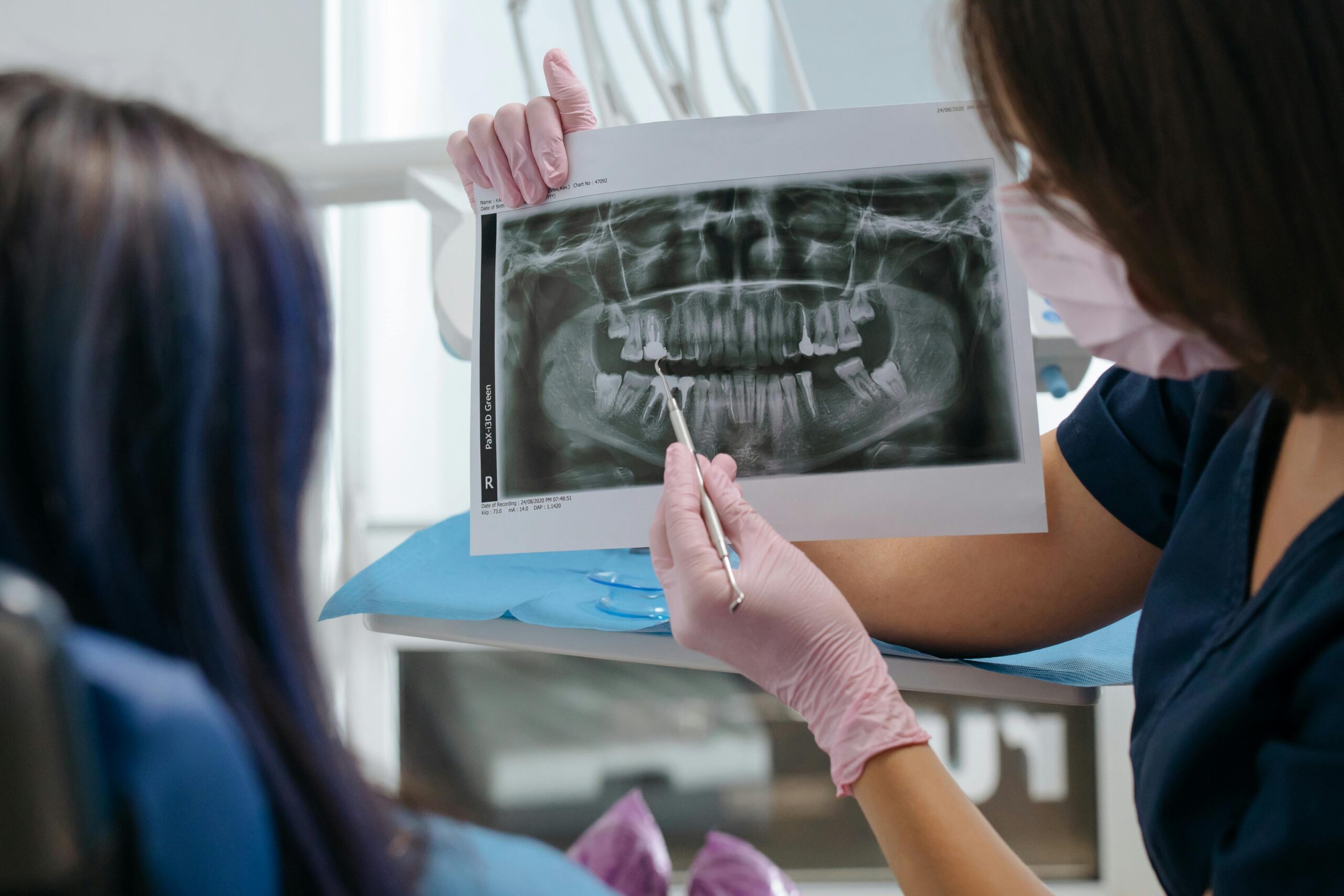
New patients receive a full series of digital X-rays including bitewing images and a panoramic. Digital X-rays use 80% less radiation than traditional film and produce sharper, instantly reviewable images we can show you on-screen.

Clinical Examination

The doctor evaluates every tooth for decay, cracks, wear, and structural problems. We also assess your bite alignment, the condition of existing restorations, and any missing teeth that may affect your long-term oral health.

Oral Cancer Screening

We perform a visual and tactile examination of all soft tissues -- lips, cheeks, tongue, floor of mouth, palate, and throat -- to identify abnormal tissue changes at the earliest possible stage, when treatment outcomes are best.

Treatment Plan Discussion

After the exam, we walk you through every finding and present a clear, prioritized treatment plan. Nothing is scheduled without your understanding and agreement. We believe informed patients make better decisions.

New Patient Exam vs. Recall Exam

These two exam types serve different purposes. Here is what distinguishes them.

New Patient Comprehensive Exam

  • Full medical and dental history intake
  • Comprehensive periodontal charting (all teeth)
  • Full-mouth digital X-rays including panoramic
  • CBCT 3D scan if implants or complex evaluation needed
  • Complete clinical exam with intraoral camera documentation
  • Oral cancer screening
  • Full treatment plan presentation
  • Time: approximately 90 minutes

Recall (Maintenance) Exam

  • Health history update (changes since last visit)
  • Periodontal charting at recommended intervals
  • Bitewing X-rays (typically every 12 -- 24 months)
  • Clinical examination and restoration review
  • Oral cancer screening
  • Treatment plan updates as needed
  • Hygiene cleaning (same appointment)
  • Time: approximately 60 minutes

How Often Do You Need a Dental Exam?

The answer depends on your individual oral health risk profile. The "every six months" guideline is a reasonable default for most patients, but it is not a universal rule.

Every 3 -- 4 Months

Patients with active or recently treated gum disease, dry mouth from medications, uncontrolled diabetes, a history of frequent cavities, or high sugar dietary intake.

Every 6 Months (Standard)

Most adults with healthy gums, low to moderate cavity risk, and consistent home care. This is the correct interval for the majority of patients.

Annually

A small subset of patients with consistently excellent periodontal health, low cavity risk, and a proven record of strong home hygiene may qualify for annual exams. This is the exception, not the default.

We determine the right exam frequency for you based on your clinical findings, not a billing schedule. If you qualify for annual exams, we will tell you.

Digital X-Rays

We use fully digital radiography for all X-rays at SmileScience. Digital sensors deliver up to 80% less radiation than traditional film while producing sharper, higher-resolution images. The images are available on-screen within seconds and can be enlarged, enhanced, and shared with specialists instantly.

New patients receive a full-mouth series including bitewing X-rays (which show the contact areas between teeth where decay most commonly hides) and a panoramic image (which captures the entire jaw, roots, and bone levels in a single exposure).

At recall appointments, we take bitewing X-rays at intervals determined by your cavity risk -- typically every 12 months for higher-risk patients and every 24 months for lower-risk patients. We do not X-ray at every single visit.

What we look for on your X-rays

  • -- Cavities between teeth (interproximal decay)
  • -- Decay beneath existing fillings or crowns
  • -- Bone loss from periodontal disease
  • -- Root infections or abscesses
  • -- Unerupted or impacted teeth
  • -- Jaw bone quality for implant planning
  • -- Cysts, abnormal lesions, or early pathology

CBCT 3D Imaging -- When We Recommend It

Cone beam CT (CBCT) imaging produces a three-dimensional scan of your jaw, teeth, bone, and anatomy in a single rotation. It is not required for every patient, but it is invaluable when we need information that a flat X-ray simply cannot provide.

When We Order a CBCT Scan

  • -- Implant treatment planning (bone volume, nerve position, sinus proximity)
  • -- Complex extractions (impacted wisdom teeth, root proximity to nerves)
  • -- Bone graft evaluation before or after surgery
  • -- Root canal evaluation in complex cases
  • -- TMJ assessment and joint evaluation
  • -- Suspected pathology requiring 3D visualization

What 3D Imaging Shows That 2D Cannot

  • -- Exact bone width and height at a proposed implant site
  • -- Precise location of the inferior alveolar nerve
  • -- Sinus floor anatomy and proximity to roots
  • -- Root fractures not visible on flat film
  • -- Three-dimensional jaw joint anatomy
  • -- Cyst or lesion extent in three dimensions

CBCT scans are not ordered routinely -- only when the diagnostic benefit justifies the additional exposure. We will always explain why we are recommending one and answer your questions before proceeding.

Oral Cancer Screening at Every Exam

Oral cancer screening is included at every comprehensive exam and recall visit at SmileScience. The examination takes only a few minutes, is completely painless, and can be life-saving. Oral cancer is highly treatable when caught at an early stage -- but it is often painless in its earliest phases, which means patients may not notice anything on their own.

We perform a visual and tactile exam of the lips, inside cheeks, gums, tongue (top, sides, and underside), floor of the mouth, palate, and the throat area. We are looking for any tissue changes -- red or white patches, ulcers that have not healed, thickened areas, or lumps -- that warrant closer evaluation.

Risk factors we discuss with patients

-- Tobacco use (smoking or smokeless)

-- Alcohol use, particularly combined with tobacco

-- HPV (human papillomavirus) infection

-- Prolonged sun exposure to the lips

-- Age 40 and older

-- Personal or family history of oral cancer

What Happens If We Find a Problem

If we identify anything that needs attention during your exam, we will walk you through exactly what we found, show you the evidence (X-rays, intraoral photos, charting numbers), explain your options, and give you a clear written treatment plan with associated fees before any work is scheduled.

There is no pressure. We present treatment in order of clinical priority -- what is urgent, what is important to address soon, and what we can monitor -- and let you make decisions on your own timeline. If you want a second opinion on anything we recommend, we respect that completely. Clear communication and transparency are core to how we practice.

1

We explain what we found and why it matters

Using X-rays, intraoral photos, and plain language -- not jargon -- we show you the clinical evidence behind every recommendation.

2

We present your options

Most situations have more than one approach. We explain the tradeoffs clearly so you can make a decision that fits your goals and budget.

3

We give you a written fee estimate before any work

Treatment fees and insurance coverage estimates are presented in writing before you commit to anything. No surprises at checkout.

Diagnostic Technology at SmileScience

Digital X-Rays

80% lower radiation than traditional film. Instant, on-screen review with enlargement and enhancement tools. Images archived and accessible at every future visit.

CBCT 3D Scanner

Full three-dimensional jaw and bone imaging for implant planning, complex extractions, and detailed anatomy evaluation. On-site -- no referral to an imaging center.

Intraoral Camera

High-resolution camera that shows the inside of your mouth on a chairside monitor in real time. We can show you exactly what we see, including cracks, staining, and early decay that is difficult to photograph otherwise.

Digital Impressions (iTero / Trios)

Optical scanner captures precise 3D models of your teeth without traditional impression material -- more comfortable, faster, and dimensionally accurate for crowns, aligners, and restorations.

Your First Visit at SmileScience

New patient appointments at SmileScience are scheduled for approximately 90 minutes to allow enough time for a complete exam, X-rays, charting, and a thorough conversation about your oral health and goals. Rushing a new patient exam means missing things -- we do not do that.

What to bring

  • -- A list of current medications and dosages
  • -- Your dental insurance card (if applicable)
  • -- Any recent X-rays from a previous dentist (if available)
  • -- A photo ID
  • -- Any questions or concerns you want to address

What to expect

  • -- Approximately 90 minutes total
  • -- Intake forms available online before your visit
  • -- X-rays, charting, and full clinical exam
  • -- Cleaning on the same visit when appropriate
  • -- Written treatment plan before you leave
  • -- No pressure to start treatment immediately
New Patient Information What to Expect

What Our Patients Say

4.9 (437 reviews)

What Does a Dental Exam Cost?

The comprehensive dental exam at SmileScience starts from $89 for patients without insurance. This includes the exam, full periodontal charting, and digital X-rays. Most PPO dental plans cover the new patient exam and X-rays at 80 -- 100% with minimal or no out-of-pocket cost.

For patients without coverage, our dental membership plan covers two exams and two cleanings per year for a flat annual fee. Financing is available for any recommended treatment identified during the exam. Learn about patient financing.

Interactive gum disease assessment

How healthy are your gums?

Walk through the same questions a dentist asks during a periodontal exam — bleeding, recession, mobility, bone loss on X-ray, risk factors. We’ll compare your answers to the five AAP stages of gum disease and tell you when to be seen.

  • 9questions
  • ~2minutes
  • 5AAP stages
  • In-househygienist

Created by Dr. Richard Dawson, DMD · Reviewed by Dr. John Turke, DMD · AAP 2018 staging criteria · No login

Not a diagnosis. Only a dentist can stage gum disease using probing depths, bone levels on X-ray, and a clinical exam. If you have pain, pus, loose teeth, or facial swelling, call (480) 530-3663 now.

Reference

The five AAP stages of gum disease

The 2018 AAP classification replaces "mild/moderate/severe" with four numbered stages plus gingivitis. Each stage is defined by clinical attachment loss, bone levels on X-ray, and tooth mobility. The stage-defining signs are on the left; the description and standard treatment are on the right.

Stage-defining signs

  • Gums bleed occasionally when brushing or flossing
  • Gums look red, puffy, or tender
  • No bone loss on X-ray
  • No measurable attachment loss

Gingivitis

Inflammation limited to the gum tissue with no damage to the underlying bone. Fully reversible with a professional cleaning and improved home care. The most common form of gum disease.

Treated with Professional cleaning and improved home care →

Stage-defining signs

  • Bleeding on brushing or flossing most of the time
  • Up to 2 mm of gum recession from the gumline
  • Early bone loss visible on X-ray
  • No loose teeth

Stage I — Mild Periodontitis

Mild but measurable bone loss (1 to 2 mm attachment loss). Not reversible, but highly controllable with scaling and root planing followed by regular maintenance.

Treated with Scaling and root planing →

Stage-defining signs

  • Consistent bleeding on brushing or flossing
  • 3 to 4 mm of gum recession
  • Moderate bone loss on X-ray
  • No tooth mobility yet

Stage II — Moderate Periodontitis

Moderate bone and attachment loss (3 to 4 mm). Requires deeper cleaning (scaling and root planing) and close monitoring. Without treatment, progression to Stage III is likely.

Treated with Deep cleaning and periodontal maintenance →

Stage-defining signs

  • Significant gum recession (5 mm or more)
  • One or more loose teeth
  • Significant bone loss on X-ray
  • Pus, pain, or abscess around a tooth

Stage III — Severe Periodontitis

Severe bone loss (5 mm or more) with tooth mobility and potential tooth loss. Requires active periodontal therapy — often including surgical intervention. Tooth preservation is the goal, but some teeth may not be salvageable.

Treated with Periodontal surgery and osseous therapy →

Stage-defining signs

  • Multiple loose or shifting teeth
  • Changes in how your bite fits together
  • Teeth have drifted, flared, or spread apart
  • History of multiple tooth loss from gum disease

Stage IV — Very Severe Periodontitis

The most advanced stage: extensive bone loss with masticatory dysfunction (difficulty chewing). Full-mouth rehabilitation combining periodontal surgery, implants, and prosthetic reconstruction is often required.

Treated with Full-mouth periodontal rehabilitation →

Frequently Asked Questions

The SmileScience new patient exam includes a complete medical and dental history review, full periodontal charting, digital X-rays (bitewings and panoramic), a clinical examination of every tooth, an oral cancer screening, bite and wear assessment, and a written treatment plan discussion. If your gum health allows, a cleaning is often performed on the same visit. The appointment is scheduled for approximately 90 minutes.

Most patients benefit from an exam every six months. Patients with active gum disease, elevated cavity risk, dry mouth, or certain systemic conditions may need to be seen every three to four months. Patients with excellent long-term oral health and low clinical risk may qualify for annual exams. We determine the right interval for you based on your clinical findings at each visit.

Yes. Digital X-rays produce up to 80% less radiation than traditional film X-rays and are considered extremely low-risk. For context, the radiation from a full set of dental X-rays is comparable to a few hours of normal background radiation exposure from the environment. We take X-rays at clinically appropriate intervals -- not at every visit -- and we follow established ADA guidelines for frequency based on your individual risk factors.

We accept most major PPO dental insurance plans. Most plans cover two exams per year at 100% with no out-of-pocket cost. X-rays and cleanings are typically covered at 80 -- 100% as well. If you are uninsured, our in-house membership plan covers two exams and cleanings per year along with discounts on all other services. Call us and we will verify your benefits before your appointment.

You are not alone and you will not be judged. Many patients come to us having not seen a dentist in several years, sometimes more than a decade. Our approach is to assess exactly where you are, explain what we find, and create a realistic plan to get your oral health on track. The first appointment is a conversation, not a lecture. The most important thing is making the call.

4.9 (437 reviews)

Schedule Your Dental Exam in Glendale, AZ

New patient exams are scheduled for 90 minutes. We accept most insurance and offer same-week appointments for new patients. Call or book online today.

{ "@context": "https://schema.org", "@type": "MedicalProcedure", "name": "Comprehensive Dental Exam", "description": "Comprehensive dental examination at SmileScience Dental Spa in Glendale, AZ. Includes digital X-rays, periodontal charting, oral cancer screening, and CBCT imaging.", "performedBy": { "@type": "Dentist", "name": "SmileScience Dental Spa", "telephone": "+14805303663", "aggregateRating": {"@type":"AggregateRating","ratingValue":"4.9","reviewCount":"430","bestRating":"5"}, "address": { "@type": "PostalAddress", "streetAddress": "20118 N 67th Ave, Ste 308", "addressLocality": "Glendale", "addressRegion": "AZ", "postalCode": "85308", "addressCountry": "US" } } }