

Dental Implant Costs Near Me
Discover the average dental implant costs in Glendale, AZ, and find out how you can enhance your smile…
Read Article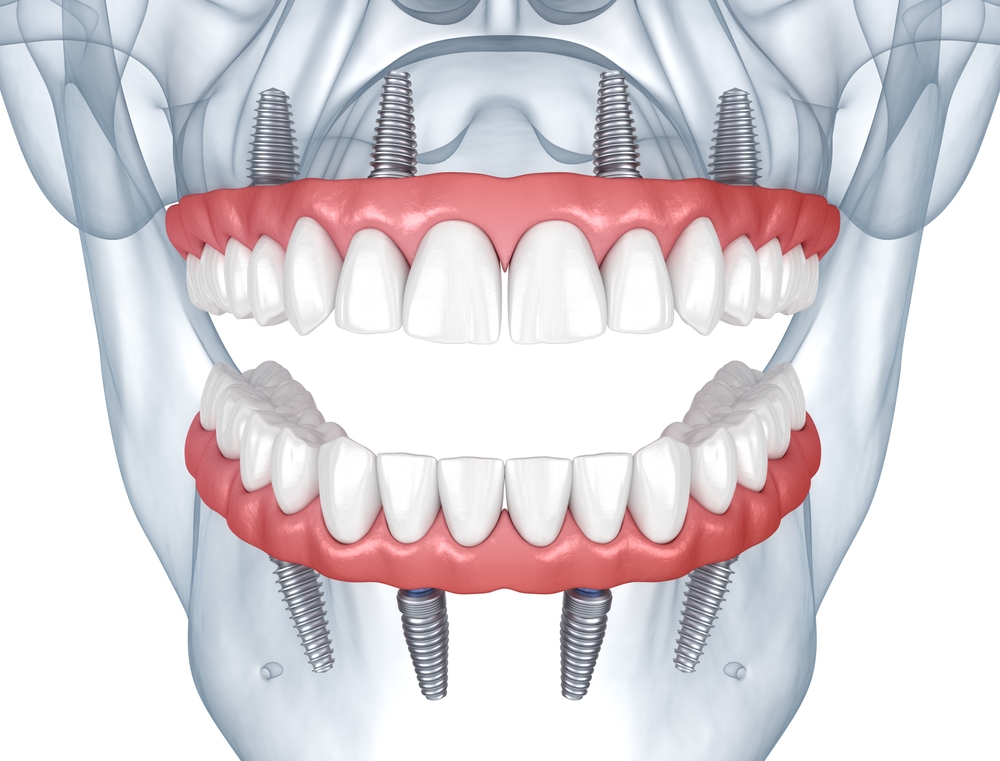
Glendale, Arizona
Full-Arch Teeth-in-a-Day Treatment. Free consultations include same-day CBCT scan, photography, & treatment planning.
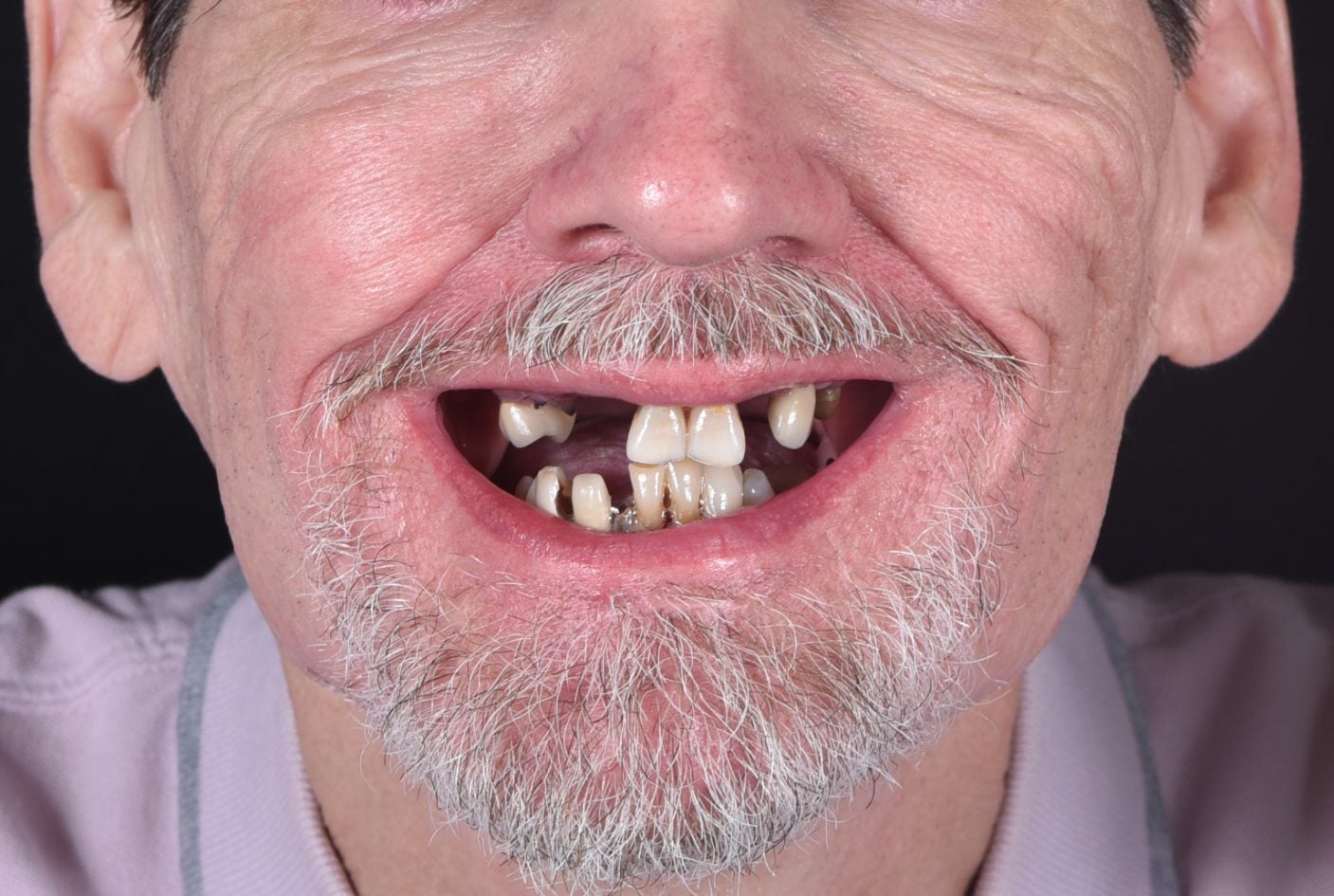
All-on-4® is an innovative dental procedure designed to provide a permanent, full-arch restoration for individuals with missing teeth. This solution combines the latest in dental technology with advanced surgical techniques to offer a comprehensive and efficient treatment option. Here's what you need to know:
All-on-4 dental implants provide a revolutionary solution for those looking to restore their smile and dental function efficiently and effectively. This procedure represents a significant advancement in dental care, offering hope and improved quality of life for many. Even if you don't need a full-arch restoration, you can benefit from our single or multi-tooth dental implants in Glendale, AZ for individual tooth replacement.
Missing teeth are more than just a cosmetic concern — they can lead to a range of oral health complications if left untreated. When a tooth is lost and not replaced, the jawbone in that area begins to deteriorate, a process called bone resorption. Over time, this bone loss can weaken the foundation for your remaining teeth, making them more vulnerable to shifting, loosening, or even falling out.
Untreated tooth loss can also cause your remaining teeth to drift out of alignment, leading to bite problems, jaw discomfort, and difficulty chewing. These changes may affect your ability to eat a balanced diet, potentially resulting in poor nutrition and impacting your overall health. Additionally, gaps in your smile can lead to changes in facial appearance and speech, while also affecting self-confidence and social interactions.
Common complications of untreated tooth loss include:
Addressing tooth loss promptly helps prevent these complications and supports long-term oral and overall health.
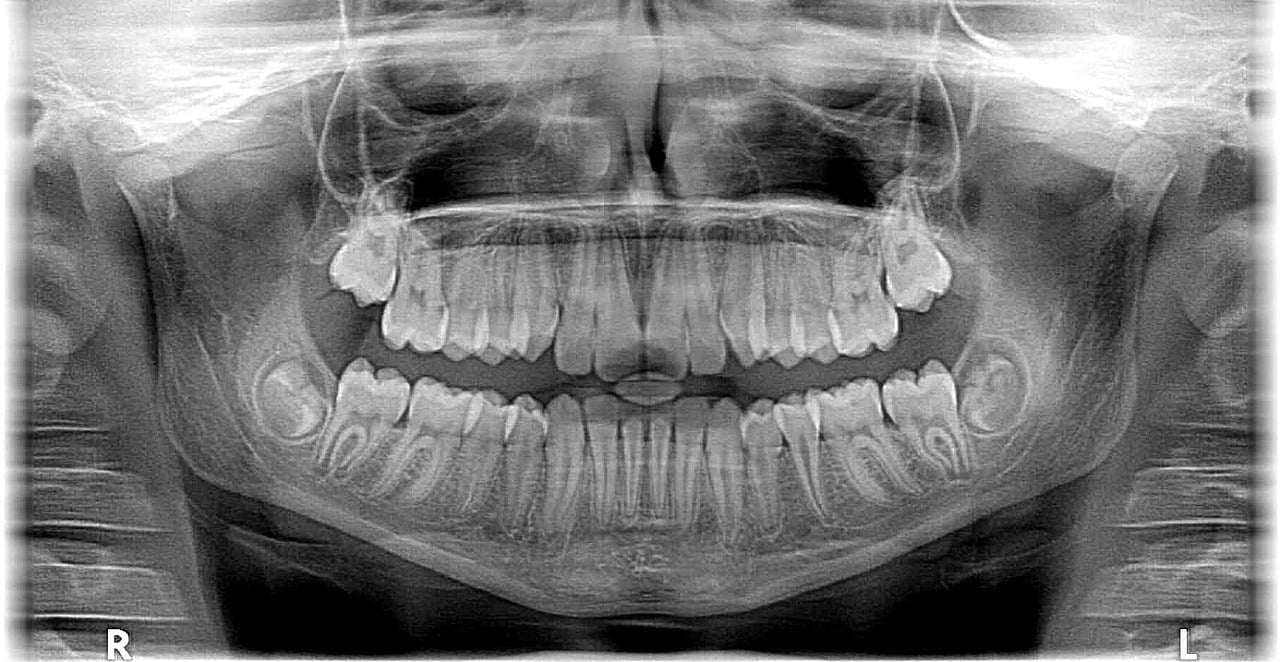
Assess suitability for All-on-4®, discuss goals, and review medical history. We'll take a 3D scan and evaluate bone levels to plan your treatment.
Finalize treatment plan, take mouth impressions, and discuss anesthesia options. You'll meet your surgical team and confirm your smile design.
Place the dental implants into the jawbone. In most cases, you will leave with a healing denture. Most patients leave the same day with a natural-looking temporary smile.
Monitor healing and address any immediate post-surgical concerns. Discomfort is usually mild and controlled with medication.
Allow 3–6 months for osseointegration, where the implants bond with the jawbone. During this time you'll wear your secure provisional bridge.
Take mouth impressions / scans for the permanent teeth. These are custom-crafted for ideal esthetics and bite.
Replace the temporary teeth with the permanent, custom-made teeth. We ensure comfort, function, and a seamless new smile.
Ensure the health of the implants and the surrounding tissue. We clean under the bridge and confirm implant stability.
| Material Type | Description | Strength & Longevity | Esthetics | Maintenance | Cost Tier |
|---|---|---|---|---|---|
| Acrylic Hybrid Bridge | A titanium bar substructure covered in high-impact acrylic teeth and pink composite gum. Lightweight and repairable. | Durable but can wear over time (average 5–8 years). | Natural appearance, slightly less lifelike than porcelain. | Easy to repair or re-polish; requires professional cleaning. | $$ |
| Zirconia Bridge | Solid monolithic zirconia or layered porcelain over zirconia for maximum strength. | Extremely strong and chip-resistant (10–15+ years). | Highly lifelike translucency, best for esthetics. | Harder surface; requires professional cleanings to maintain polish. | $$$ |
| PMMA (Provisional Bridge) | Used during the healing phase while implants integrate. Digitally designed and milled in-office. | Short-term use (3–6 months). | Esthetic and comfortable for temporary use. | Replaced after final prosthesis delivery. | Included. (Replaced at final prosthesis delivery) |
All materials are biocompatible, designed for comfort, and fabricated to meet FDA and ADA standards. During your consultation, we'll show you real examples so you can see and feel the difference in weight, gloss, and realism before making your choice.

If you're seeking a lasting solution for significant tooth loss, All-on-4® implant dentures at Smile Science Dental Spa may be ideal. Our team is committed to making this transformative procedure accessible and affordable. We offer financial options to work within your budget, ensuring that excellent dental care is within reach. With our expertise in delivering exceptional clinical outcomes, we're equipped to serve patients with diverse dental needs. Let's explore how All-on-4® can restore your smile and confidence!
Your free consultation includes a same-day CBCT scan, photography, and a personalized treatment plan. No commitment required.
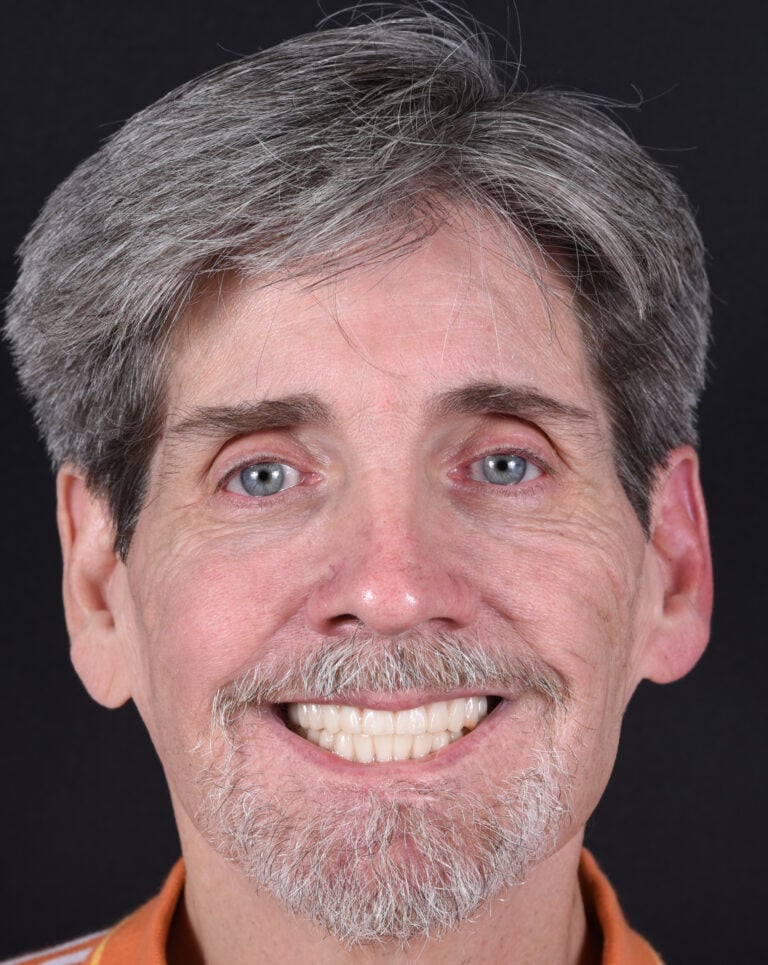
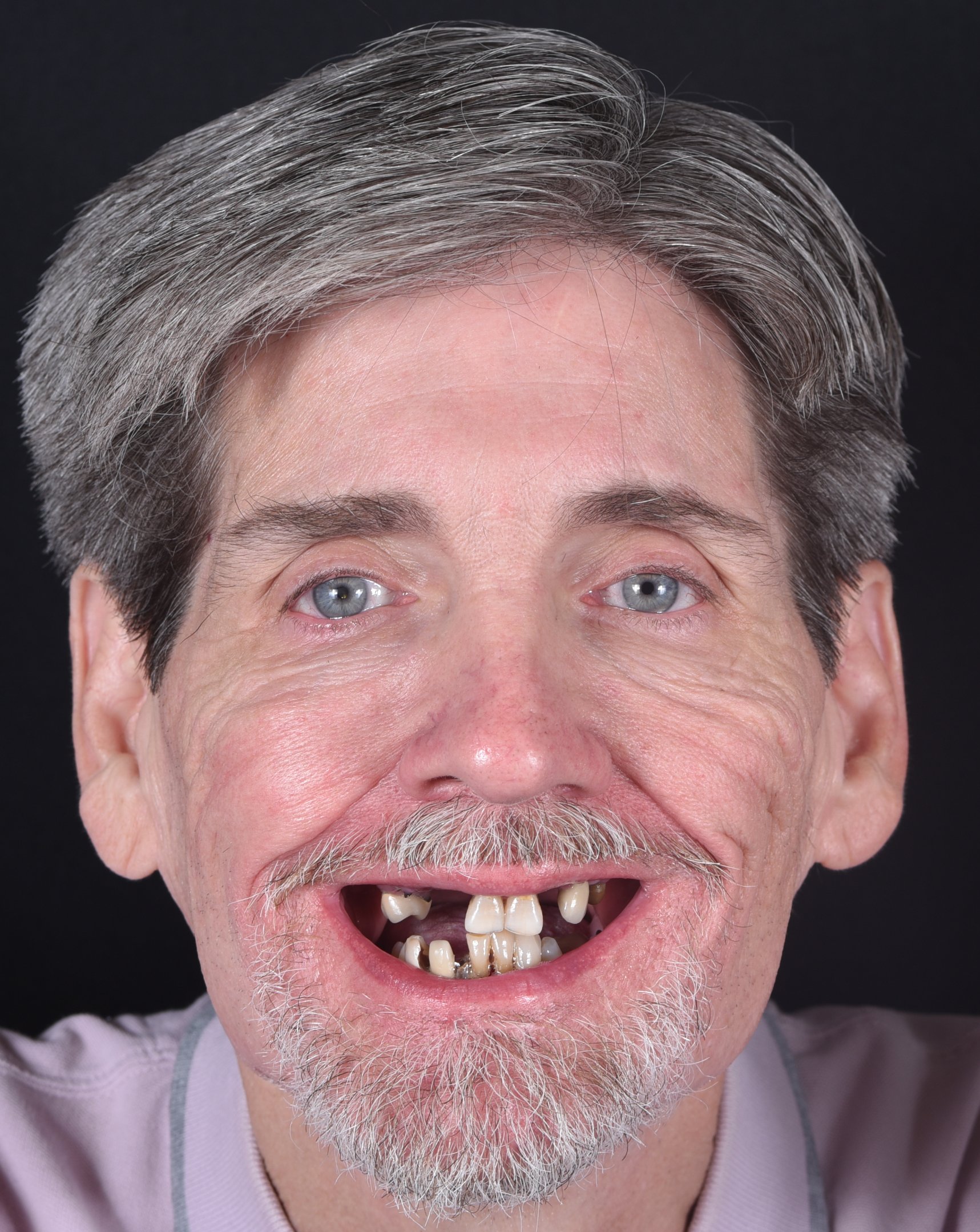
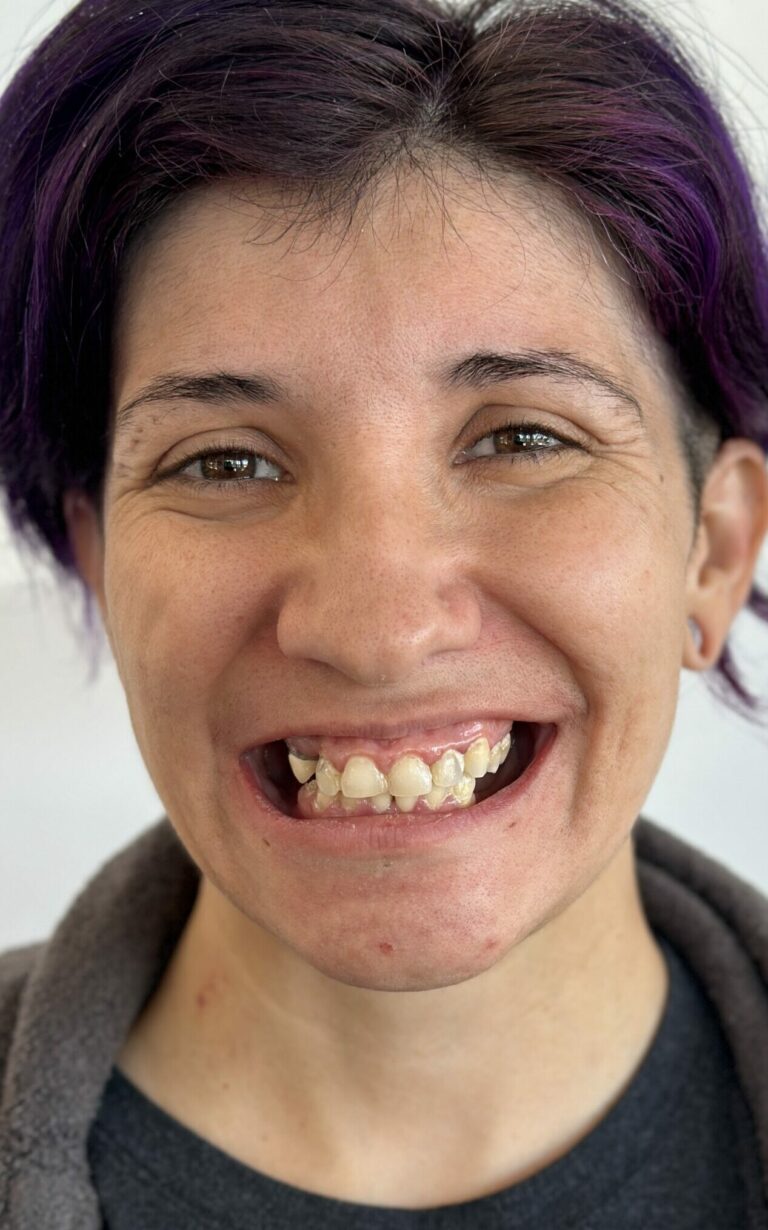
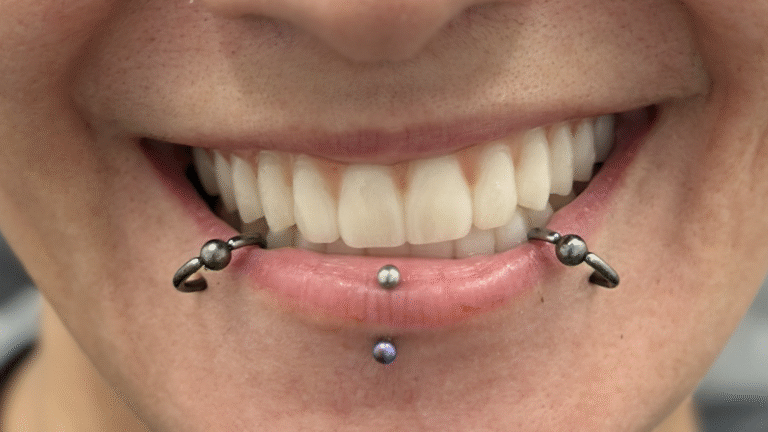
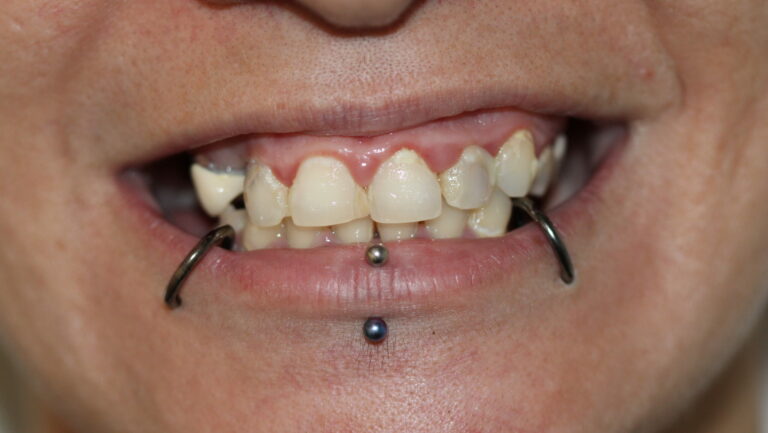
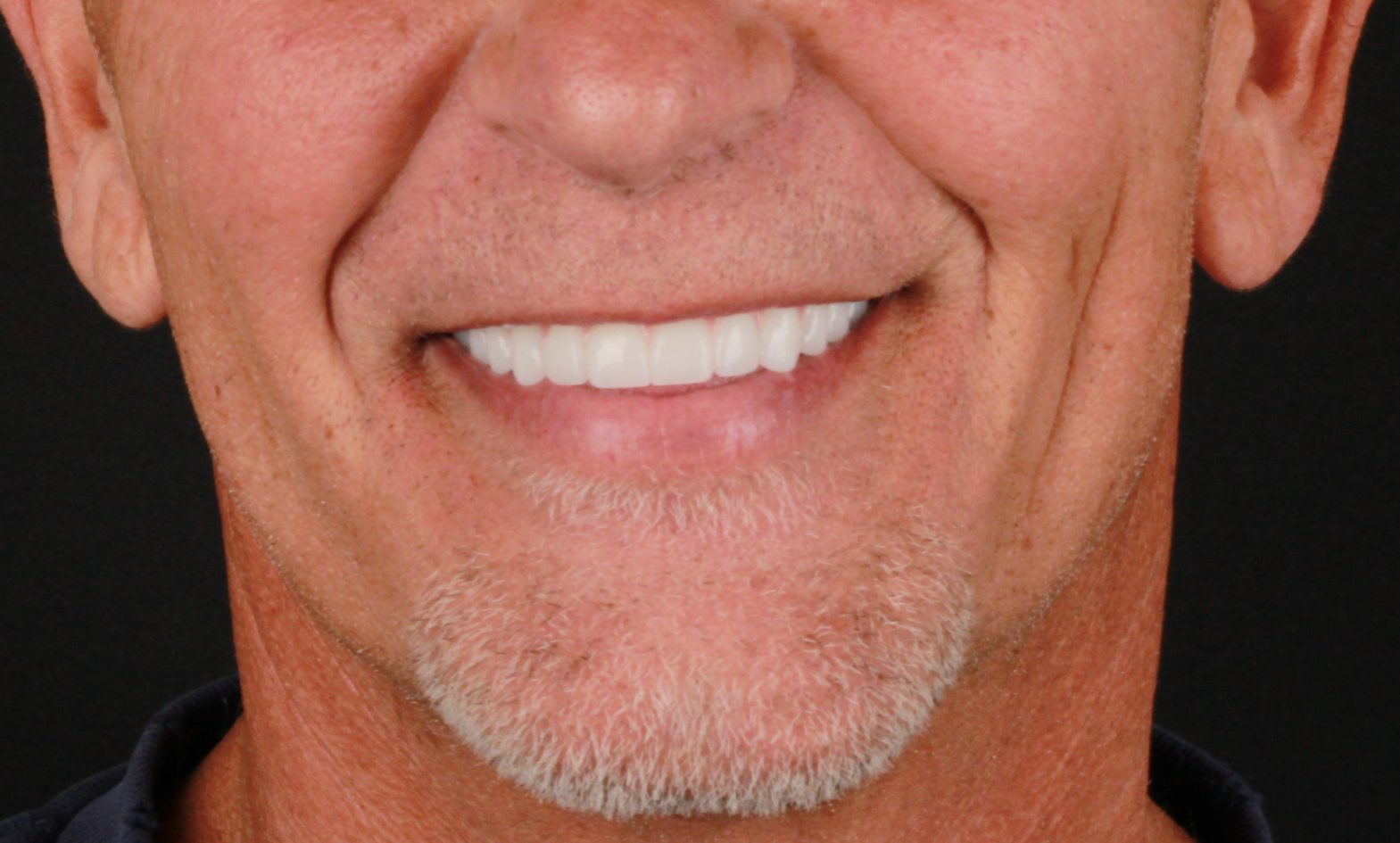
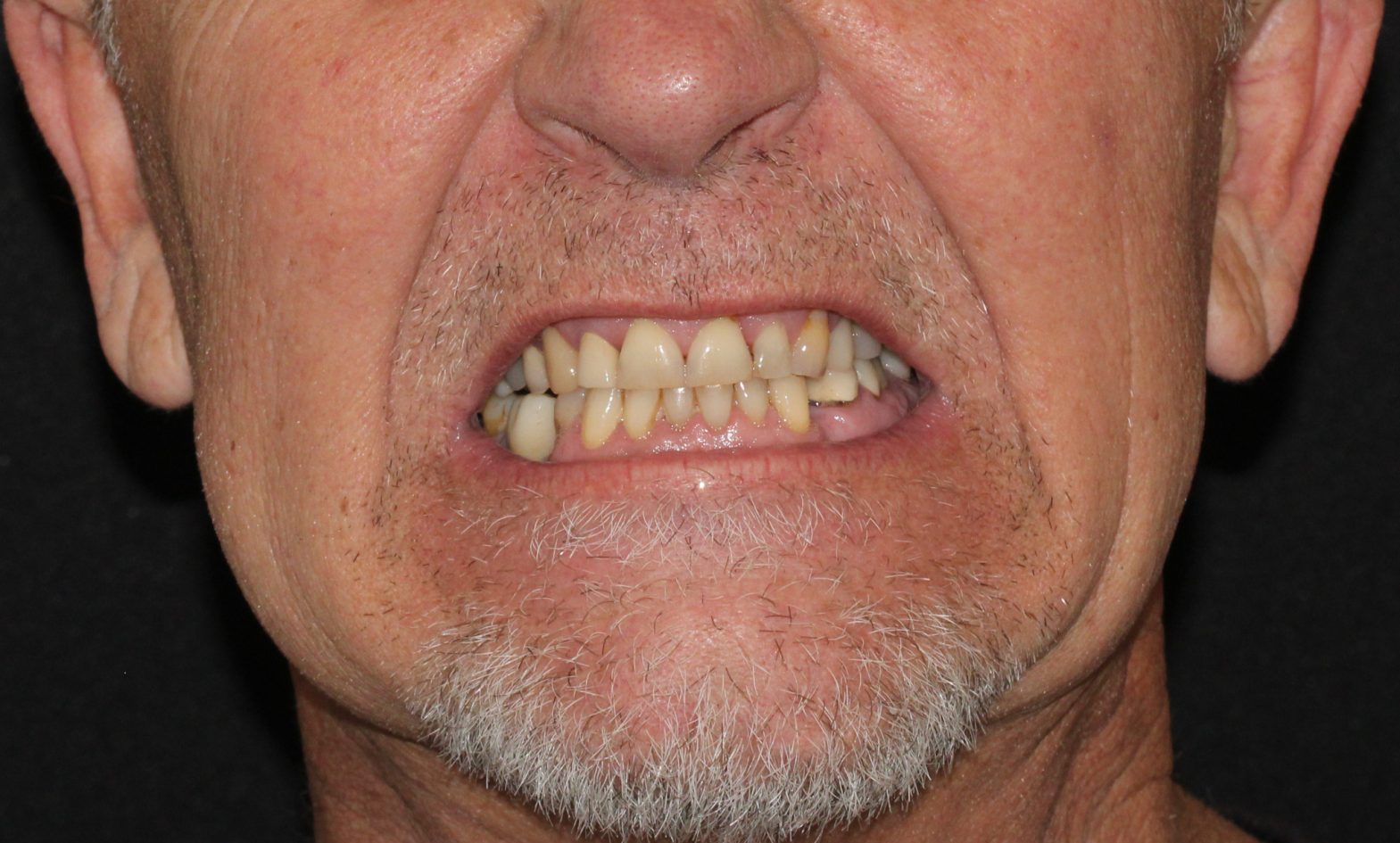
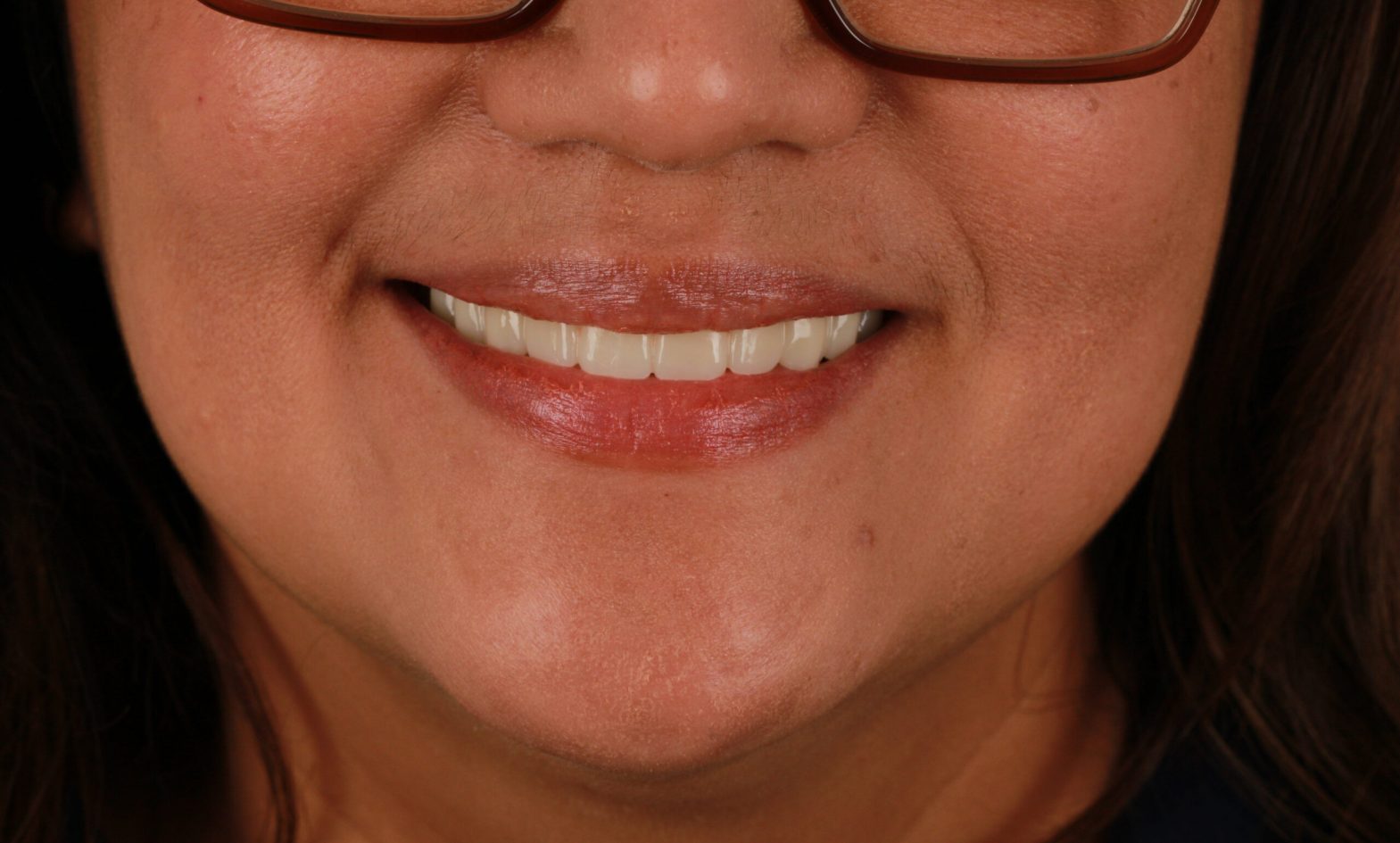
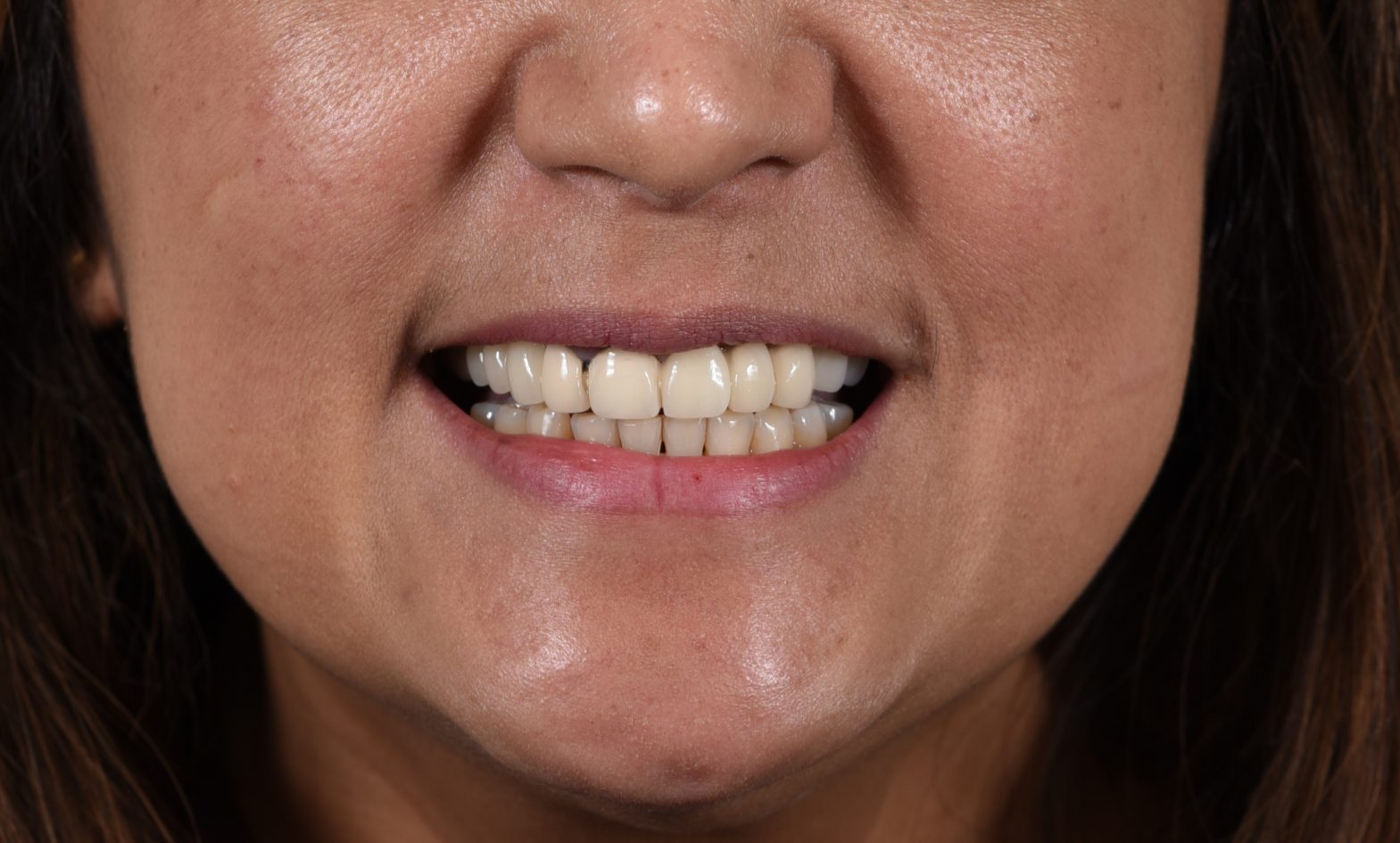
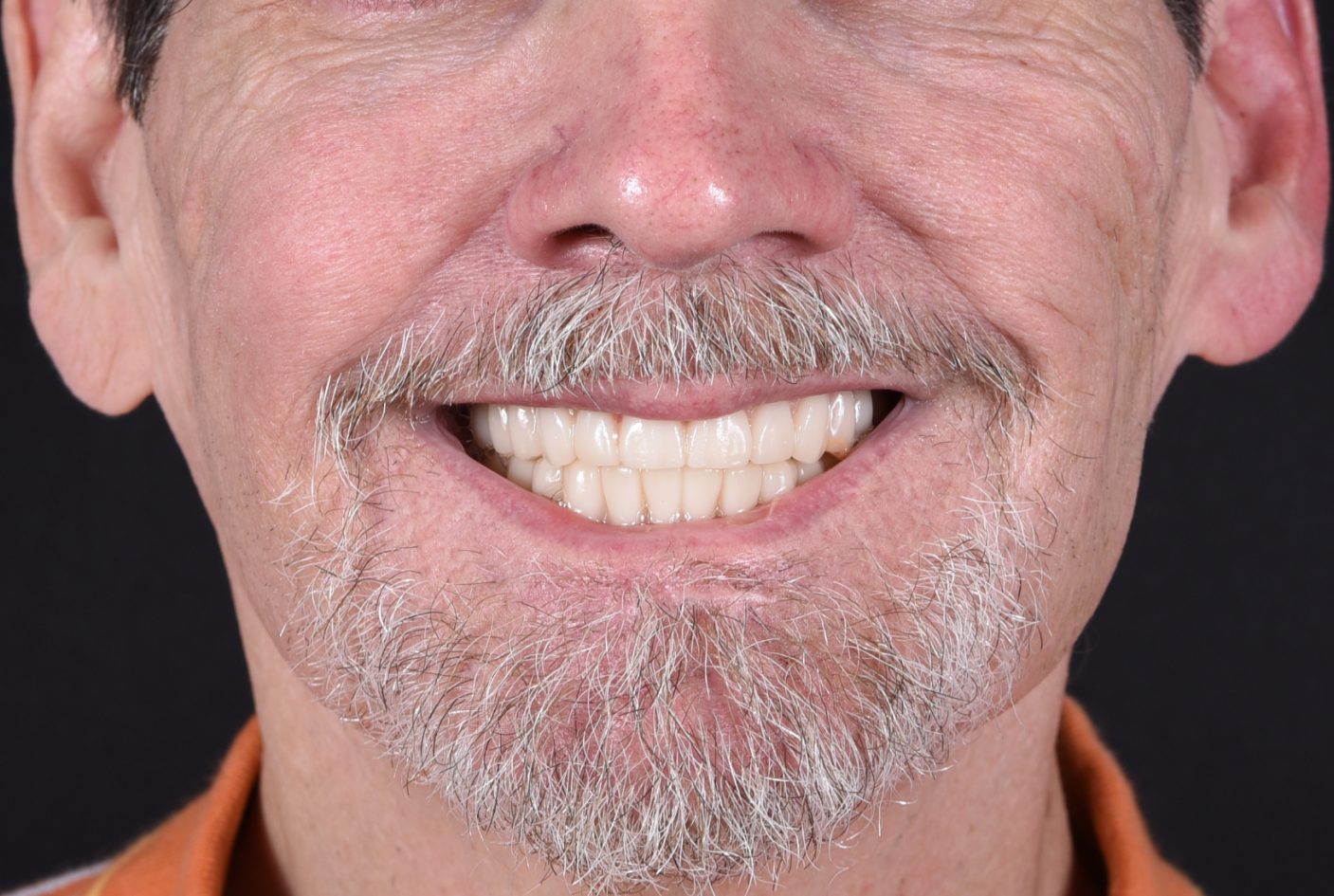
We confirm your medical history and consent forms, verify your customized plan, and take any final photos/scans. You'll meet the surgical and prosthetic team, review expectations, and ask last-minute questions.
Based on your plan, we'll use local anesthesia, oral sedation, or IV sedation. We monitor you throughout. You'll be comfortable and won't feel pain during the procedure.
Using your CBCT and digital guide, we remove any non-restorable teeth (if needed), prepare the sites, and place 4–6 implants (tilted posterior implants if appropriate). We confirm primary stability and position for the future bridge.
You'll rest in our recovery area until you're stable, then head home with a responsible adult (no driving after oral/IV sedation for 24 hours). Expect grogginess if sedated; numbness from local anesthesia wears off in ~2–6 hours.
We fit your same-day provisional (PMMA) or an immediate healing prosthesis, check your bite/occlusion, and make comfort/phonetic adjustments. If we're doing upper + lower, we balance your bite so chewing forces are distributed evenly.
You'll receive written instructions, medication guidance, a soft-diet guide, and hygiene tips for the first weeks. We schedule your first check-in visit and answer any final questions.
Most patients leave the same day with a fixed provisional and a soft-diet plan while the implants integrate (you'll still smile and speak normally). Important: same-day delivery depends on start time, case complexity, implant stability, and in-house lab capacity. When same-day isn't feasible, we deliver your provisional within 24–48 hours — you'll never be left without teeth.
Expert-Led Full-Arch Dental Implant Care
At Smile Science Dental Spa in Glendale, All-on-4® is not a one-size-fits-all procedure. It is a planned, staged treatment performed by experienced implant surgeons using guided digital workflows for accuracy, stability, and long-term function.
At your consultation, we evaluate bone structure, bite mechanics, airway considerations, and aesthetic goals to determine whether All-on-4® or another full-arch approach is appropriate. If you are a candidate, we digitally design your smile, place the implants with precision, and provide a same-day fixed provisional bridge in most cases.
Once healing is complete, we fabricate your final zirconia or hybrid prosthesis with attention to function, phonetics, and a natural esthetic outcome. The goal is a stable, comfortable, long-lasting result that looks and feels like your own teeth.
If you're exploring fixed full-arch implants, begin with the Free Implant Denture Assessment using the form here. Our team will review your case and discuss appropriate treatment options, expected timelines, and costs.
Expert-Led Full-Arch Dental Implant Care. One integrated team, start to finish.
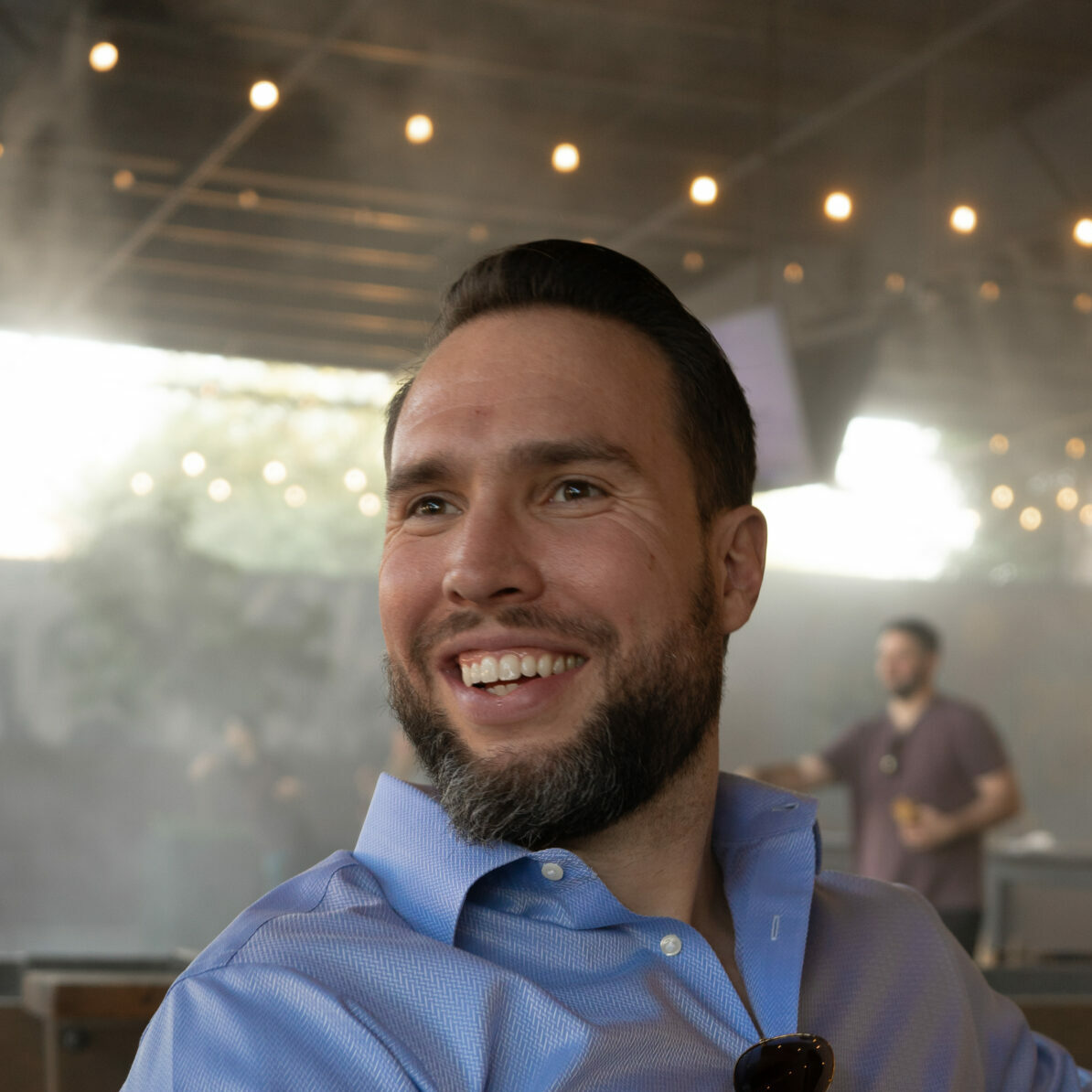
Full-Arch Implant Surgery • Digital Treatment Planning
Dr. Dawson focuses on full-arch rehabilitation with CBCT-guided planning, digital smile design, and meticulous prosthetic delivery. A Midwestern University (AZ) DMD graduate, he's known for clear communication and detail-oriented care in complex implant cases.
What to expect: precise planning, same-day provisional when indicated, and a long-term maintenance plan tailored to you.
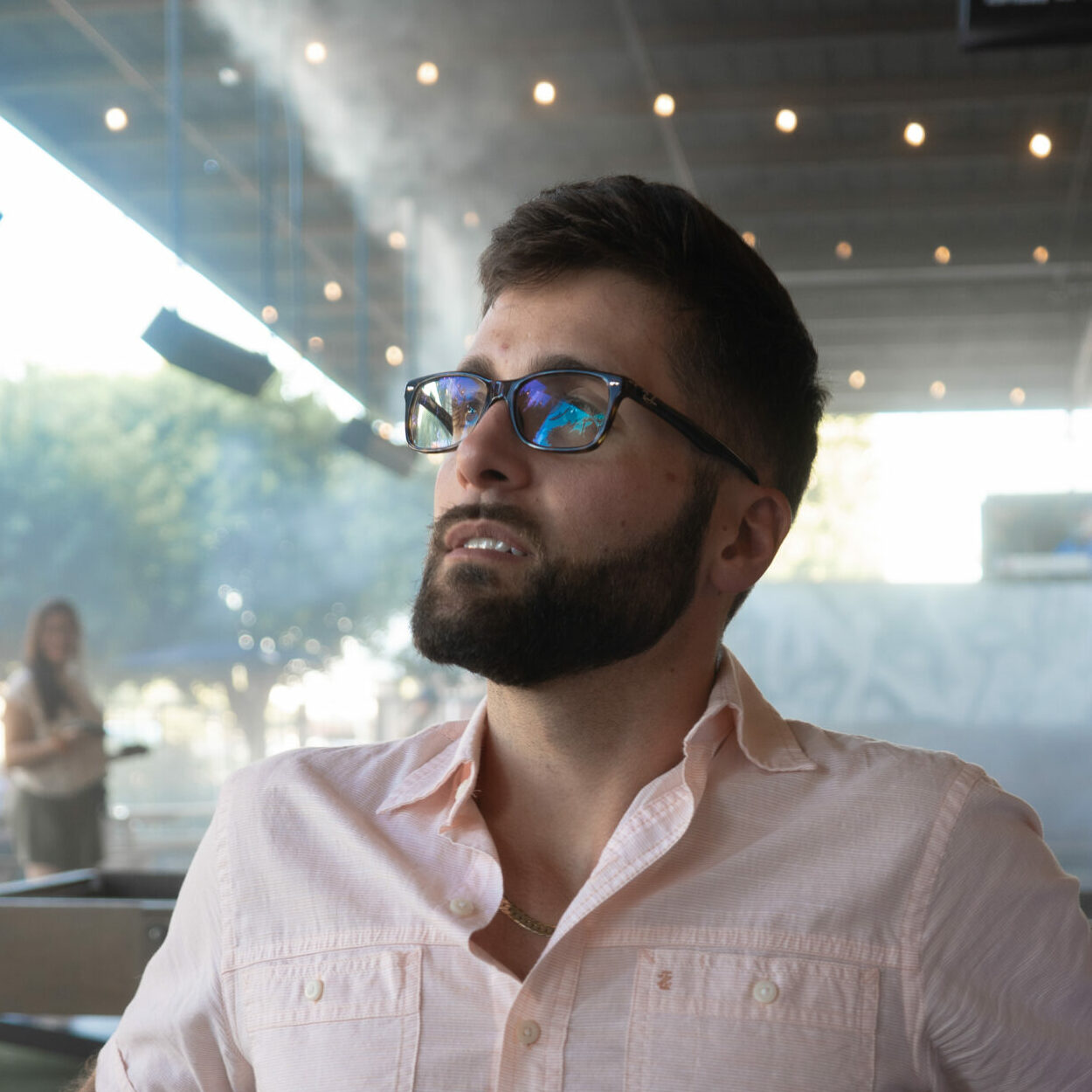
Implant Surgery • Advanced Restorative & Digital Dentistry
Dr. Turke blends efficient surgical technique with restorative precision and modern digital workflows (intraoral scanning, smile design). Patients value his gentle chairside manner and focus on predictable, esthetic outcomes.
What to expect: thoughtful treatment sequencing, clear after-care, and occlusal accuracy for comfort and durability.
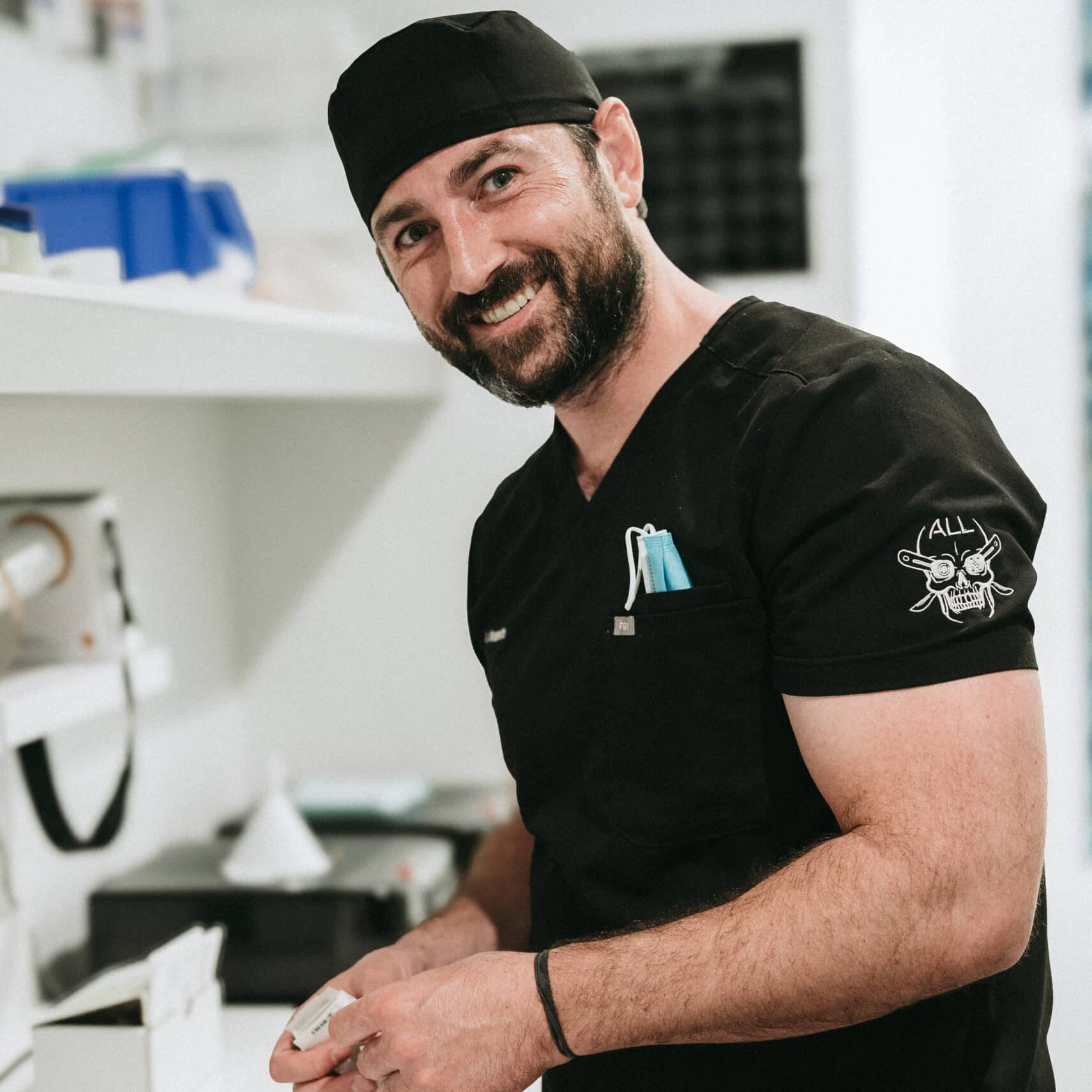
Full-Arch & Zygomatic Implants • Advanced Anchorage Techniques
Dr. Barrett brings extensive experience in All-on-4® and complex full-arch care, including zygomatic solutions for severe upper-jaw bone loss. He has placed thousands of dental implants and teaches on implant techniques internationally.
What to expect: advanced options for limited bone (including zygomatic and pterygoid approaches) and a comprehensive path to a fixed, functional smile.
From your first 3D scan to the day your final bridge is delivered, Drs. Dawson, Turke, and Barrett coordinate your surgery and prosthetics together — all in one location for speed, comfort, and quality.
Leading in Affordability Without Compromising Quality
At Smile Science Dental Spa, we understand that the journey to achieving your best smile should be accessible and affordable for everyone. We're proud to offer the All-on-4® dental implant solution at the most competitive price in the area. We offer the most competitive rates for All-on-4® treatments in the area — committed to providing our patients with high-quality care without the hefty price tag.
Dental implants are a significant investment in your health and self-confidence. We offer the option to break down the investment into manageable monthly payments. We collaborate with a range of financing providers to present payment plans that can cover the full or partial cost of your dental implant procedure.
Most Smile Science cases land between $11,000 and $15,000 per arch (exact quote after your CBCT). Fees reflect: 4 vs 6 implants, bone support, anesthesia/sedation, and the materials you choose (PMMA provisional → zirconia final).
CBCT 3D scan, surgery, same-day provisional, routine bone grafting, post-ops, and the final bridge.
Plans may cover parts (extractions/prosthetics). We offer monthly financing and multiple payment options. Get a written, itemized plan at your free consult.
| Option | Implants per Arch | Fixed or Removable | Typical Price | Our Price | Best for |
|---|---|---|---|---|---|
| All-on-4® | 4 | Fixed | $20,000+ | $14,999 | Adequate bone; streamlined surgery with immediate load |
| All-on-6 | 6 | Fixed | $25,000+ | $14,999 | Lower bone density or higher bite forces; future-proofing |
| Snap-in overdenture | 2–4 | Removable (snaps on implants) | $12,000+ | $5,995 | Budget-minded or those preferring removable |
Choosing Smile Science Dental Spa for your All-on-4® dental implants means entrusting your smile to the skilled hands of our experienced doctors. Our Glendale, Arizona, practice is renowned for:
At Smile Science Dental Spa, your full-arch case is planned and delivered by our surgical–prosthetic team under one roof. All three of our doctors place implants and design/deliver the final bridge, so your case stays with experts from initial scan to brand new smile. That means your CBCT, surgery, same-day provisional, and final zirconia are planned together — no hand-offs, no shuttling between offices.
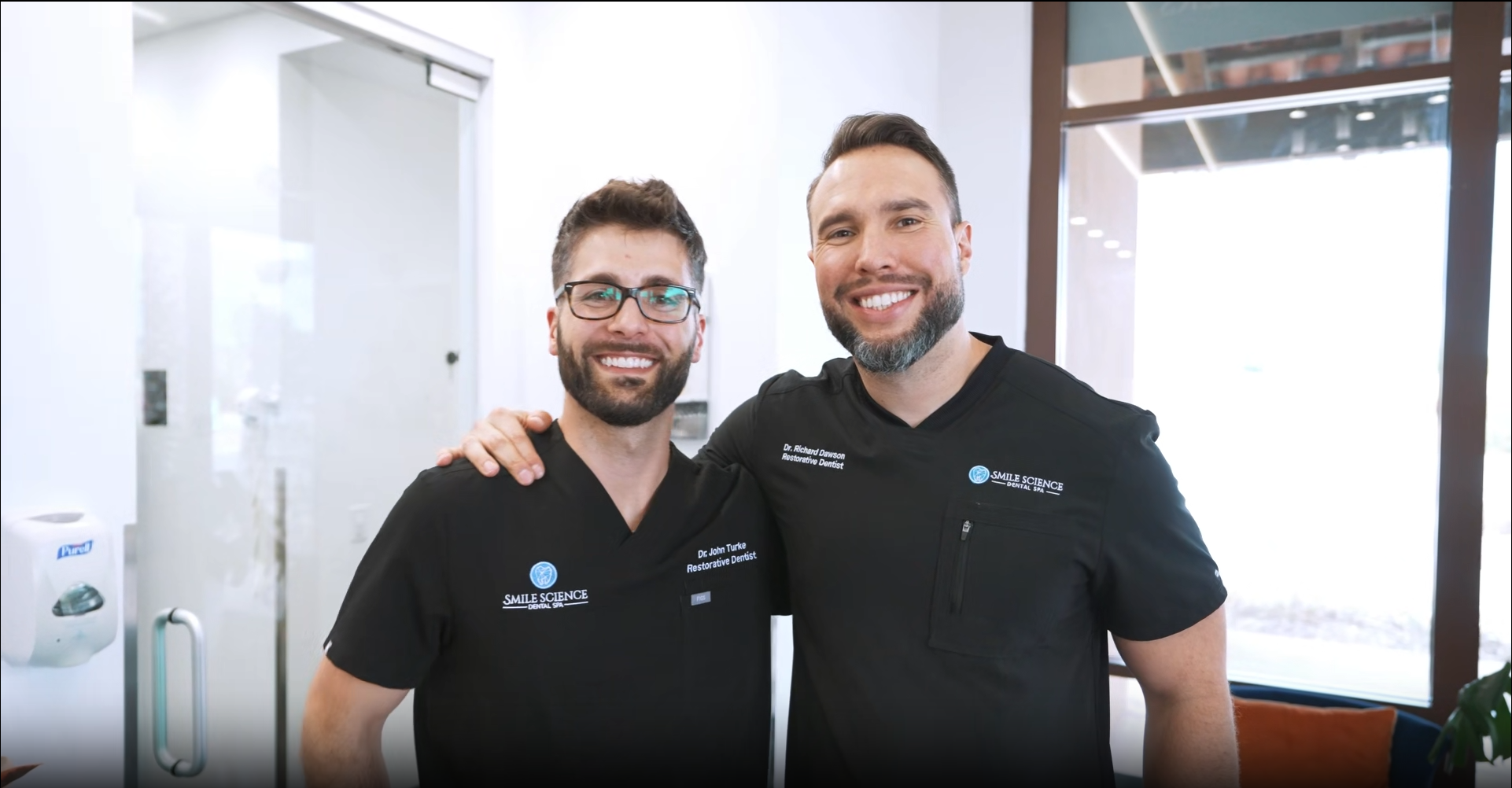
If you've been told you're not a candidate—or quoted a plan that doesn't feel right—bring us your scan or we'll take a new CBCT. We routinely treat complex and told no cases, including limited bone with All-on-6 or advanced options (e.g., zygomatic or pterygoid implants when appropriate). You'll leave with a clear, written plan, transparent fees, and time to decide—no pressure.
We'll review your case, take a new CBCT if needed, and give you a clear plan with transparent pricing — no pressure.
4.9 (437 reviews)
I recently had the pleasure of visiting Smile Science Dental Spa, and I couldn't be more impressed with the level of care and service provided by the entire team. Dr. Dawson and Dr. Turke are both incredibly skilled and made me feel completely at ease throughout my procedures. Their professionalism, combined with their gentle approach, made me feel comfortable and well-informed every step of the way. I was especially impressed that I was able to get a same-day crown(apparently their first ever!), which exceeded my expectations. I couldn’t believe how quick and seamless the process was. It really saved me time and made the experience even more convenient. Cindiray and Angeles, the dental assistants, were equally wonderful. They were not only friendly and attentive but also thorough in explaining everything and made sure I was relaxed during each phase of my visit. Lastly, a big thank you to Litzy at the front desk, who greeted me with a smile and helped with scheduling and any questions I had. She made the entire check-in process a breeze. From start to finish, my experience at Smile Science Dental Spa was exceptional. I'll be returning for sure. I highly, highly, highly recommend them for anyone looking for high-quality dental care.
View Full Review on GoogleDusty
Honestly I’ve never been so happy to go to the dentist. I came in (late due to Lyft) and was still taken care of and treated with care. Even without insurance (kicking in within the next month) prices for an extraction on my infected tooth were more than reasonable. I was able to get more than expected done in the same visit. Dr. Dawson and his team made me feel so comfortable and taken care of. Won’t go anywhere else.
View Full Review on GoogleCherish B
I recently started as a patient after leaving our long-time family Dentist and couldn’t be happier! Marcela is AMAZING and a FANTASTIC hygienist!!!! 😃 Dr Dawson is great too! Every time I visit, they make me feel like family.
View Full Review on GoogleTJ Winzeler
Myself and my family had previously gone to Dr. Turk at another dental office that he worked at. He had relocated and we did not know where he had gone to until this week. Today I got in with Dr. Turk and he took the time to look at my x-rays carefully . I was having pain from a tooth and some other issues. The previous Dentist I went to that I saw just a few days earlier, he did not find any issues with my tooth which I had pain in. Dr. Turk identified infection and referred me to an endodontist. He is very gentle as a wonderful disposition and my self and my family are thrilled to be able to get back with him. The office is lovely, relaxing music, heat and massage chair.I have always been very nervous and some anxiety going to dentist as I have had bad reactions with the anesthesia. I am confident that Dr. Kirk will help me get through my next appointment just fine. “The staff are very kind and attentive. I am looking forward as I have quite a bit of work to be done, and I know I’m in good hands with Dr. Turk and his staff. Five stars!⭐️ Sherry
View Full Review on GoogleSherry Redmond
I recently moved to Arizona and had an issue with a tooth repair from 15 years back. Not knowing anyone here in my new home, I searched dentists close to me. I chose Smile Science much like pinning the tail on the donkey and my selection couldn't have been better! What a terrific staff! Dr. Turke was concerned the tooth would need to be extracted, but said he wanted to take a shot at saving it..and that's just what he did! After setting a temporary crown, I was on my way with an appointment to install the permanent crown in the following two weeks. That evening I received a call I've never received from a dentist. Dr. Turke had taken the time to follow up with me to make sure I wasn't in any discomfort..I was completely caught off guard by this kind of attention to detail and caring for my well being. The permanent crown is now in place, it fits and feels fantastic, the job and treatment are first class! Thank you, Dr. Turke and staff for taking in this stray and giving me a home dentist! I'd like to say that I'm just good at selecting blindly, but the truth is I am very lucky..and I'll take lucky over being good any day of the week! Thank you, again and Happiest of New Year's in 2026, Science Smile!!
View Full Review on GoogleEddy
Discover the average dental implant costs in Glendale, AZ, and find out how you can enhance your smile…
Read ArticleDiscover what to expect during the dental implants healing process and how to care for your implants in…
Read ArticleExplore the possible risks and complications of dental implants to make informed decisions for your oral health at…
Read ArticleExplore the dental implant healing timeline and what to expect during recovery in Glendale, AZ for a smooth…
Read ArticleDiscover expert dental implants in Glendale, AZ, designed to restore your smile and confidence. Schedule a consultation with…
Read ArticleDiscover high-quality Phoenix dental implants at Smile Science in Glendale, AZ, and restore your smile with our expert…
Read ArticleReady to change your life? Transform your smile in no time with our All-on-4® procedure. Say goodbye to broken and infected teeth. Say hello to a complete, confident smile. It's like getting a brand-new set of teeth in just a day! And the best part? They're fixed in place using dental implants, giving you a natural feel without the hassle of traditional dentures.

The patient education on this page is aligned with current literature on full-arch, immediate-load implant therapy, maintenance, and advanced anchorage options (e.g., zygomatic implants). Key findings from published research include:
This page is reviewed periodically for clinical accuracy. Individual treatment outcomes vary. Consult your Smile Science provider for a personalized assessment.
Interactive candidacy assessment
Walk through the same screening questions a real implant consult covers — bone, gum health, medical history, lifestyle — and we’ll tell you what tier you fall into and which treatment path fits your situation. Most patients finish in under three minutes.
Final candidacy is confirmed by a clinical exam and 3D imaging. This tool gives you the same screening framework a real consult uses, so you arrive informed and ready to ask the right questions.
Reference
Every implant consult places you into one of five candidacy tiers. The interactive tool above predicts your tier from your answers; a clinical exam confirms it.
Healthy bone, healthy gums, no medical or lifestyle factors that interfere with implant integration. The most predictable case type with the highest long-term success rates.
A strong candidate after addressing one or two factors first — typically a deep cleaning for mild gum issues, a simple bone graft for minor bone loss, or stabilizing a medical condition.
The bone in the implant area has shrunk too much to support a standard implant directly. A bone graft (sometimes combined with a sinus lift) builds the site back up over 4–6 months, after which implants are placed normally.
Full-arch tooth replacement combined with severe bone loss. Specialty options like All-on-4, All-on-6, or zygomatic implants (anchored in the cheekbone) make implants possible when traditional placement isn't. Most general practices refer these out — Smile Science places them in-house.
A factor blocks implants safely right now — typically uncontrolled diabetes, IV bisphosphonates, recent head/neck radiation, active periodontitis, or being under 18. The right next step is a planning consult to identify the blocking factor and map out a path that resolves it.
Dental implants are titanium or zirconia posts surgically placed in the jawbone to serve as artificial tooth roots. They support crowns, bridges, or full-arch restorations and integrate with bone through osseointegration.
All-on-4® is a fixed full-arch bridge supported by four strategically placed implants — often with tilted posterior implants to maximize bone contact and avoid anatomical structures like sinuses.
Options include monolithic zirconia (strong, ceramic, natural-looking) and PMMA/acrylic hybrid bridges on a titanium framework. We review materials during your consultation so you can see and feel the difference.
The All-on-4® protocol uses four implants per arch. Some patients benefit from six implants (All-on-6) depending on bone density and bite forces. We determine this with CBCT imaging.
With proper home care, regular professional maintenance, and no tobacco use, implants can last decades. The prosthesis (bridge) may need periodic maintenance or replacement over time.
Surgery is performed under local anesthesia, oral sedation, IV sedation, or general anesthesia based on your preference. Post-operative discomfort is typically manageable with prescribed medication.
In some cases yes, but full-arch All-on-4® typically requires all teeth in that arch to be removed to allow proper implant placement and prosthesis design. We evaluate your specific situation at consultation.
During the healing phase (3–6 months), patients follow a soft-food diet and avoid hard, crunchy, or sticky foods. Long-term, most patients eat normally. We recommend wearing a night guard if you grind and avoiding tobacco to protect your investment.
Some plans contribute to parts of care such as extractions, imaging, or sedation. Full-arch implant bridges are often elective; our team verifies benefits and discusses financing.
Most patients receive a same-day provisional (PMMA) bridge on surgery day. The final zirconia or hybrid bridge is typically delivered 3–6 months later, after implants have fully integrated with the jawbone.
Yes — in most cases, implant placement and a provisional fixed bridge happen on the same day (Teeth-in-a-Day). Same-day delivery depends on start time, case complexity, implant stability, and in-house lab capacity. When same-day isn't feasible, we deliver your provisional within 24–48 hours.
A single implant failure does not necessarily mean the entire arch fails. Depending on bone support and implant position, the bridge can sometimes be supported by the remaining implants while a replacement implant heals. We assess each situation individually and have a 10-year fixture warranty.
Use a water flosser or oral irrigator to flush under the bridge daily. Brush with a soft-bristle or sonic toothbrush, clean around the gumline gently, and schedule professional hygiene visits every 3–6 months for deep cleaning under the bridge.
All-on-4® provides a fixed, non-removable restoration that functions more like natural teeth. Unlike conventional dentures, there's no slipping, no adhesive, and no bone resorption from pressure on soft tissue. Most patients report dramatically improved confidence, comfort, and diet compared to traditional dentures or snap-in overdentures.
Smoking significantly increases implant failure risk. We ask patients to pause or quit smoking around the time of surgery. We work with patients on cessation strategies and may recommend a phased approach. Continued smoking after placement can void warranty coverage.
We offer local anesthesia, oral conscious sedation (OCS), IV sedation, and can coordinate with a board-certified dental anesthesiologist for general anesthesia when needed. Options are reviewed and confirmed before your surgery date.
Most patients take 3–5 days off work for rest and recovery. Swelling peaks around day 3 and typically resolves within a week. Soft-food diet continues for several weeks. Most patients resume light activity within a few days, and normal activity (except heavy lifting) within a week.
Often, yes. Depending on implant number, position, and bone support, an existing overdenture case can be transitioned to a fixed full-arch bridge by placing or repositioning implants to achieve stable support.
Published data shows high long-term survival for implants and prostheses when case selection, implant positioning, and maintenance are optimized. Most patients report durable function and comfort over many years.
Most Smile Science All-on-4® cases land between $11,000 and $15,000 per arch, depending on implant count, bone support, anesthesia, and material choices. This includes CBCT scan, surgery, same-day provisional, routine grafting, and the final bridge. We provide a written itemized quote at your free consultation.
Some dental plans contribute to parts of care such as extractions, imaging, or sedation. Full-arch implant bridges are often classified as elective. Our team verifies your benefits and helps you maximize coverage, with flexible financing for the remainder.
Potential tradeoffs include a period of soft-food diet during healing, future maintenance of prosthetic components, and occasional adjustments. Most patients feel the functional and smile benefits outweigh these.
Published literature reports implant survival rates above 95% at 10+ years with proper case selection and maintenance. If an implant fails, we assess the cause, allow healing, and can replace the fixture — our 10-year fixture warranty covers this under defined conditions.
During the healing phase, a soft-food diet is required for several weeks. After the final bridge is delivered and osseointegration is confirmed (typically 3–6 months post-surgery), most patients can eat a full diet including steak, salads, and apples. We guide you through each dietary phase.
Yes. We offer oral conscious sedation (OCS), IV sedation, and coordination with a board-certified dental anesthesiologist. Sedation options are discussed and confirmed at your pre-treatment appointment based on your comfort level, medical history, and case complexity.
The choice depends on bone density, bite forces, and long-term loading requirements. Four implants suffice for most patients with adequate bone. Six implants provide additional support for those with lower bone density, higher bite forces, or cases requiring extra long-term security. CBCT imaging guides the decision.
Controlled diabetes and a commitment to pausing/quitting tobacco around surgery do not automatically disqualify you. We work with your physician and take a staged approach when needed. Uncontrolled systemic conditions may need to be addressed before implant placement to optimize healing and long-term success.
In many cases, yes. Depending on the number and position of existing implants (if any) and available bone, we can place additional implants and fabricate a fixed bridge over them. We evaluate this at consultation with CBCT imaging.
We recommend professional hygiene visits every 3–6 months. These include deep cleaning under the bridge, X-rays, torque checks on implant components, and monitoring of peri-implant tissue health. Consistent maintenance is key to long-term implant success.
Most patients feel significantly better within 3–5 days. Mild soreness and swelling typically resolve within a week. Full osseointegration takes 3–6 months, but day-to-day function (eating soft foods, speaking, smiling) returns quickly. You'll receive a detailed recovery timeline at your pre-treatment appointment.
Yes — our practice stands behind materials and craftsmanship with a written policy covering adjustments or repairs under defined conditions. Details are provided at consult.
You've probably seen other implant centers advertising "lifetime warranties." The reality is that those promises often sound better than they actually are. Dental implants can last many years, but they are medical devices that require ongoing care, and no one can guarantee a prosthesis for life.
We prefer to be clear and honest with you up front.
| What's Covered | How Long | What it Means | Your Part |
|---|---|---|---|
| Implant Fixture (the titanium implant in bone) | 10 years | If the implant fails under normal use, we will replace the fixture. | Regular hygiene visits, good home care, proper nightguard use, no nicotine use, and follow your maintenance plan. |
| Prosthetic Restoration (bridge, full arch, or crown) | 5 years | Covers fractures or failures under normal use. We'll repair or replace as needed. | Routine scheduled checks, report issues early, wear a night guard as prescribed. |
| Surgical Complications | 3 years | If a fixture fails early despite proper healing, we'll replace it at no fee. | Follow post-op instructions and attend follow-up appointments. |
You deserve a warranty that's clear, not just clever wording. We choose transparency over marketing gimmicks, so you know exactly what's covered, how long it's covered, and what's expected to keep it valid. Our patients trust us because we make straightforward promises and keep them.
Your All-on-4® bridge is designed to last for decades. Long-term success depends on consistent home care, professional maintenance every 3–4 months, and protecting your bite from excessive forces. Here is what we recommend at Smile Science Dental Spa.
Checks at 1–2 weeks, 6–8 weeks, 3 months, and 6 months to monitor healing, tissue health, and bite stability.
Questions about your care routine? We’re always happy to walk you through it. (480) 530-3663
All-on-4 succeeds when biology, bite forces, and home care line up. We'll recommend alternatives — or prep you first — if any of the following apply: