



Excellent Candidate
Healthy bone, healthy gums, no medical or lifestyle factors that interfere with implant integration. The most predictable case type with the highest long-term success rates.
Glendale, Arizona
Services provided by an Arizona licensed general dentist.
Free consultations include same-day CBCT scan, photography, & treatment planning.
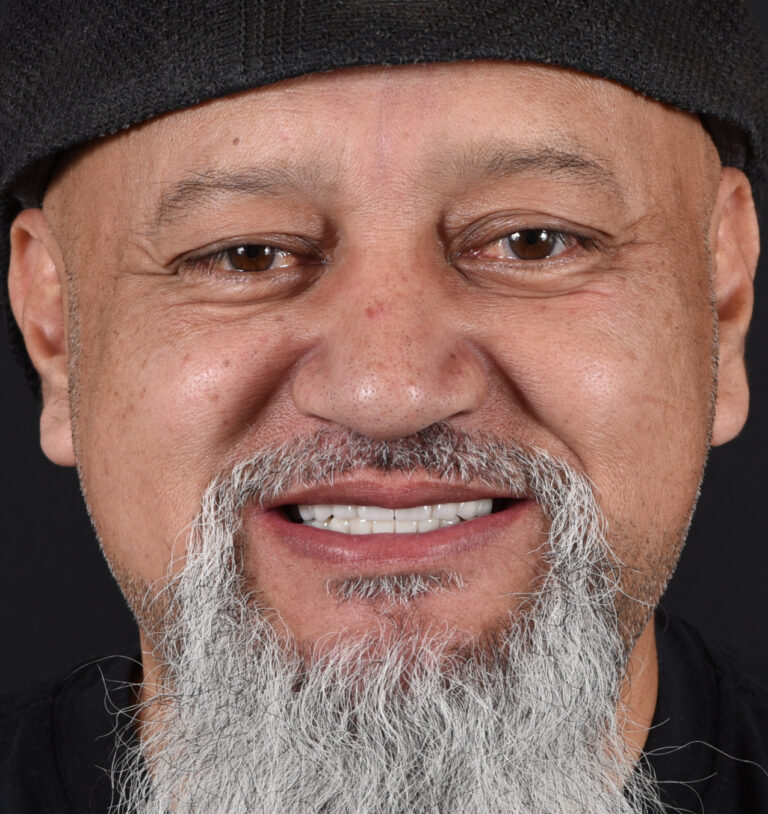
All-on-6 is a full-arch dental implant treatment that replaces all the teeth in one arch using six strategically placed implants and a fixed, permanent bridge. The implants act like artificial roots, supporting a custom full-arch prosthesis that restores function, stability, and esthetics.
Compared to removable dentures, All-on-6 does not come in and out, does not rely on adhesive, and provides a solid biting surface. It is designed for patients who want a stable, long-term solution that feels as close as possible to natural teeth.
Placing six implants provides additional support and load distribution across the jaw. This is especially helpful when:
More implants increase the overall stability of the restoration, reduce stress on each individual implant, and can improve how the prosthesis feels and functions day-to-day.
All-on-4® and All-on-6 are both full-arch solutions. The difference is structural:
Both treatments are valid depending on bone quality, bite force, and restorative goals. Some patients are better suited for All-on-4®, while others benefit from the increased stability of All-on-6. We determine this with CBCT imaging, digital planning, and a full clinical evaluation.
The purpose of All-on-6 is simple:
Full-arch implant treatment is only as strong as its planning and execution. At Smile Science Dental Spa, All-on-6 is handled by a team that focuses heavily on implant dentistry, digital planning, and long-term restorative outcomes. The goal is not just to replace teeth, but to build a stable, functional, and attractive smile that performs well under daily use.
We begin every full-arch case with:
This allows precise implant positioning and prosthetic design before any treatment begins. We do not guess. Every millimeter is planned.
Our in-house anesthesia partnership allows patients to choose the level of sedation that matches their needs and comfort. Most full-arch patients choose IV sedation so treatment feels relaxed, controlled, and predictable.
By placing six implants, we distribute bite forces across the arch. This is particularly valuable for:
The prosthesis is secured the same day, so patients leave with a fixed smile rather than a removable denture.
We do not use generic shapes. Your provisional and final teeth are designed to fit:
This is where most full-arch cases succeed or fail. The prosthesis has to look right and function comfortably.
We offer multiple final prosthesis options, including high-strength milled zirconia and titanium-reinforced frameworks. These materials are chosen for their durability, precision, and wear resistance. They are engineered to handle real-world function, not showroom photos.
Full-arch treatment is not a one-day event. We guide patients through healing, restoration, and long-term maintenance. You are not left to figure it out alone. Our team monitors function, tissue health, occlusion, and prosthetic integrity over time.
Full-arch treatment is significant and permanent. It is reasonable to compare recommendations before you decide. We frequently provide second opinions for patients who have been told they need full extractions, grafting, or a specific implant approach.
If you would like another perspective, bring your treatment plan or previous imaging. If you don't have a CBCT yet, we will take one here and review your options together. No pressure. No obligation. Just clarity and a plan that makes sense.
| Treatment | Implants per Arch | Fixed or Removable | Typical Price | Our Price | Best for |
|---|---|---|---|---|---|
| All-on-6 | 6 | Fixed | $25,000+ | $14,999 | Patients who want maximum long-term stability, stronger bite support, or have uneven bone distribution. Ideal when we want to future-proof the restoration. |
| All-on-4® | 4 | Fixed | $20,000+ | $14,999 | Patients with adequate bone volume where four implants still provide full support and immediate loading. |
| Snap-in overdenture | 2–4 | Removable (snaps on implants) | $12,000+ | $5,995 | Patients who prefer a removable solution or want a lower-cost option with some added stability. |
The best treatment depends on your bone anatomy, bite forces, medical history, and esthetic goals. We determine this with CBCT imaging and a full clinical assessment.
We confirm your medical history and consent forms, verify your customized plan, and take any final photos/scans. You'll meet the surgical and prosthetic team, review expectations, and ask last-minute questions.
Based on your plan, we'll use local anesthesia, oral sedation, or IV sedation. We monitor you throughout. You'll be comfortable and won't feel pain during the procedure.
Using your CBCT and digital guide, we remove any non-restorable teeth (if needed), prepare the sites, and place six implants. We confirm primary stability and position for the future bridge.
We fit your same-day provisional (PMMA) or an immediate healing prosthesis, check your bite/occlusion, and make comfort/phonetic adjustments. If we're doing upper + lower, we balance your bite so chewing forces are distributed evenly.
You'll receive written instructions, medication guidance, a soft-diet guide, and hygiene tips for the first weeks. We schedule your first check-in visit and answer any final questions.
Most patients leave the same day with a fixed provisional and a soft-diet plan while the implants integrate. You'll still smile and speak normally. Same-day delivery depends on start time, case complexity, implant stability, and in-house lab capacity. When same-day isn't feasible, we deliver your provisional within 24–48 hours.
Candidacy
All-on-6 is designed for patients who are missing most or all teeth in an arch, or who have teeth that cannot be predictably restored. The key is having enough bone support for six implants to be placed in stable positions.
Multiple failing teeth, widespread decay, or advanced periodontal bone loss that makes individual restorations impractical.
Prefers non-removable teeth that function like natural teeth -- no adhesive, no nightly removal, no instability.
Moderate to strong chewing habits or uneven bone distribution that benefits from the wider support of six implants vs. four.
No uncontrolled systemic conditions that contraindicate outpatient oral surgery or sedation. Managed diabetes and most medications are fine.
Sufficient bone to support six implant sites. Some patients told they are not candidates elsewhere qualify with proper 3D planning.
Candidacy is confirmed through CBCT imaging, digital implant planning, bite analysis, and a medical history review. There is no guessing -- we show you the scan and walk through the plan together.
Book a Free ConsultAll-on-4® is sometimes used when bone density is sufficient only in specific anterior or angled support zones, or when the goal is a streamlined surgery with fewer implant sites. Both treatments are valid -- the difference is force distribution over time and what best protects the final prosthesis. We determine which is right for you at consultation.
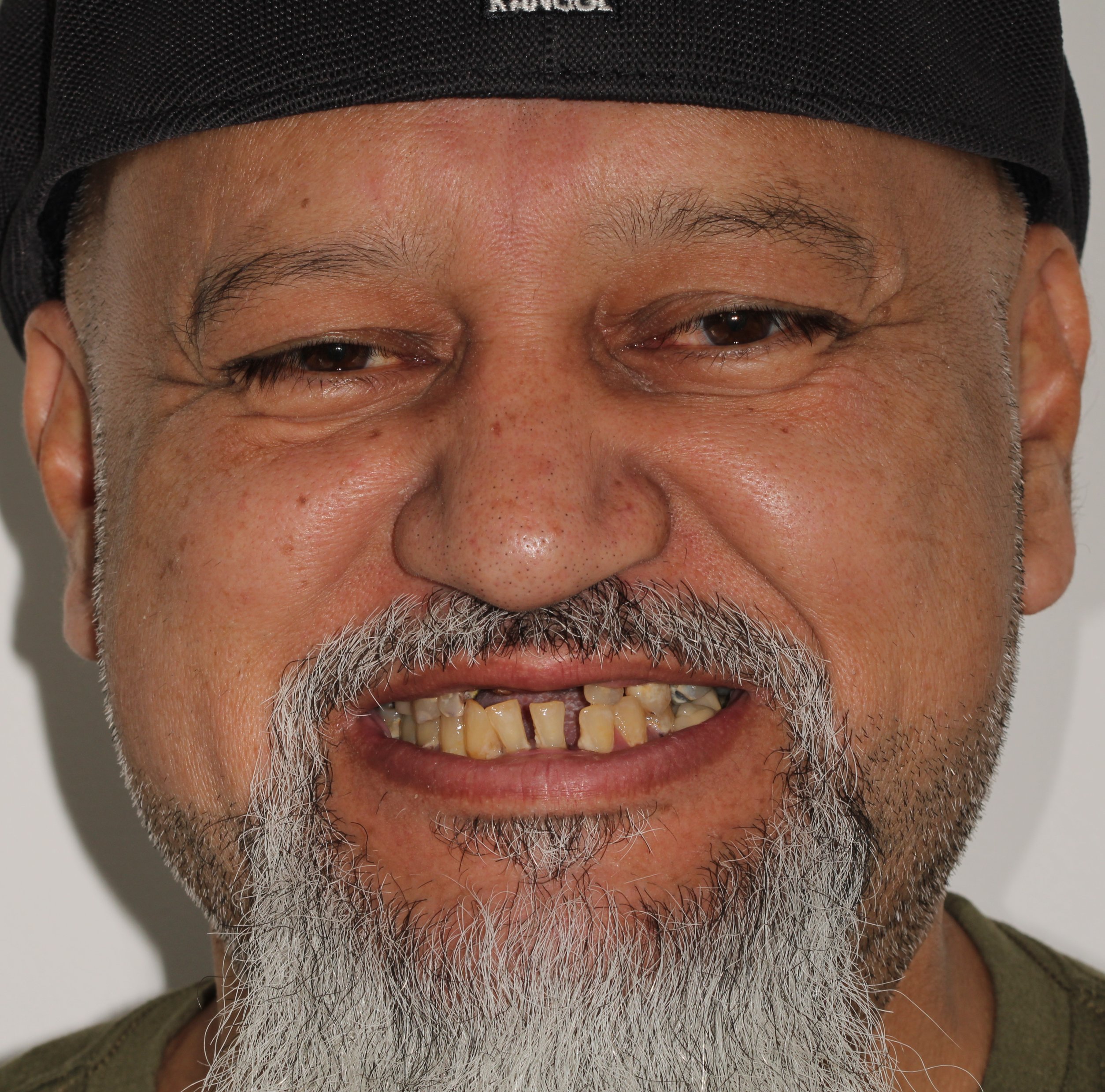
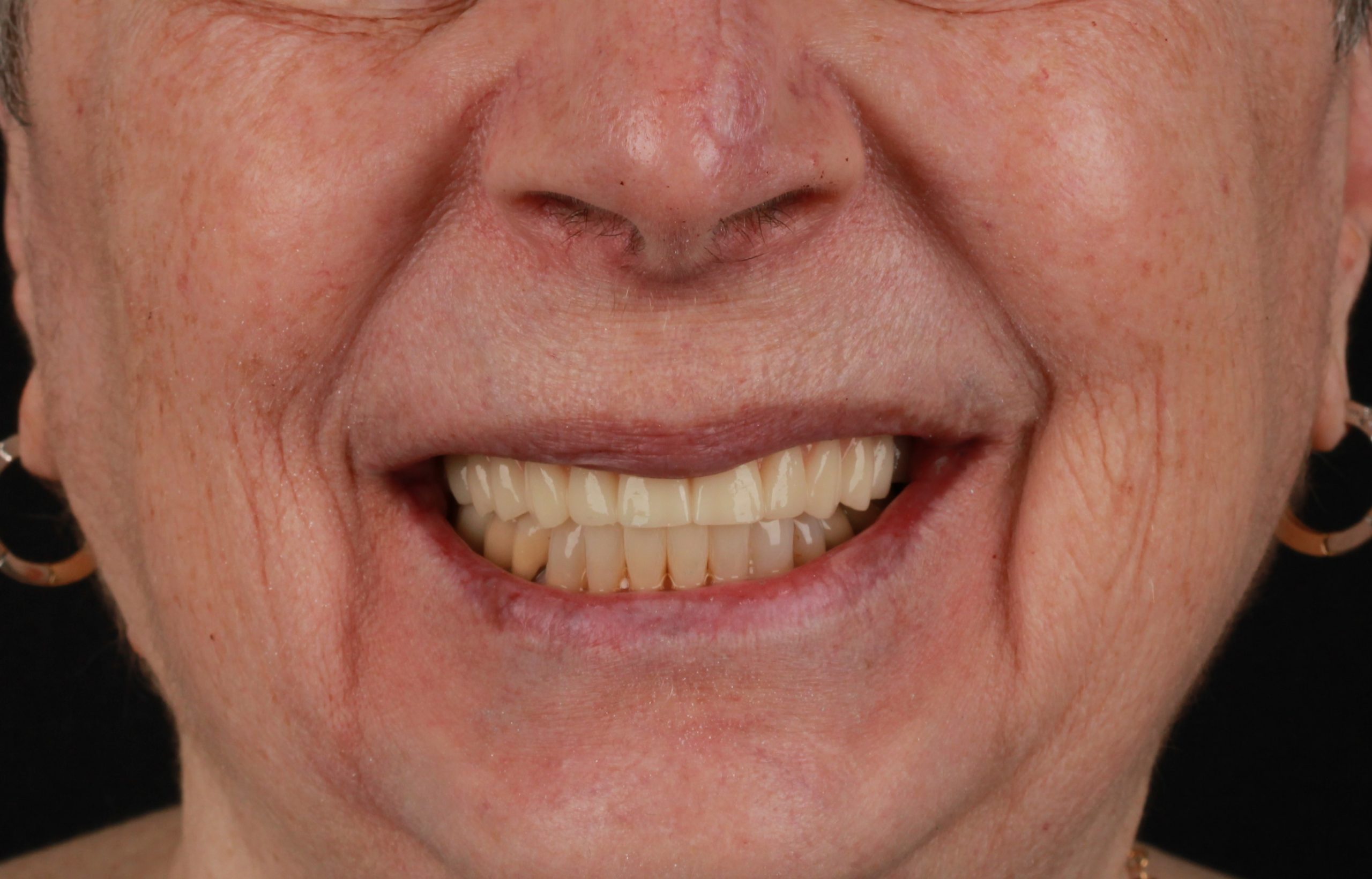
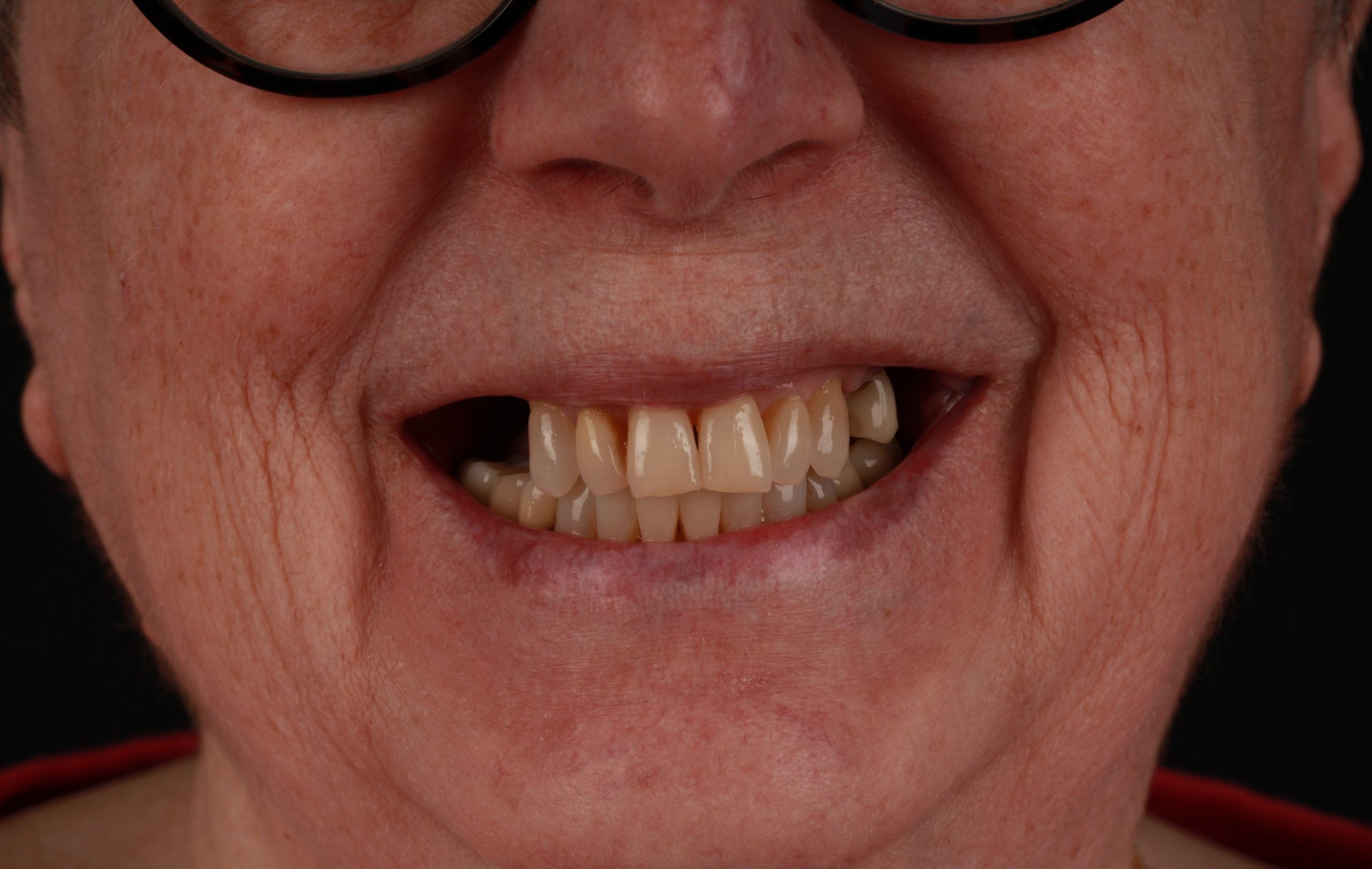
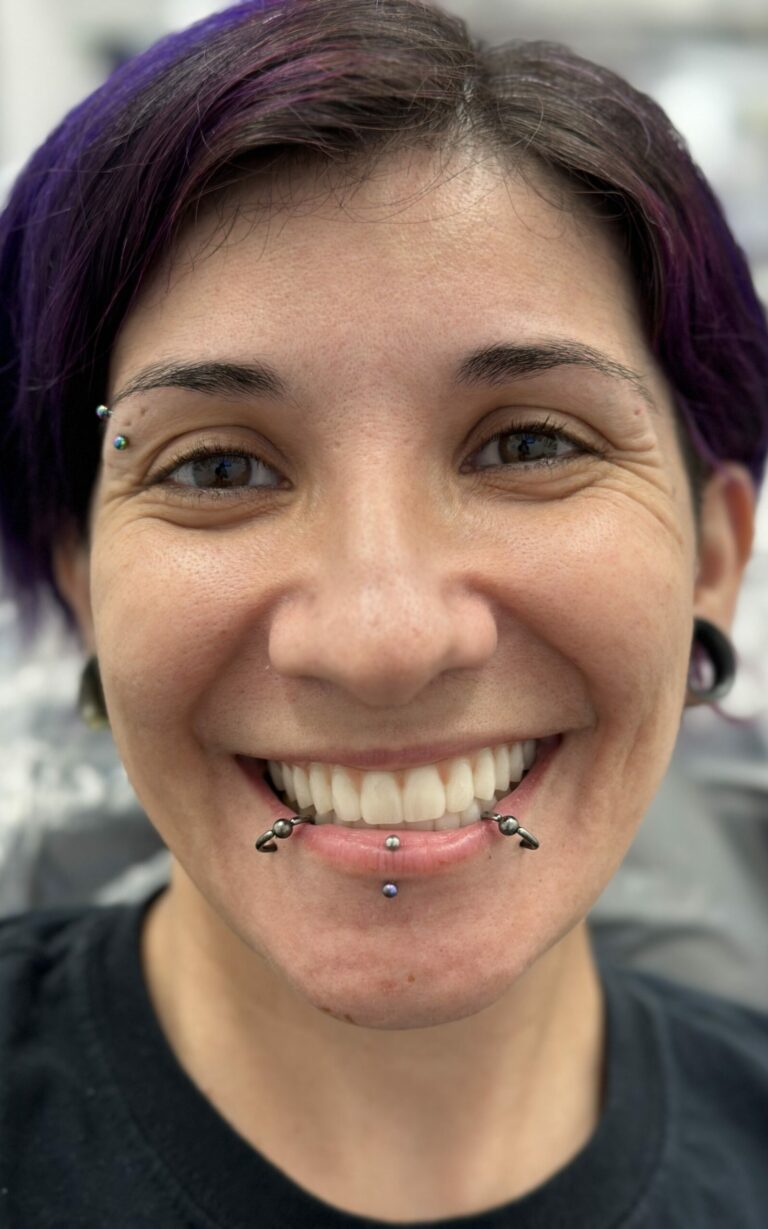
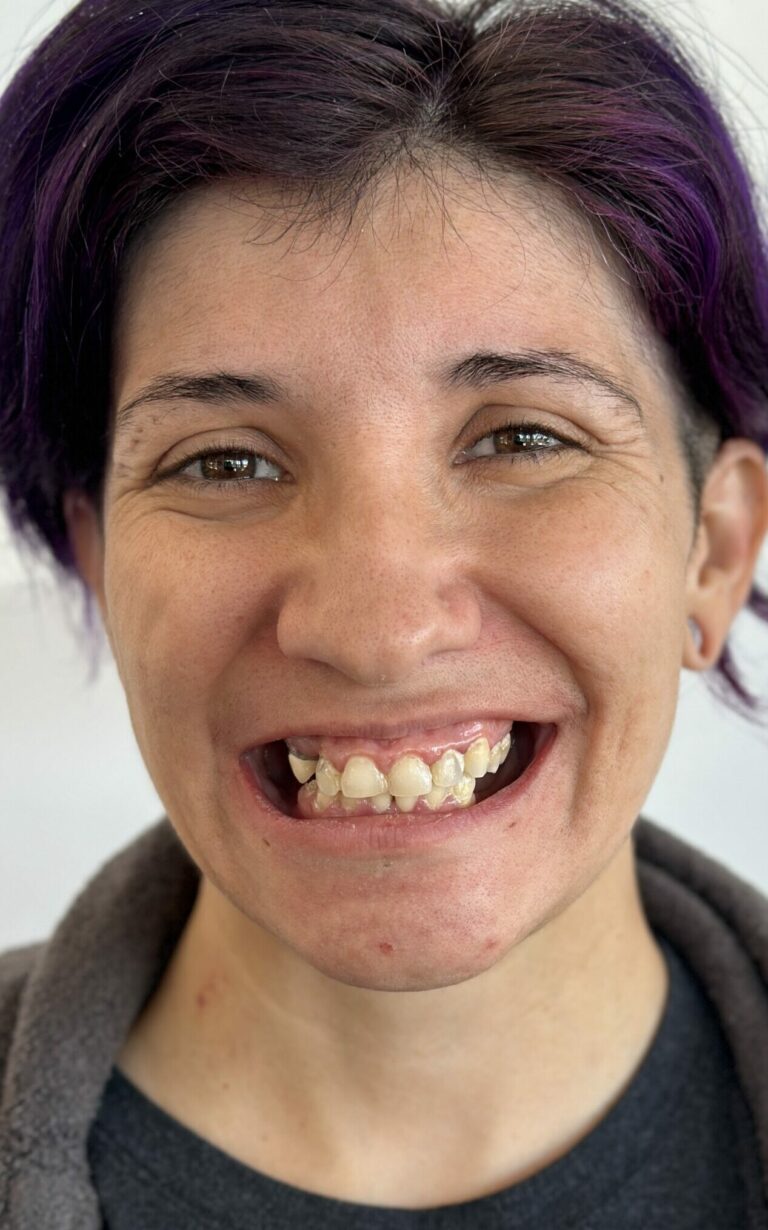
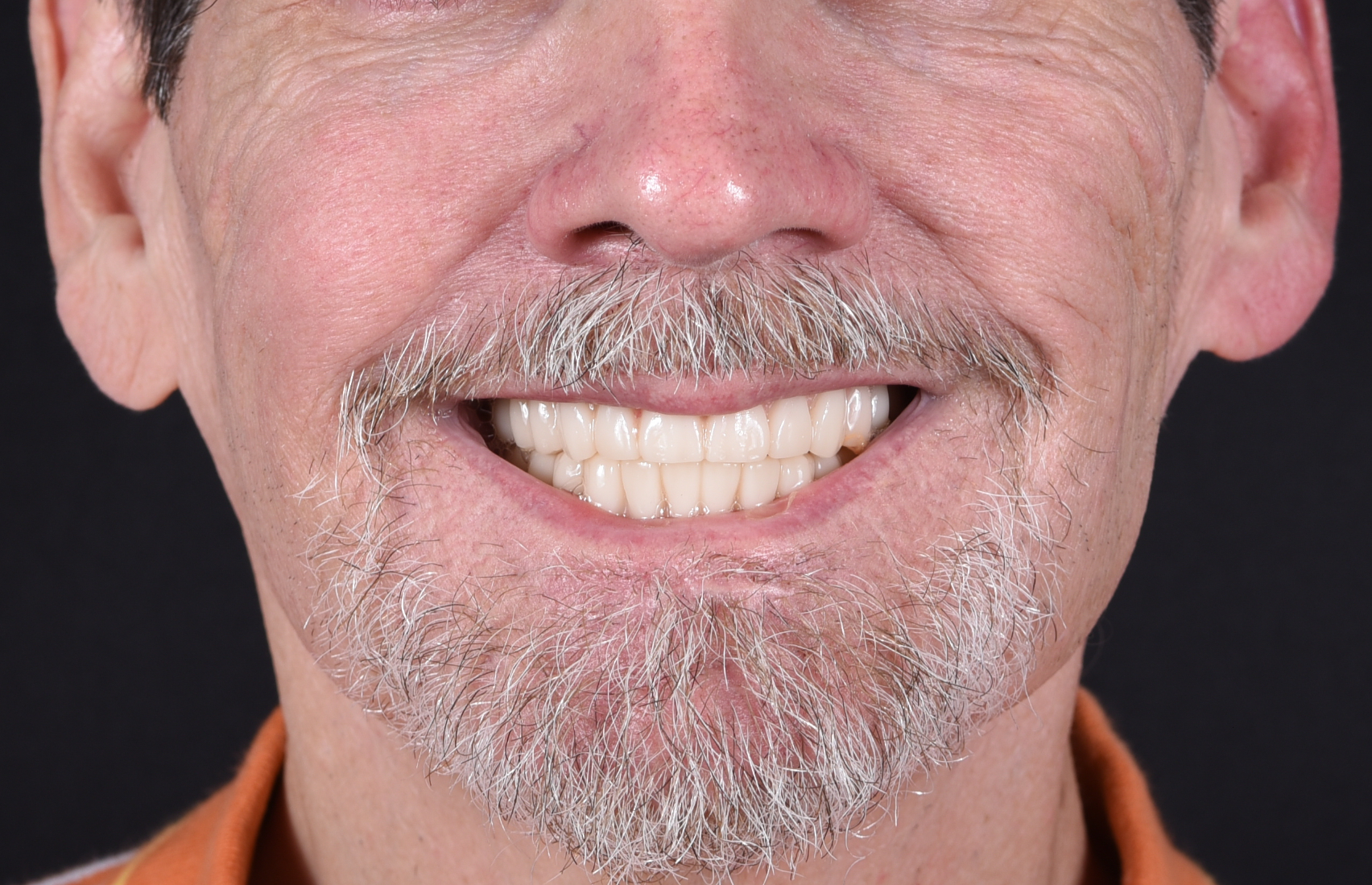
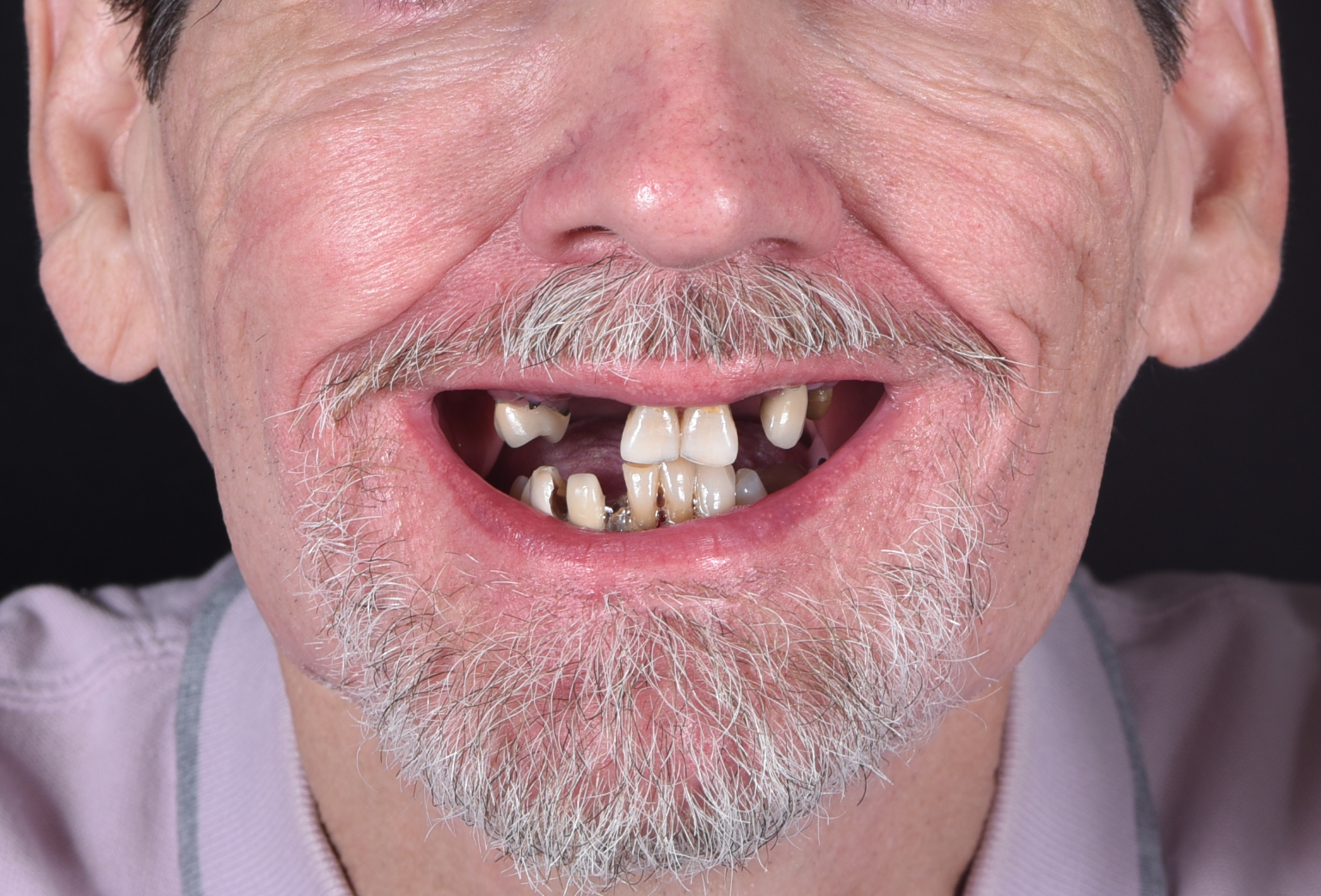
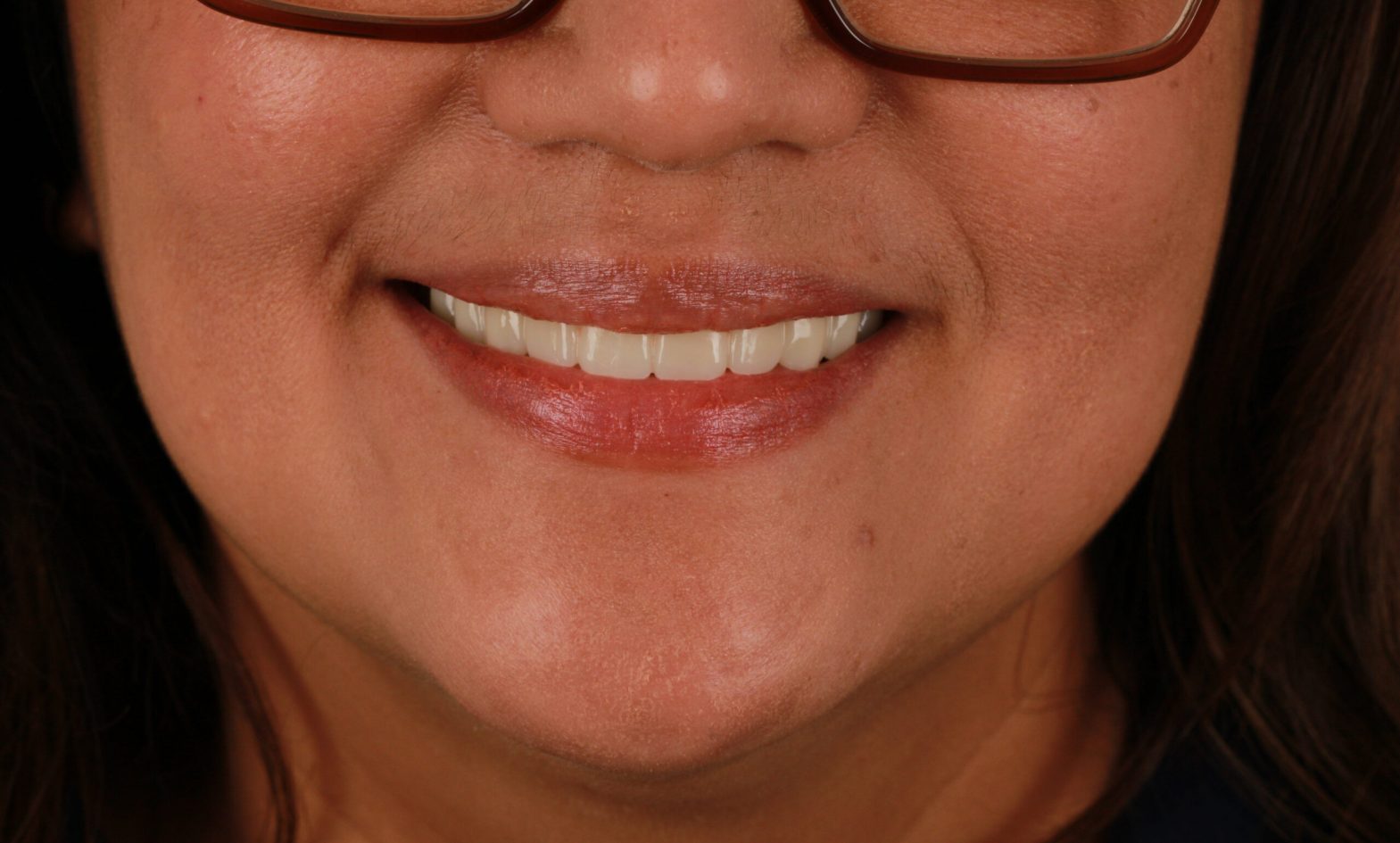
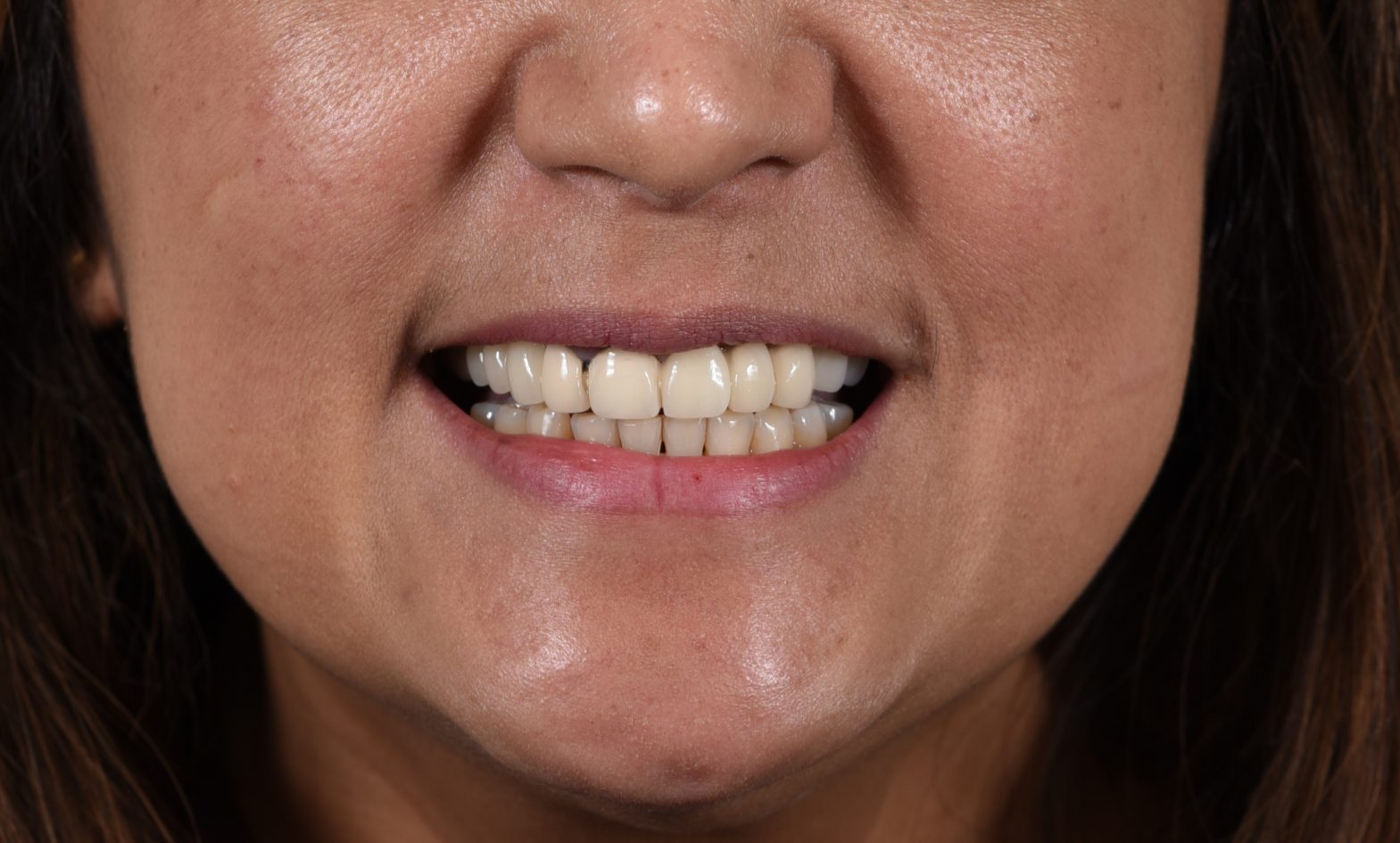
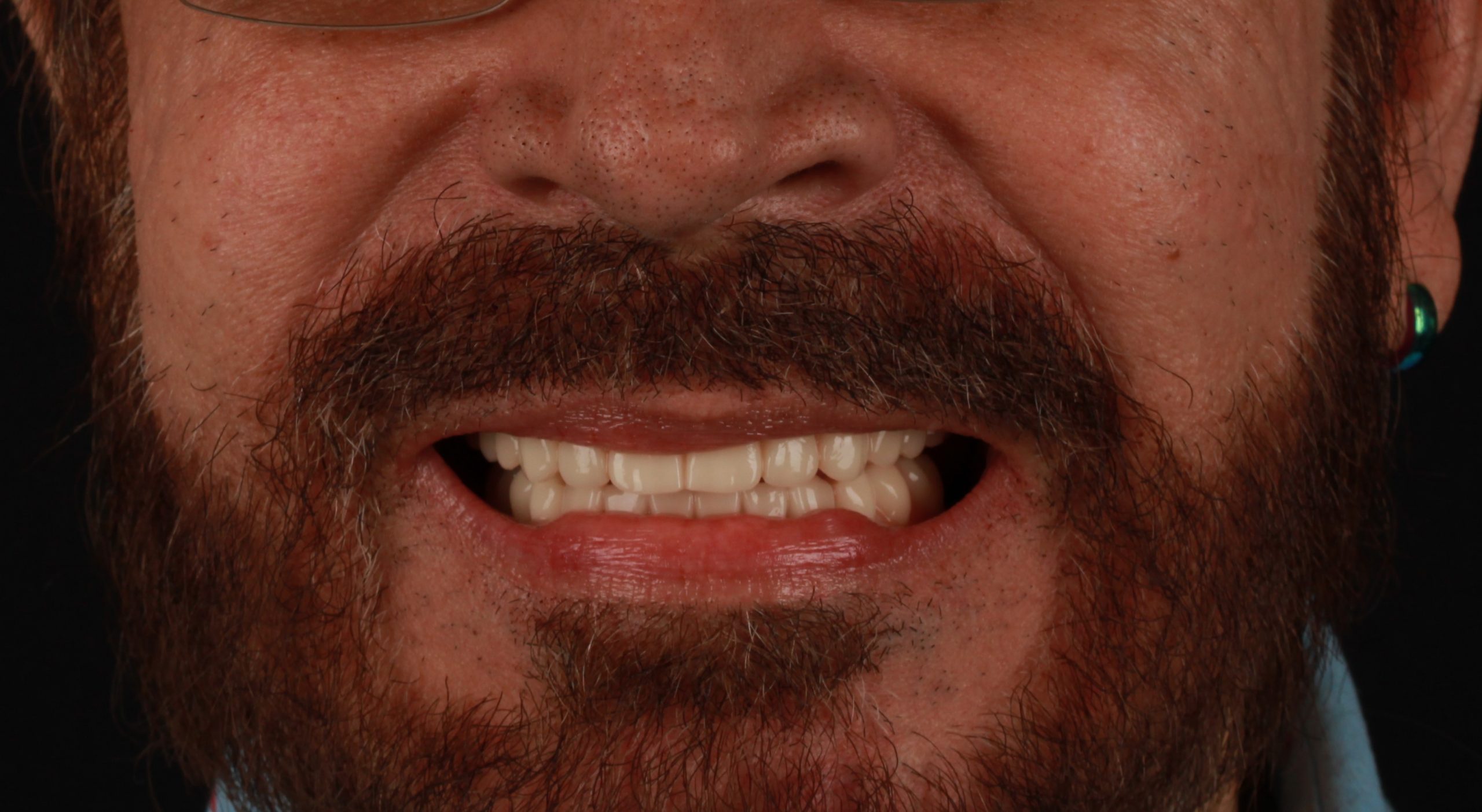
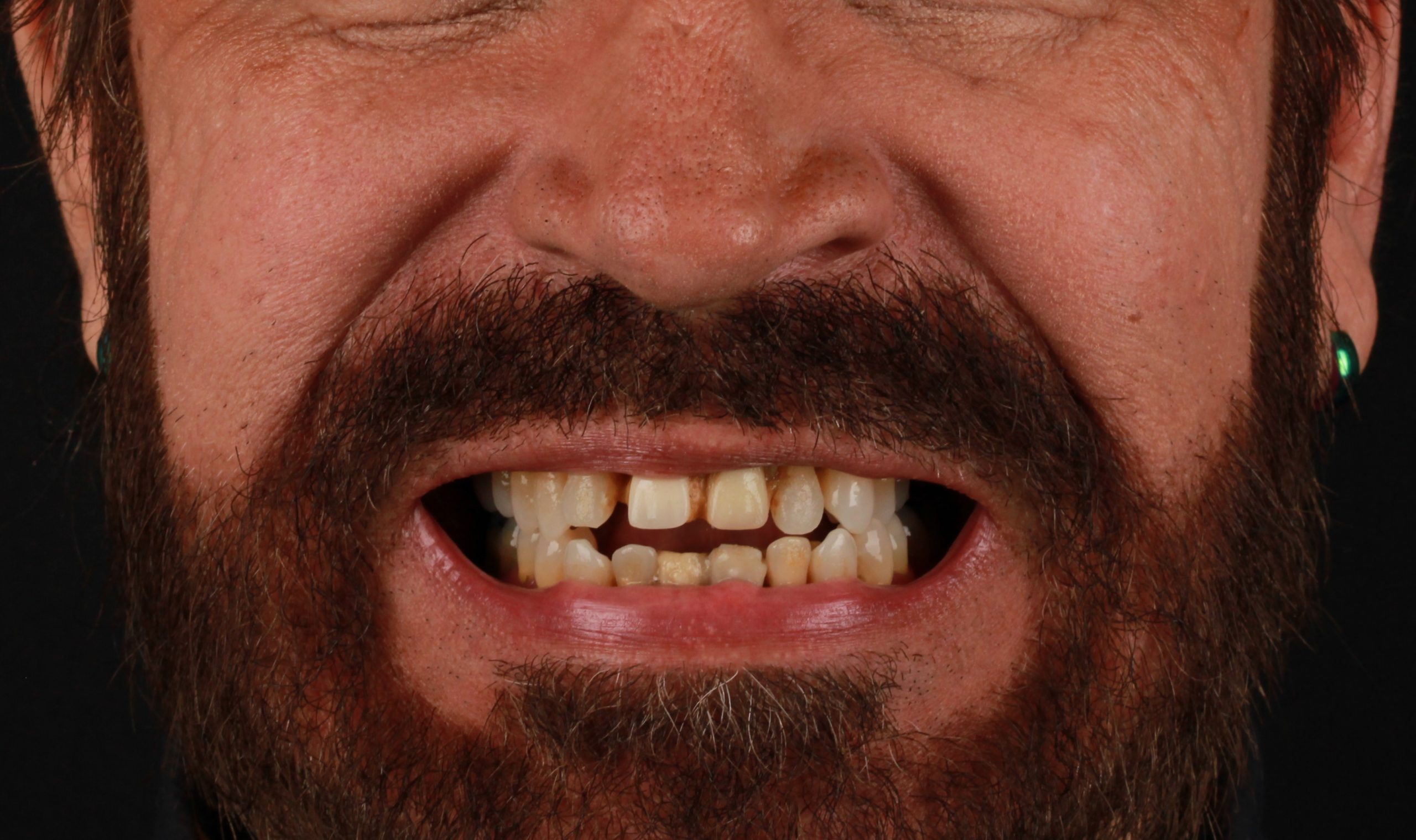
Like any implant procedure, All-on-6 comes with benefits and risks. Understanding both helps you make a well-informed decision.
Benefits
Risks & Considerations
All-on-6 treatment involves two phases:

This stage is intentional. It ensures your final prosthesis fits correctly and feels natural.
When choosing the right final prosthesis, we consider:
There is no single "best" material.
The correct choice depends on your functional needs and esthetic goals, which we plan during the healing phase.
Most Popular
A single milled block of ceramic. Very high strength and fracture resistance with natural translucency and polish.
Best for: Patients who want a durable, highly esthetic long-term result.
For Heavy Biters
Zirconia or nano-ceramic layered over a titanium bar. Excellent structural stability and load distribution with highly customizable esthetics.
Best for: Patients with strong bite forces or parafunction who need additional reinforcement.
Budget Option
Reinforced acrylic over a metal bar. Lower long-term wear resistance with acceptable esthetics.
Best for: Patients seeking a lower-cost final prosthesis or planning a future upgrade.
We will review material options in detail during your design appointments and help you choose the prosthesis that supports both function and esthetics long term.
A full-arch implant restoration is a long-term treatment. Like natural teeth, it requires ongoing care to protect the implants, prosthesis, and surrounding tissues. Proper maintenance ensures comfort, function, and stability over time.
We schedule maintenance visits at regular intervals to evaluate:
These visits help prevent small issues from developing into larger problems.
The prosthesis does not decay, but plaque and biofilm can still accumulate around the implants. Not all dental offices are equipped to clean full-arch restorations correctly.
At Smile Science Dental Spa:
This is a meaningful part of your long-term outcome.
Your daily routine will include:
These steps reduce inflammation and support long-term implant health.
Over time, we may make small adjustments to your bite or prosthesis. This is normal. These adjustments help distribute forces evenly and maintain comfort.
A final prosthesis is long-term, but not permanent in the same sense as natural enamel. Materials can wear or chip over many years of use. With proper care, full-arch restorations are designed to function for many years before any component needs repair or replacement.
Six-implant full-arch restoration — transparent, all-inclusive pricing confirmed after your free CBCT evaluation
Typically, All-on-6 costs the same as All-on-4® at Smile Science Dental Spa — starting at $14,999 per arch. Final cost depends on materials selected, bone management needed, and prosthetic design. A written all-inclusive cost estimate is provided after your free consultation and CBCT scan.
All-on-4® and All-on-6 are priced comparably at our office. Both start from $14,999 per arch. Snap-in overdentures start at $5,995. The choice between All-on-6 and All-on-4® is based on bone volume, arch size, and bite load — not price. Both options are discussed at your consultation.
Cherry, Proceed Finance, Sunbit, and CareCredit are all accepted. Monthly payment plans are available. Ask our team about current promotional offers. FSA and HSA funds may also be applied to the full treatment cost.
4.9 (437 reviews)
I recently had the pleasure of visiting Smile Science Dental Spa, and I couldn't be more impressed with the level of care and service provided by the entire team. Dr. Dawson and Dr. Turke are both incredibly skilled and made me feel completely at ease throughout my procedures. Their professionalism, combined with their gentle approach, made me feel comfortable and well-informed every step of the way. I was especially impressed that I was able to get a same-day crown(apparently their first ever!), which exceeded my expectations. I couldn’t believe how quick and seamless the process was. It really saved me time and made the experience even more convenient. Cindiray and Angeles, the dental assistants, were equally wonderful. They were not only friendly and attentive but also thorough in explaining everything and made sure I was relaxed during each phase of my visit. Lastly, a big thank you to Litzy at the front desk, who greeted me with a smile and helped with scheduling and any questions I had. She made the entire check-in process a breeze. From start to finish, my experience at Smile Science Dental Spa was exceptional. I'll be returning for sure. I highly, highly, highly recommend them for anyone looking for high-quality dental care.
View Full Review on GoogleDusty
Honestly I’ve never been so happy to go to the dentist. I came in (late due to Lyft) and was still taken care of and treated with care. Even without insurance (kicking in within the next month) prices for an extraction on my infected tooth were more than reasonable. I was able to get more than expected done in the same visit. Dr. Dawson and his team made me feel so comfortable and taken care of. Won’t go anywhere else.
View Full Review on GoogleCherish B
I recently started as a patient after leaving our long-time family Dentist and couldn’t be happier! Marcela is AMAZING and a FANTASTIC hygienist!!!! 😃 Dr Dawson is great too! Every time I visit, they make me feel like family.
View Full Review on GoogleTJ Winzeler
Myself and my family had previously gone to Dr. Turk at another dental office that he worked at. He had relocated and we did not know where he had gone to until this week. Today I got in with Dr. Turk and he took the time to look at my x-rays carefully . I was having pain from a tooth and some other issues. The previous Dentist I went to that I saw just a few days earlier, he did not find any issues with my tooth which I had pain in. Dr. Turk identified infection and referred me to an endodontist. He is very gentle as a wonderful disposition and my self and my family are thrilled to be able to get back with him. The office is lovely, relaxing music, heat and massage chair.I have always been very nervous and some anxiety going to dentist as I have had bad reactions with the anesthesia. I am confident that Dr. Kirk will help me get through my next appointment just fine. “The staff are very kind and attentive. I am looking forward as I have quite a bit of work to be done, and I know I’m in good hands with Dr. Turk and his staff. Five stars!⭐️ Sherry
View Full Review on GoogleSherry Redmond
I recently moved to Arizona and had an issue with a tooth repair from 15 years back. Not knowing anyone here in my new home, I searched dentists close to me. I chose Smile Science much like pinning the tail on the donkey and my selection couldn't have been better! What a terrific staff! Dr. Turke was concerned the tooth would need to be extracted, but said he wanted to take a shot at saving it..and that's just what he did! After setting a temporary crown, I was on my way with an appointment to install the permanent crown in the following two weeks. That evening I received a call I've never received from a dentist. Dr. Turke had taken the time to follow up with me to make sure I wasn't in any discomfort..I was completely caught off guard by this kind of attention to detail and caring for my well being. The permanent crown is now in place, it fits and feels fantastic, the job and treatment are first class! Thank you, Dr. Turke and staff for taking in this stray and giving me a home dentist! I'd like to say that I'm just good at selecting blindly, but the truth is I am very lucky..and I'll take lucky over being good any day of the week! Thank you, again and Happiest of New Year's in 2026, Science Smile!!
View Full Review on GoogleEddy
Interactive candidacy assessment
Walk through the same screening questions a real implant consult covers: bone, gum health, medical history and lifestyle. We’ll tell you what tier you fall into and which treatment path fits your situation. Most patients finish in under three minutes.
Final candidacy is confirmed by a clinical exam and 3D imaging. This tool gives you the same screening framework a real consult uses, so you arrive informed and ready to ask the right questions.
Reference
Every implant consult places you into one of five candidacy tiers. The interactive tool above predicts your tier from your answers; a clinical exam confirms it.
Healthy bone, healthy gums, no medical or lifestyle factors that interfere with implant integration. The most predictable case type with the highest long-term success rates.
A strong candidate after addressing one or two factors first, typically a deep cleaning for mild gum issues, a simple bone graft for minor bone loss, or stabilizing a medical condition.
The bone in the implant area has shrunk too much to support a standard implant directly. A bone graft (sometimes combined with a sinus lift) builds the site back up over 4–6 months, after which implants are placed normally.
Full-arch tooth replacement combined with severe bone loss. Treatment options like All-on-4, All-on-6, or zygomatic implants (anchored in the cheekbone) make implants possible when traditional placement isn't. Most general practices refer these out. Smile Science places them in-house.
A factor blocks implants safely right now, typically uncontrolled diabetes, IV bisphosphonates, recent head/neck radiation, active periodontitis, or being under 18. The right next step is a planning consult to identify the blocking factor and map out a path that resolves it.
At Smile Science Dental Spa, All-on-6 starts at $14,999 per arch — the same price as All-on-4®. This is all-inclusive: implants, surgery, provisional bridge, and final restoration. The exact fee depends on materials selected, any additional bone management needed, and the number of arches being treated. A written treatment plan with full cost breakdown is provided after your free consultation and CBCT scan.
For most patients who qualify, yes. All-on-6 provides a fixed, non-removable full-arch restoration that functions like natural teeth. It preserves jawbone, restores chewing strength, and eliminates the inconvenience of removable dentures. Whether it is the right choice depends on your bone anatomy, bite force, and long-term goals — all of which we evaluate at your consultation.
Neither is universally better. All-on-4® uses four implants and may be preferred when bone support is adequate and surgery should be streamlined. All-on-6 uses six implants and is chosen for patients with wider arches, stronger bite forces, uneven bone distribution, or when maximum long-term stability is the goal. We determine the best approach using CBCT imaging and a full clinical evaluation — not a formula.
All-on-6 requires surgery and a healing period of 3–6 months. Implant failure is possible, especially with smoking or uncontrolled medical conditions. More implants mean a slightly longer surgical appointment. Cost is higher than removable denture options. Bone grafting may be needed in some cases. The provisional bridge may require minor adjustments during the healing phase. A thorough evaluation helps identify these risks before treatment begins.
The surgical appointment typically takes one to two hours per arch. Patients often leave the same day with a fixed provisional bridge. The full treatment process — from implant placement to final bridge delivery — spans approximately 3–6 months to allow proper osseointegration. Final prosthesis delivery requires two to three additional appointments.
Traditional Medicare does not cover dental implants. Some Medicare Advantage plans include limited dental benefits, but full-arch implant treatment is rarely covered. Most dental insurance plans also do not cover implants or provide only partial coverage for specific components. We recommend calling your insurer directly to confirm. We offer multiple financing options — including Cherry, Proceed Finance, Sunbit, and CareCredit — to make treatment affordable.
We offer full-contour zirconia, titanium-reinforced hybrid frameworks (zirconia or nano-ceramic over a titanium bar), and acrylic or PMMA hybrid options. The right material depends on your bite force, esthetic goals, bone support, and maintenance expectations. We review all options in detail during your design appointments and help you choose the prosthesis that best supports function and esthetics long term.
Bone loss does not automatically disqualify you. Many patients with significant bone loss qualify for All-on-6 using tilted implants, bone grafting, or advanced anchorage techniques such as zygomatic or pterygoid implants. Patients with strong bite forces often benefit specifically from six-implant support, as the added implants distribute force more evenly across the arch. A CBCT scan is required to determine your options.
Daily cleaning under the bridge with a water flosser and soft brush, plus professional maintenance every 3–4 months. At each maintenance visit, we check implant stability, tissue health, bite alignment, and prosthesis integrity. Wearing a night guard as prescribed and attending all scheduled visits protects your investment and helps implants last for decades.
Yes. We offer all levels of sedation — from oral conscious sedation to IV sedation and general anesthesia administered by a board-certified dental anesthesiologist. Most full-arch patients choose IV sedation for a calm, controlled experience. You will be monitored throughout and will not feel pain during the procedure. Sedation options are reviewed at your consultation based on your medical history and preferences.

The patient education on this page is aligned with current literature on six-implant full-arch therapy, immediate loading protocols, and prosthetic material selection. Key findings from published research include:
You've probably seen other implant centers advertising "lifetime warranties." The reality is that those promises often sound better than they actually are. Dental implants can last many years, but they are medical devices that require ongoing care, and no one can guarantee a prosthesis for life.
We prefer to be clear and honest with you up front.
| What’s Covered | How Long | What it Means | Your Part |
|---|---|---|---|
| Implant Fixture (the titanium implant in bone) | 10 years | If the implant fails under normal use, we will replace the fixture. | Regular hygiene visits, good home care, proper nightguard use, no nicotine use, and follow your maintenance plan. |
| Prosthetic Restoration (bridge, full arch, or crown) | 5 years | Covers fractures or failures under normal use. We'll repair or replace as needed. | Routine scheduled checks, report issues early, wear a night guard as prescribed. |
| Surgical Complications | 3 years | If a fixture fails early despite proper healing, we'll replace it at no fee. | Follow post-op instructions and attend follow-up appointments. |
You deserve a warranty that’s clear, not just clever wording. We choose transparency over marketing gimmicks, so you know exactly what’s covered, how long it’s covered, and what’s expected to keep it valid. Our patients trust us because we make straightforward promises and keep them.
Free consultations include same-day CBCT scan, photography, & treatment planning. No commitment required.