
Pick your insurance
Sixteen carriers including Delta, Cigna, Aetna, all 4 major BCBS-network plans, AARP, and "I don't see my plan." We file claims for every carrier.
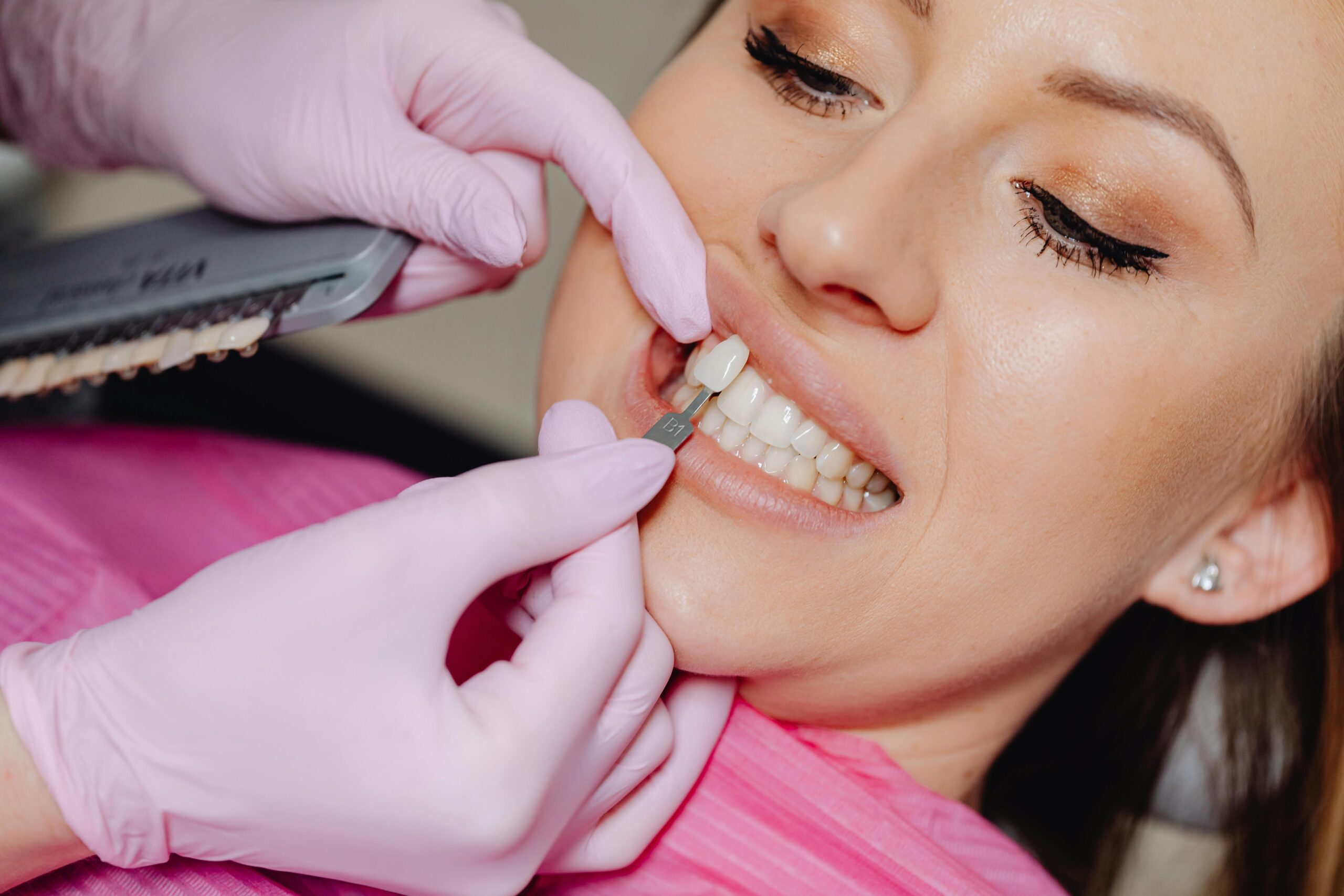
Glendale, Arizona
Walk in with a broken or damaged tooth. Walk out the same day with a permanent ceramic crown. SmileScience Dental Spa mills all-ceramic crowns in our on-site PlanMeca 60S digital lab -- no temporary crown, no second appointment, no waiting two weeks for a lab to send it back.
Traditional crown treatment requires two appointments separated by two to three weeks. At the first visit, the tooth is prepared, a conventional impression is taken, and a temporary crown is cemented. You leave with a provisional restoration that may be sensitive, can come off, and does not match the final result. Two weeks later, you return to seat the permanent crown.
SmileScience Dental Spa eliminates that entire process. Dr. John Turke uses the Trios 5 intraoral scanner to capture a precise digital impression, designs the crown digitally at chairside, mills it in our on-site PlanMeca 60S lab from a solid ceramic block, and seats the permanent restoration -- all in a single appointment.
There is no temporary crown. No second visit. No waiting for a dental laboratory. You leave with a permanent, custom-fabricated ceramic crown the same day your tooth is prepared.
Dr. Turke has built his restorative practice around digital workflows. Same-day crown fabrication is the standard at SmileScience -- not an occasional service -- and the PlanMeca 60S lab operates on all clinical days.
Same-Day Crowns at SmileScience Dental Spa -- Glendale, AZ
A same-day crown appointment at SmileScience takes approximately 2 to 3 hours from start to finish. Here is exactly what happens.
Examination and Anesthesia
Dr. Turke examines the tooth and any relevant imaging to confirm a crown is the appropriate treatment. Local anesthesia is administered, and the tooth is prepared -- reducing it to create space for the crown material and ensuring the margins are clean and precisely defined.
Digital Impression (No Goop Required)
The Trios 5 intraoral scanner captures a full-color 3D model of the prepared tooth, surrounding teeth, and opposing bite in about two minutes. No traditional impression trays, no gagging, no messy material. The scan is accurate to within 20 microns -- more precise than most conventional impressions.
Chairside Crown Design
Dr. Turke designs the crown in CAD/CAM software at the chairside computer. The design accounts for the adjacent teeth, the opposing bite, the margin fit, and the occlusal anatomy of the crown surface. You can see the design on screen before milling begins. If the tooth position or color shade requires discussion, that happens now -- not after a temporary has been worn for two weeks.
In-House Milling (About 15 -- 20 Minutes)
The design is sent to the PlanMeca 60S mill, which carves the crown from a solid block of E.max ceramic or zirconia. The 5-axis mill produces internal geometry and margin fits that match the precision of an outside laboratory. Most patients wait comfortably in the chair or step out to the lobby while this runs.
Fit Verification, Shade, and Cementation
The milled crown is tried in, adjusted as needed, polished, and custom-stained to match the surrounding teeth. After final bite check and contact verification, it is bonded permanently. You leave with a completed crown -- not a temporary.
In-House Fabrication
After preparation and scanning, the proposed crown design appears on a chairside monitor. Dr. Turke adjusts the contours, bite contacts, and margins before the file is sent to the PlanMeca 60S mill -- which operates inside the practice, not at an outside laboratory.
The crown is milled from a ceramic blank in approximately 15 to 20 minutes, then polished, glazed, and bonded permanently -- all within the same appointment, at the same location.
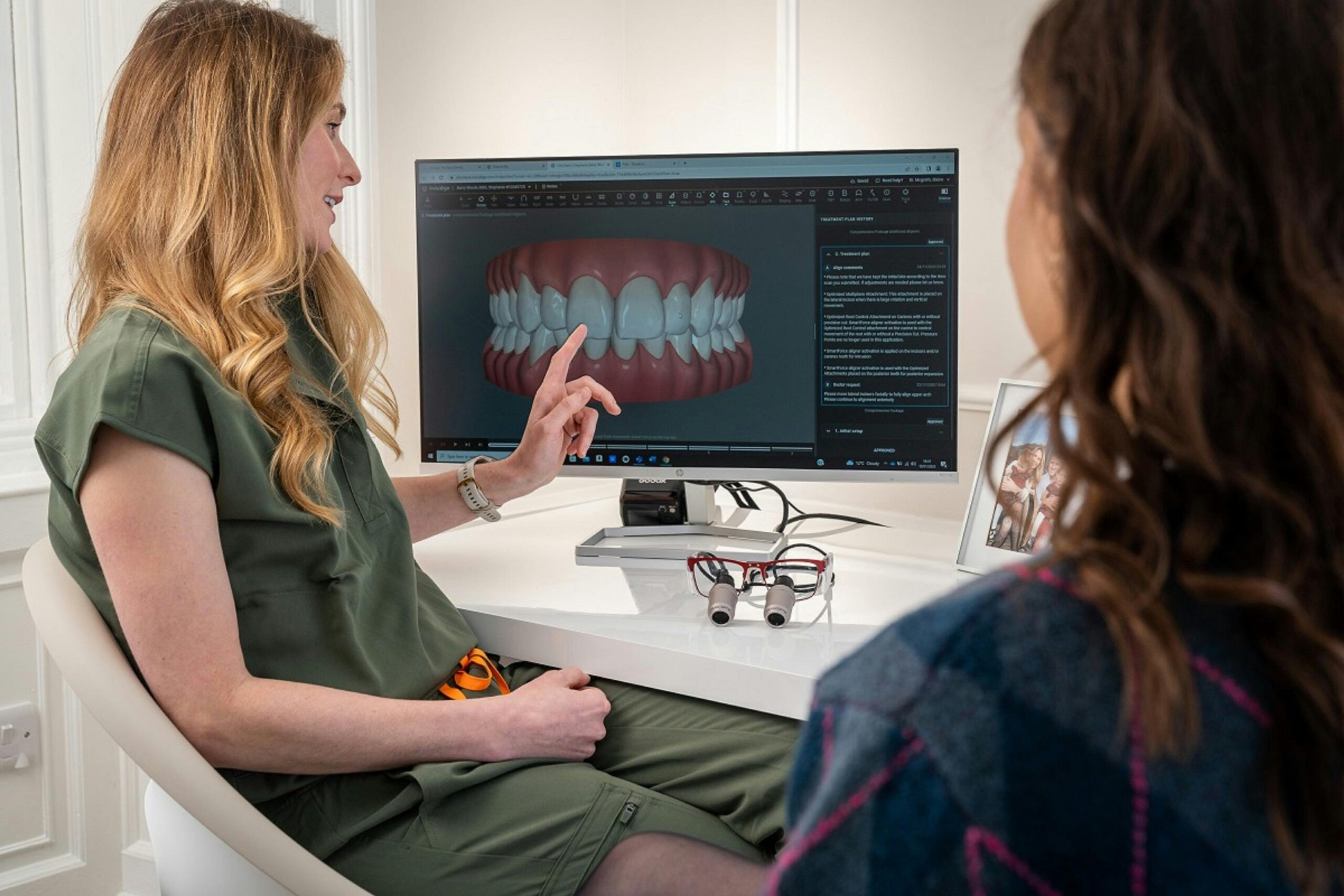
Both materials are milled in our PlanMeca 60S lab. Dr. Turke selects the material based on the tooth's position in the mouth, the bite forces involved, and the esthetic requirements of the case.
Best for: Front teeth, premolars, cases where natural-looking translucency is the priority
Best for: Posterior molars, patients who grind heavily, implant crowns, cases where strength is the priority
Why no metal?
All-ceramic crowns eliminate the dark line at the gumline that metal-ceramic crowns develop over time. They are metal-free for patients with sensitivities and require less tooth reduction in many cases because ceramic can be used at thinner cross-sections than older materials. Dr. Turke has not placed metal-ceramic crowns in years.
A crown covers the entire visible portion of a tooth, replacing the original structure when too much has been lost or damaged to support a filling or partial restoration. These are the most common clinical indications.
When decay has destroyed more than half the tooth's crown structure, a filling cannot reliably restore it. The remaining tooth walls become too thin to withstand chewing forces and are at risk of fracture. A crown protects what remains and restores full function.
A crack in the enamel or dentin can cause sharp pain when biting and may worsen over time if untreated. A crown binds the tooth together and prevents the crack from propagating into the root, which could require extraction.
Root canal treatment removes the pulp tissue that kept the tooth hydrated. The remaining tooth becomes more brittle over time. A crown is standard following root canal on any back tooth to prevent fracture under chewing forces.
Large amalgam fillings often develop cracks in the surrounding tooth structure over decades. When the margins fail or a cusp fractures, a crown is the appropriate replacement rather than replacing the filling again -- there is simply not enough tooth left for another filling.
Bruxism, acid erosion, or long-term attrition can flatten the biting surface of teeth to the point where normal function is impaired. Crowns rebuild the height and anatomy of worn teeth and restore proper occlusal function.
After a dental implant has osseointegrated, it requires a crown to function as a tooth. Implant crowns are also milled in the PlanMeca 60S lab and can often be placed in a single appointment once the implant abutment is confirmed.
| Factor | Same-Day Crown (SmileScience) | Traditional Crown (2 visits) |
|---|---|---|
| Appointments required | 1 | 2 (separated by 2 -- 3 weeks) |
| Temporary crown | None required | Yes -- worn for 2 -- 3 weeks |
| Wait time for final crown | 15 -- 20 minutes (milling) | 2 -- 3 weeks (outside lab) |
| Impression method | Digital intraoral scan | Traditional goop impression |
| Crown material | All-ceramic (E.max or zirconia) | Varies by lab -- metal-ceramic still common |
| Design review | Chairside, before milling | Lab technician decides off-site |
Both approaches deliver durable permanent crowns. The advantage of same-day is time and convenience -- not a compromise in quality.
Related Services
Live coverage estimator
Three quick taps — pick your insurance, pick your procedure, see the patient-cost range against our 2026 fee schedule next to our in-house membership plan. No login, no email, no sales pitch.
Estimate range, not a quote. Final cost depends on your specific plan benefits, remaining annual max, and clinical findings at your consult. Defaults used here: $1,500 annual max, $50 deductible.
Sixteen carriers including Delta, Cigna, Aetna, all 4 major BCBS-network plans, AARP, and "I don't see my plan." We file claims for every carrier.
Plain-language categories — Cleaning, Filling, Crown, Root Canal, Extraction, Gum Treatment, Implants, Cosmetic. Drill down to the specific option that matches your case.
Insurance estimate vs. our in-house membership plan, side-by-side. Ranges (not single numbers) so you're not surprised at the desk. Real 2026 Glendale-market pricing.
Yes, when milled from the same materials. E.max and zirconia blocks used in our PlanMeca 60S mill are identical to those sent to dental laboratories. The strength and longevity of the finished crown depends on the material, the preparation, and the fit -- not whether the crown was made in-house or off-site. Our same-day crowns carry the same long-term expectations as any other all-ceramic crown: 10 to 15+ years with proper care.
Plan for 2 to 3 hours. This includes examination, anesthesia, tooth preparation, digital scanning, design review, milling (about 15 to 20 minutes), shade finalization, fit adjustment, and cementation. The milling portion is automated, and most patients find it a good time to relax in the chair or step out briefly.
The preparation phase is done under local anesthesia, so you should not feel discomfort during the procedure. The tooth may be sensitive for a few days after the anesthesia wears off, particularly to temperature. This is normal and typically resolves within a week. Over-the-counter pain relief manages any discomfort well.
Most dental insurance plans cover ceramic crowns at the same benefit level as any other crown, typically 50% after your deductible. Coverage is determined by the procedure code, not by the manufacturing method. We verify your specific benefits before treatment and provide a written cost estimate. The out-of-pocket cost for a same-day crown is typically the same as a traditional crown under the same insurance plan.
All-ceramic crowns placed with proper preparation, cementation, and bite adjustment typically last 10 to 15 years or longer with routine maintenance. Longevity is most influenced by home hygiene, bite forces, and whether you grind your teeth at night. Patients who grind are strongly encouraged to wear a custom night guard to protect their crowns.
Most teeth can. Very rarely, a tooth may have unusual geometry -- significant subgingival margin depth, a complex post-and-core buildup, or a position that makes scanning difficult -- that makes a same-day approach less predictable. In those cases, Dr. Turke will discuss the best approach at your appointment. The majority of crown preparations at SmileScience are completed same-day.
A filling replaces material inside the tooth. An inlay fills within the cusps. An onlay covers one or more cusps and the fill area. A crown covers the entire visible surface of the tooth. Dr. Turke always recommends the most conservative option that provides adequate strength -- so if your tooth can be reliably restored with an onlay rather than a full crown, that is what will be recommended. Onlays are also milled same-day in the PlanMeca lab.
A same-day ceramic crown at SmileScience Dental Spa typically ranges from $1,200 to $1,800 out-of-pocket, depending on the tooth, the material, and your specific insurance coverage. Most dental insurance plans cover crowns at 50% after your deductible -- and because our same-day crowns use the same procedure codes as any other crown, they are reimbursed at the same rate. We verify your benefits before your appointment and provide a written cost estimate so there are no surprises. Financing through CareCredit, Cherry, and Sunbit is available for out-of-pocket balances.
4.9 (437 reviews)
I recently had the pleasure of visiting Smile Science Dental Spa, and I couldn't be more impressed with the level of care and service provided by the entire team. Dr. Dawson and Dr. Turke are both incredibly skilled and made me feel completely at ease throughout my procedures. Their professionalism, combined with their gentle approach, made me feel comfortable and well-informed every step of the way. I was especially impressed that I was able to get a same-day crown(apparently their first ever!), which exceeded my expectations. I couldn’t believe how quick and seamless the process was. It really saved me time and made the experience even more convenient. Cindiray and Angeles, the dental assistants, were equally wonderful. They were not only friendly and attentive but also thorough in explaining everything and made sure I was relaxed during each phase of my visit. Lastly, a big thank you to Litzy at the front desk, who greeted me with a smile and helped with scheduling and any questions I had. She made the entire check-in process a breeze. From start to finish, my experience at Smile Science Dental Spa was exceptional. I'll be returning for sure. I highly, highly, highly recommend them for anyone looking for high-quality dental care.
View Full Review on GoogleDusty
Honestly I’ve never been so happy to go to the dentist. I came in (late due to Lyft) and was still taken care of and treated with care. Even without insurance (kicking in within the next month) prices for an extraction on my infected tooth were more than reasonable. I was able to get more than expected done in the same visit. Dr. Dawson and his team made me feel so comfortable and taken care of. Won’t go anywhere else.
View Full Review on GoogleCherish B
I recently started as a patient after leaving our long-time family Dentist and couldn’t be happier! Marcela is AMAZING and a FANTASTIC hygienist!!!! 😃 Dr Dawson is great too! Every time I visit, they make me feel like family.
View Full Review on GoogleTJ Winzeler
Myself and my family had previously gone to Dr. Turk at another dental office that he worked at. He had relocated and we did not know where he had gone to until this week. Today I got in with Dr. Turk and he took the time to look at my x-rays carefully . I was having pain from a tooth and some other issues. The previous Dentist I went to that I saw just a few days earlier, he did not find any issues with my tooth which I had pain in. Dr. Turk identified infection and referred me to an endodontist. He is very gentle as a wonderful disposition and my self and my family are thrilled to be able to get back with him. The office is lovely, relaxing music, heat and massage chair.I have always been very nervous and some anxiety going to dentist as I have had bad reactions with the anesthesia. I am confident that Dr. Kirk will help me get through my next appointment just fine. “The staff are very kind and attentive. I am looking forward as I have quite a bit of work to be done, and I know I’m in good hands with Dr. Turk and his staff. Five stars!⭐️ Sherry
View Full Review on GoogleSherry Redmond
I recently moved to Arizona and had an issue with a tooth repair from 15 years back. Not knowing anyone here in my new home, I searched dentists close to me. I chose Smile Science much like pinning the tail on the donkey and my selection couldn't have been better! What a terrific staff! Dr. Turke was concerned the tooth would need to be extracted, but said he wanted to take a shot at saving it..and that's just what he did! After setting a temporary crown, I was on my way with an appointment to install the permanent crown in the following two weeks. That evening I received a call I've never received from a dentist. Dr. Turke had taken the time to follow up with me to make sure I wasn't in any discomfort..I was completely caught off guard by this kind of attention to detail and caring for my well being. The permanent crown is now in place, it fits and feels fantastic, the job and treatment are first class! Thank you, Dr. Turke and staff for taking in this stray and giving me a home dentist! I'd like to say that I'm just good at selecting blindly, but the truth is I am very lucky..and I'll take lucky over being good any day of the week! Thank you, again and Happiest of New Year's in 2026, Science Smile!!
View Full Review on GoogleEddy
No temporaries. No second appointment. No waiting weeks for a lab. Request an appointment with Dr. Turke at SmileScience Dental Spa in Glendale, AZ.


