
Pick your insurance
Sixteen carriers including Delta, Cigna, Aetna, all 4 major BCBS-network plans, AARP, and "I don't see my plan." We file claims for every carrier.

Glendale, Arizona
Services provided by an Arizona licensed general dentist.
When damage, decay, or tooth loss has affected most of your mouth, treating each problem in isolation produces unpredictable results. Full mouth rehabilitation rebuilds every tooth together -- restoring function, eliminating pain, and giving you a smile that works and lasts for decades.
Full mouth rehabilitation -- also called full mouth reconstruction -- is a comprehensive, coordinated treatment plan that restores every tooth in your mouth to proper health, function, and form. Unlike treating teeth one at a time, rehabilitation addresses the bite as a whole system, correcting problems that are interconnected and would otherwise continue recurring.
The goal is not purely cosmetic. Rehabilitation begins with function: stabilizing the bite, eliminating infection and decay, replacing missing teeth, and building a foundation that supports long-term oral health. Aesthetic improvement is frequently a byproduct -- but the clinical driver is always function first.
Because every case is different, there is no standard "full mouth rehab package." The treatment plan is built specifically around what your mouth needs -- which is determined by a comprehensive clinical exam and imaging session, not a template.
Full Mouth Rehabilitation at SmileScience Dental Spa -- Glendale, AZ
SmileScience patient. Full-arch restoration combining implants, ceramic crowns, and bite rehabilitation performed by Drs. Turke and Dawson.
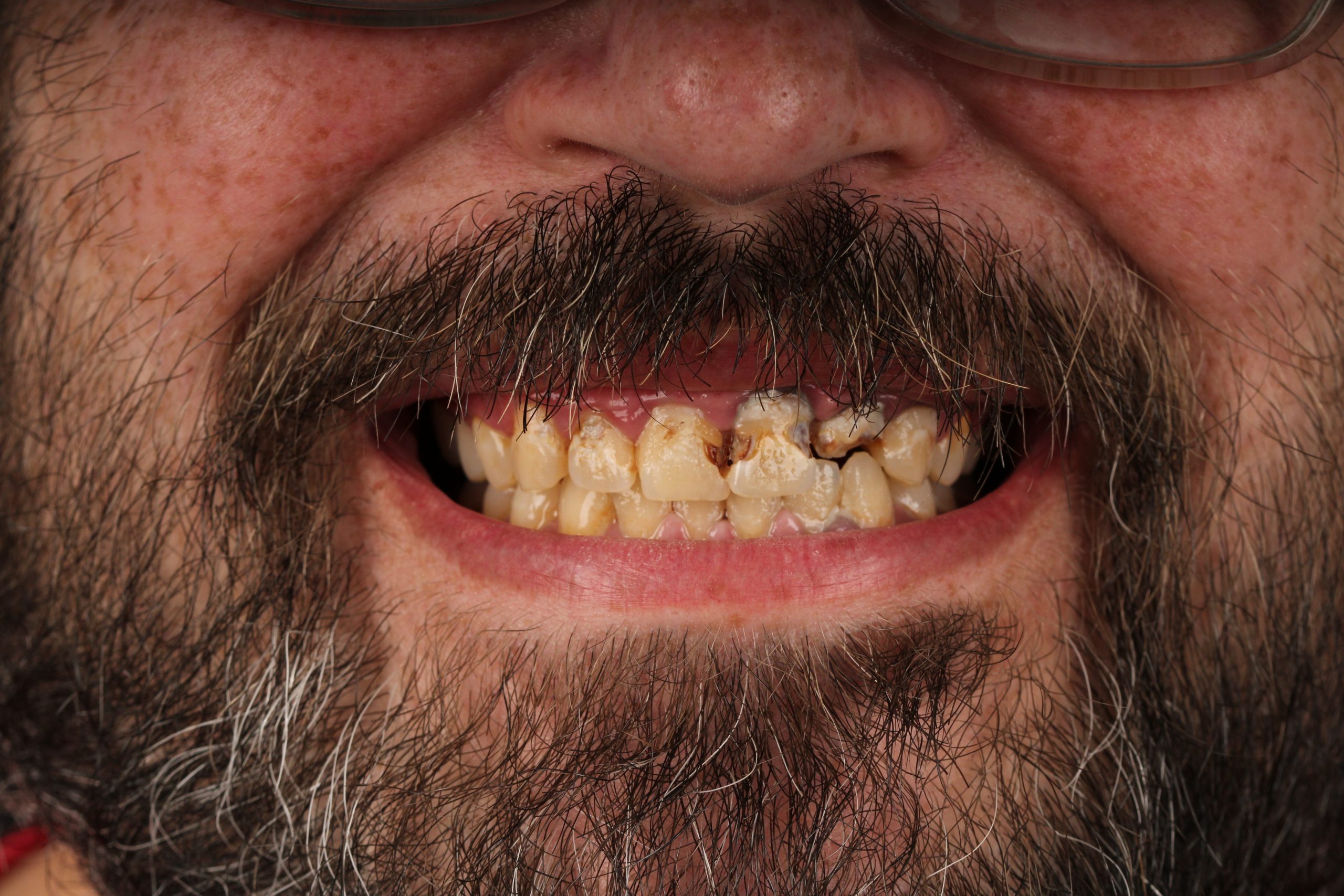
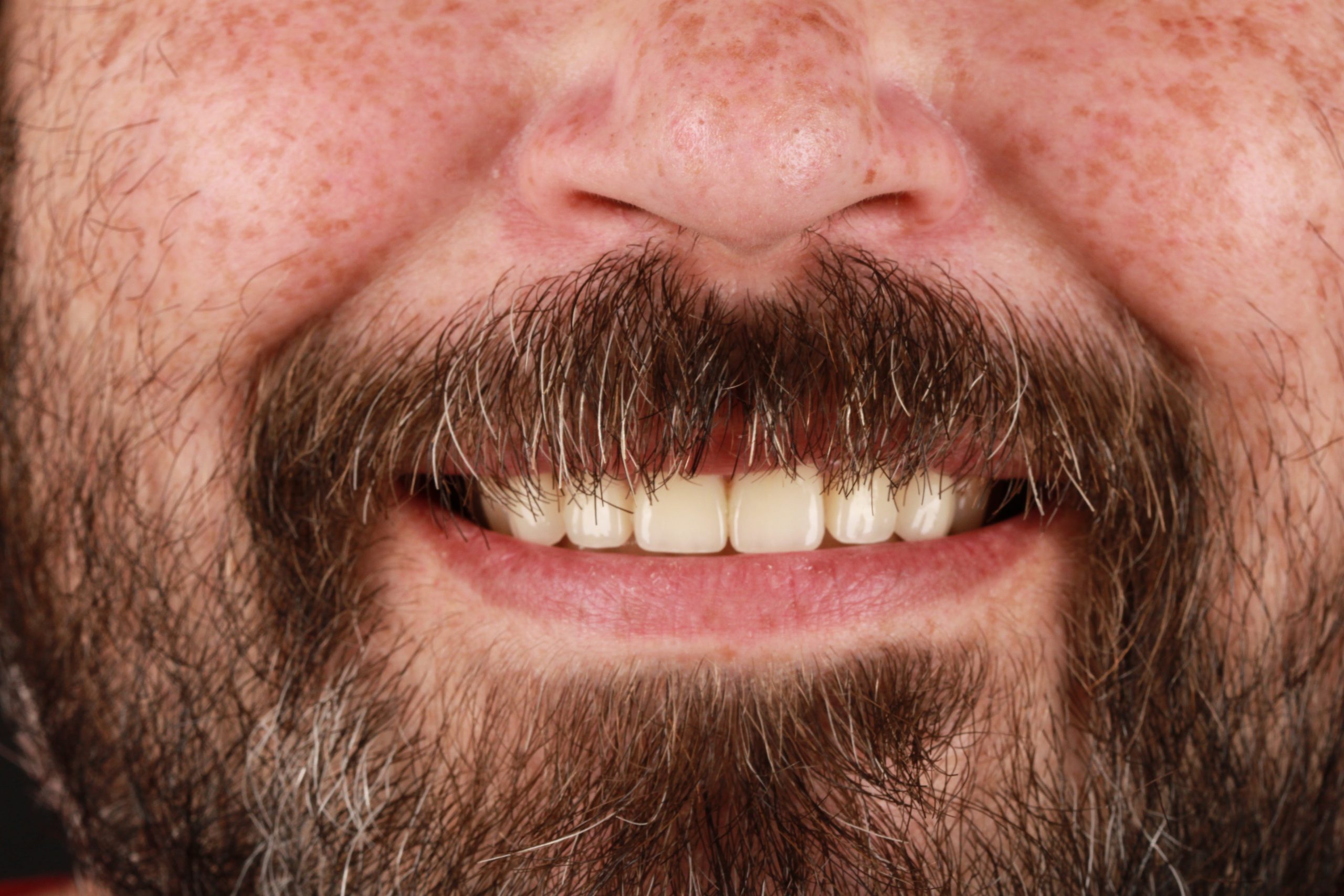
Individual results vary. Photos shared with patient consent.
Primary driver: function and health. The patient's bite, teeth, gums, and bone are compromised. Treatment is medically necessary -- not elective. Aesthetics improve as a result of rebuilding healthy structure.
Common presentations: Severe tooth wear, acid erosion, extensive decay affecting most teeth, multiple missing teeth impacting the bite, bite collapse, TMJ/bruxism-related damage, failed prior dentistry throughout the mouth.
Treatment complexity: High. Often involves implants, bone grafting, root canals, extractions, gum therapy, and full-arch crowns or veneers in a specific sequence over months.
Primary driver: appearance. The patient's bite and oral health are fundamentally sound. The motivation is improving the look of the smile -- color, shape, spacing, or proportions.
Common presentations: Discoloration, chipped or worn edges, gaps between teeth, teeth that are too small or irregular in shape -- in a mouth that is otherwise healthy.
Treatment complexity: Moderate. Typically involves veneers, bonding, whitening, and possibly crowns -- but does not require addressing significant structural or health deficits first.
Some patients need both. When that is the case, Dr. Turke and Dr. Dawson collaborate to sequence the restorative and cosmetic phases so each phase supports the next and no work needs to be redone.
If you recognize yourself in any of these descriptions, a comprehensive consultation is the right first step.
Decades of grinding (bruxism), acid erosion from reflux or diet, or long-term wear have flattened the chewing surfaces of most teeth. The vertical dimension of the bite has collapsed -- making the face appear shorter and putting enormous strain on the jaw joints. Rehabilitation rebuilds the height, shape, and function of every tooth simultaneously.
When the majority of teeth have active or progressed decay -- whether from years without dental care, dry mouth, dietary habits, or other factors -- treating each cavity individually is less efficient and less predictable than addressing the whole mouth with a coordinated plan. A comprehensive approach also catches patterns that individual treatment would miss.
When several teeth are missing -- especially back teeth -- remaining teeth shift, tilt, and over-erupt into the spaces. The bite becomes progressively more uneven, placing destructive forces on specific teeth. Adjacent and opposing teeth wear abnormally. Rehabilitation replaces missing teeth and corrects the chain of problems their absence created.
When the bite is unbalanced -- whether from tooth loss, worn teeth, or poorly done prior restorations -- the jaw joints and chewing muscles absorb uneven forces. The result is TMJ pain, chronic headaches, jaw clicking, and muscle fatigue. Rehabilitation corrects the bite at its source rather than only managing TMJ symptoms in isolation.
A car accident, sports injury, or serious fall can fracture multiple teeth simultaneously, displace others, and cause bone loss that compounds over time. Rehabilitation after trauma requires a careful, staged approach -- often beginning with emergency stabilization and progressing through implants, bone grafting, and final restorations over 12 -- 24 months.
Patients born with conditions such as amelogenesis imperfecta, dentinogenesis imperfecta, or ectodermal dysplasia have teeth that are structurally abnormal and prone to wear, fracture, and sensitivity from eruption. Full mouth rehabilitation provides definitive, long-term restoration of every affected tooth.
Old crowns, large amalgam fillings, and bridgework deteriorate over decades. When multiple restorations are failing simultaneously, the most efficient approach is a comprehensive plan that replaces them in a coordinated sequence. Piecemeal replacement leads to mismatched restorations that do not fit together properly.
Life circumstances -- financial hardship, dental anxiety, health crises, geographic constraints -- sometimes mean years pass without dental care. A patient who returns after a long absence often has multiple simultaneous problems. We approach these cases without judgment, creating a realistic phased plan that makes treatment manageable.
No two rehabilitation plans are identical. The procedures below are the building blocks -- your plan will include the specific combination your mouth requires.
Titanium posts are placed directly into the jawbone, replacing missing tooth roots and providing stable anchors for crowns, bridges, or full-arch restorations. Implants prevent bone resorption that otherwise accelerates after tooth loss. Dr. Dawson places implants in-house.
CAD/CAM ceramic crowns restore the height, shape, and function of damaged or worn teeth. Bridges span the space of a missing tooth using adjacent teeth as anchors. Dr. Turke designs and mills same-day crowns in our PlanMeca 60S on-site digital lab -- no temporary, no second visit.
Used on front teeth when structure is intact but cosmetic improvement is part of the overall rehabilitation design. Veneers are often placed at the end of the restorative phase, once the functional foundation has been established.
Teeth that have reached an advanced stage of decay or been compromised by cracking may need root canal treatment before they can be restored with a crown. Root canals eliminate the infection and allow the tooth to serve as a stable foundation for a restoration.
Gum disease must be brought under control before any restorative work begins. Placing crowns on a foundation of active periodontitis accelerates failure. Scaling, root planing, and in some cases periodontal surgery create a healthy, stable gum and bone environment.
When teeth have been missing for years, the jawbone resorbs in those areas. Grafting rebuilds bone volume before implants are placed, ensuring long-term implant stability. Ridge augmentation, sinus lifts, and socket preservation grafts are performed in-house.
Before and after restoration, the bite must be precisely balanced. Selective equilibration removes premature contacts; night guards protect against bruxism; and in cases of significant vertical dimension loss, temporary restorations are used to verify the new bite position before permanent restorations are fabricated.
In cases where teeth have shifted significantly due to tooth loss, orthodontic movement -- using Invisalign or clear aligners -- may be part of the rehabilitation plan to create space, improve alignment, and reduce the amount of tooth reduction needed for crowns.
Full mouth rehabilitation requires both surgical and restorative expertise -- and those two disciplines are rarely found in a single provider. At SmileScience Dental Spa, Dr. Turke and Dr. Dawson practice side by side, sharing the same imaging, case records, and planning tools.
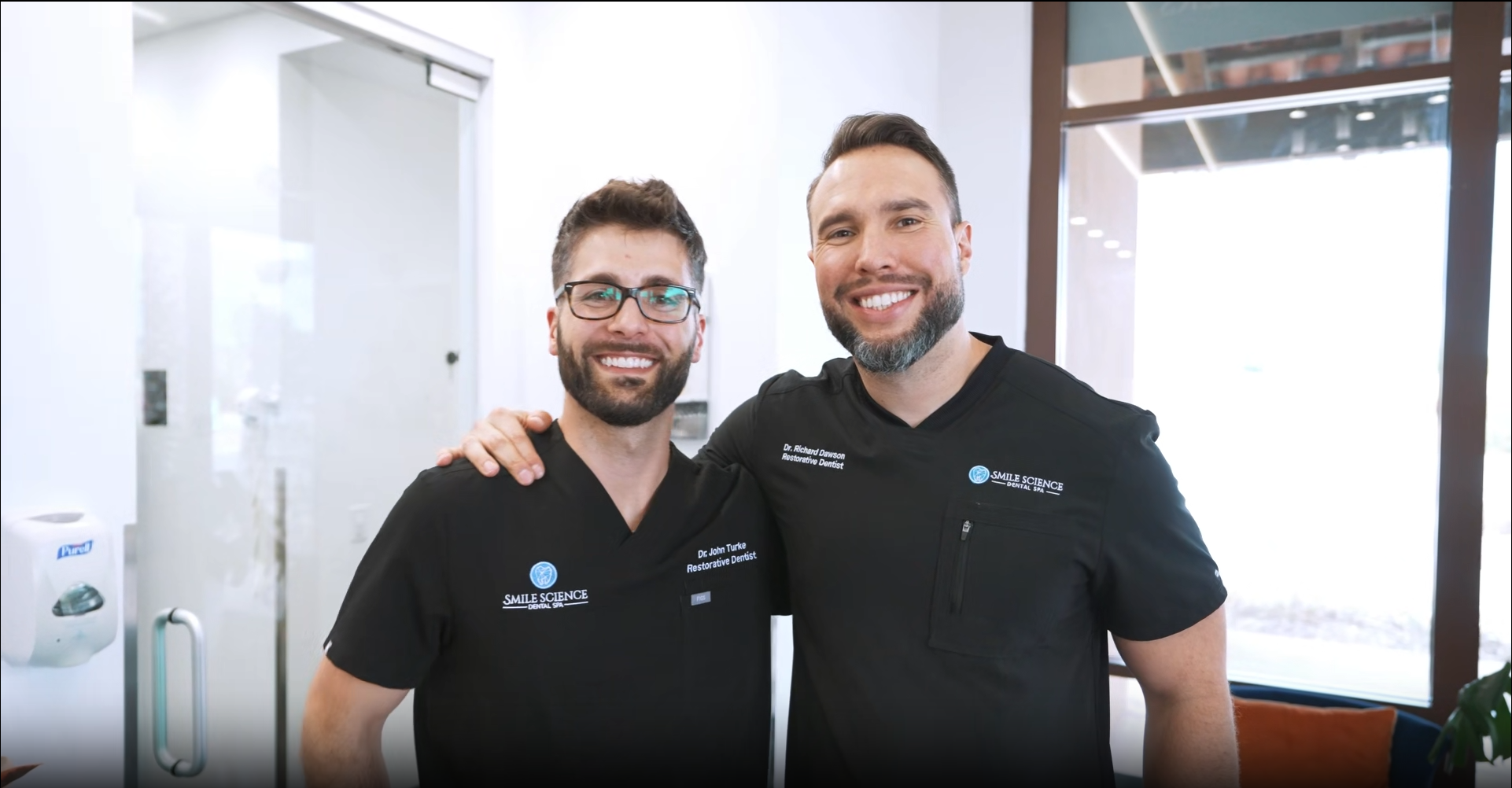
The two doctors review complex cases together, sequence each phase to support the next, and are both available at the practice on the same days -- so communication between the surgical and restorative phases happens immediately, not through phone calls between offices across town.
Full records including CBCT cone-beam CT scan, digital impressions, bite records (mounting on an articulator), clinical photographs, and complete periodontal charting. We evaluate bone levels at every tooth, the condition of the jaw joints and muscles, the current bite position, and every existing restoration. This appointment is diagnostic -- no treatment happens yet.
Dr. Turke and Dr. Dawson review all records together and design the rehabilitation digitally. This includes projected vertical dimension changes, tooth positions, implant placement sites, and a wax-up of the final result. For complex cases, a diagnostic wax-up model allows you to see the planned outcome before any irreversible treatment begins.
You receive a written treatment plan with each phase described, the specific procedures in each phase, the sequence, and itemized fees for every procedure. Nothing is vague or approximate. Phases are prioritized by clinical urgency and can be spaced to fit your schedule and financial planning. We review the plan with you in detail before any work begins.
Extractions, implant placements, bone grafting, and periodontal treatment are completed first. This phase establishes the stable biological foundation on which everything else is built. Healing time between implant placement and final restoration varies -- typically 3 to 6 months depending on bone quality and graft needs.
Temporary crowns or provisional restorations are placed to establish the new bite position and allow you to evaluate the function and aesthetics before permanent restorations are fabricated. For cases involving significant vertical dimension changes, a provisional period is essential -- it confirms the new bite works comfortably before the final investment is made.
Permanent crowns, veneers, and implant restorations are placed in the correct sequence. Final bite verification and micro-adjustments are made at delivery. A maintenance plan is established for the long-term care of the completed rehabilitation -- including night guard use if bruxism was a contributing factor.
2 -- 4 months. Multiple crowns with the PlanMeca in-house lab can reduce the total number of visits significantly.
6 -- 12 months. Implant osseointegration requires 3 -- 6 months before the crown is placed.
12 -- 24 months. Bone grafts require 4 -- 6 months of healing before implants can be placed, adding a healing phase to the timeline.
IV sedation allows multiple procedures in extended single appointments, reducing total visits and making the process more comfortable for anxious patients.
Full mouth rehabilitation is among the most significant investments in healthcare. The range is wide because the scope varies enormously by case. Rough ranges by case type:
$10,000 -- $22,000
$20,000 -- $40,000
$35,000 -- $65,000+ per arch
CareCredit, Cherry, Sunbit, and Proceed Finance. Same-day approvals. 6 -- 24 month no-interest options available for qualified applicants.
All fees are quoted in writing after your examination. We will never start work without your written consent to a specific treatment plan and fee estimate.
Related Services
Live coverage estimator
Three quick taps - pick your insurance, pick your procedure, see the patient-cost range against our 2026 fee schedule next to our in-house membership plan. No login, no email, no sales pitch.
Estimate range, not a quote. Final cost depends on your specific plan benefits, remaining annual max, and clinical findings at your consult. Defaults used here: $1,500 annual max, $50 deductible.
Sixteen carriers including Delta, Cigna, Aetna, all 4 major BCBS-network plans, AARP, and "I don't see my plan." We file claims for every carrier.
Plain-language categories - Cleaning, Filling, Crown, Root Canal, Extraction, Gum Treatment, Implants, Cosmetic. Drill down to the specific option that matches your case.
Insurance estimate vs. our in-house membership plan, side-by-side. Ranges (not single numbers) so you're not surprised at the desk. Real 2026 Glendale-market pricing.
The investment depends entirely on what procedures are needed and how many teeth are involved. Crown-only reconstructions typically range from $10,000 -- $22,000. Cases involving multiple implants range from $20,000 -- $40,000. Full-arch implant cases range from $35,000 -- $65,000 or more per arch. We provide a detailed itemized quote after your examination. Financing through CareCredit, Cherry, Sunbit, and Proceed Finance is available with no-interest options.
Many phases of rehabilitation include procedures with some insurance coverage -- extractions, root canals, and certain crowns are typically covered at 50% after deductible, subject to annual maximums. Insurance rarely covers the full scope of a rehabilitation, but partial reimbursement can be meaningful. We verify your benefits in advance and structure the phased plan to maximize insurance use where applicable. The cosmetic components of a plan are generally not covered.
No. We plan carefully to ensure patients always have functional teeth throughout treatment. Temporary crowns, provisional bridges, or immediate provisional dentures are used to maintain appearance and function during healing phases. You will never leave our office without teeth in your mouth.
The majority of full mouth rehabilitation cases can be completed entirely within our practice. Dr. Dawson handles the surgical components -- implants, extractions, bone grafting, and periodontal surgery -- and Dr. Turke handles the restorative and cosmetic components. Our in-house CBCT scanner, PlanMeca 60S digital lab, and sedation capabilities mean we rarely need to refer complex cases elsewhere. Referral to an orthodontist may occasionally be appropriate for cases requiring significant tooth movement.
With proper maintenance, implants can last a lifetime. High-quality ceramic crowns last 15 -- 25 years on average with good hygiene and no bruxism. Veneers last 10 -- 20 years. The longevity of any restoration is heavily influenced by at-home care, regular maintenance appointments, and whether contributing factors like grinding are managed (night guard, muscle relaxant therapy for masseter, etc.). We discuss maintenance expectations explicitly as part of the treatment plan.
Yes. We see this regularly. Many patients who need rehabilitation have avoided dental care for years, in part because of embarrassment. We approach these consultations without judgment. Our job is to understand your current situation, lay out what is possible, and build a plan that works for your life. The comprehensive exam appointment is private, unhurried, and focuses entirely on you -- not on what should have been done years ago.
Yes, in most cases. The phased plan is designed with clinical priorities -- urgent treatment first -- but is also structured to fit your scheduling and financial realities. We do not require you to commit to the full plan before starting. Phases can be spaced months apart. The key constraint is that some phases must precede others for clinical reasons (gum disease treatment before crowns; implant osseointegration before final crown placement), but within those constraints there is usually flexibility.
The first appointment is a comprehensive examination -- not a cleaning, not immediate treatment. We take a CBCT scan, full digital X-ray series, clinical photographs, and periodontal measurements. We evaluate your bite, jaw joints, muscles, and every existing restoration. This gives us the complete clinical picture needed to design an accurate treatment plan. After reviewing the records, we schedule a separate treatment planning presentation to walk through the plan and fees in detail before you make any decisions.
Yes. Nitrous oxide, oral conscious sedation, and IV sedation are all available. For patients who want to complete multiple procedures in single extended appointments -- significantly reducing the total number of visits required -- IV sedation is the most practical option. Our board-certified dental anesthesiologist is on-site for IV sedation appointments. Many rehabilitation patients choose to complete entire phases under IV sedation.
Book a comprehensive examination at SmileScience Dental Spa in Glendale, AZ. We will evaluate your entire bite, review all imaging, design a phased plan, and give you a clear picture of what is possible -- with no pressure and no surprises.