
Pick your insurance
Sixteen carriers including Delta, Cigna, Aetna, all 4 major BCBS-network plans, AARP, and "I don't see my plan." We file claims for every carrier.
Glendale, Arizona
Services provided by an Arizona licensed general dentist.
A dental bridge replaces one or more missing teeth with a fixed, non-removable restoration -- restoring your bite, preventing adjacent teeth from shifting, and giving you a complete smile. SmileScience Dental Spa offers traditional and implant-supported bridges using digital impressions and all-ceramic materials.
A dental bridge spans the gap left by a missing tooth by anchoring an artificial tooth -- called a pontic -- to the natural teeth on either side of the space. Those anchor teeth are prepared and crowned, and the pontic hangs between them, fully filling the gap. The result is a fixed, permanent restoration that looks, feels, and functions like a natural tooth.
Bridges are an established tooth replacement option with decades of clinical evidence behind them. They are fixed in place -- you cannot remove them -- and they restore the ability to chew, speak, and smile normally in the area of the missing tooth. They also stop adjacent and opposing teeth from drifting into the empty space, a process that begins within months of tooth loss and can create significant bite problems over time.
At SmileScience Dental Spa in Glendale, AZ, Dr. John Turke designs and places bridges using digital impressions and all-ceramic materials. In many cases, the bridge can be fabricated in our on-site PlanMeca 60S digital lab -- reducing the number of visits required. For cases that require implant support, Dr. Richard Dawson places the implants in-house, so patients see both the surgical and restorative doctor at the same location throughout treatment.
Dental Bridges at SmileScience Dental Spa -- Glendale, AZ
The right type of bridge depends on the location of the missing tooth, the condition of the adjacent teeth, and whether implants are an option. Dr. Turke reviews all options with you before treatment begins.
The most common type. The two teeth adjacent to the gap (called abutments) are prepared and crowned. A pontic connects them, spanning the empty space. The entire three-unit structure is cemented as one piece.
Best for: Single missing tooth with healthy, crown-worthy abutment teeth on both sides.
Consideration: Requires reducing the adjacent teeth for crowns, which is irreversible. If those teeth are already crowned or significantly restored, this is often the most efficient path.
Instead of relying on natural teeth as anchors, this bridge is supported by two dental implants -- one on each side of the gap, or at intervals when multiple teeth are being replaced. No natural teeth are reduced. The bridge attaches directly to the implant abutments.
Best for: Replacing multiple adjacent teeth, or when adjacent natural teeth are healthy and unrestored (preserving them is preferable).
Consideration: Requires implant placement by Dr. Dawson and a healing period of 3 -- 6 months before the bridge is placed. Total timeline is longer but bone-preserving.
A conservative alternative that uses metal or ceramic wings bonded to the back of adjacent teeth rather than full crowns. No significant tooth reduction is required. Less invasive but also less durable -- adhesive bridges are subject to debonding under heavy bite forces.
Best for: Front tooth replacement in adults when adjacent teeth are healthy and unrestored, and bite forces are moderate.
Consideration: Not ideal for back teeth or high-force areas. Discuss with Dr. Turke whether this is appropriate for your specific case.
A traditional fixed bridge requires two appointments. Here is what to expect at each.
Abutment Tooth Preparation
The abutment teeth are shaped under local anesthesia to create space for the crown portion of the bridge. The amount of reduction is precise -- enough to seat a well-fitting crown, no more.
Digital Impression
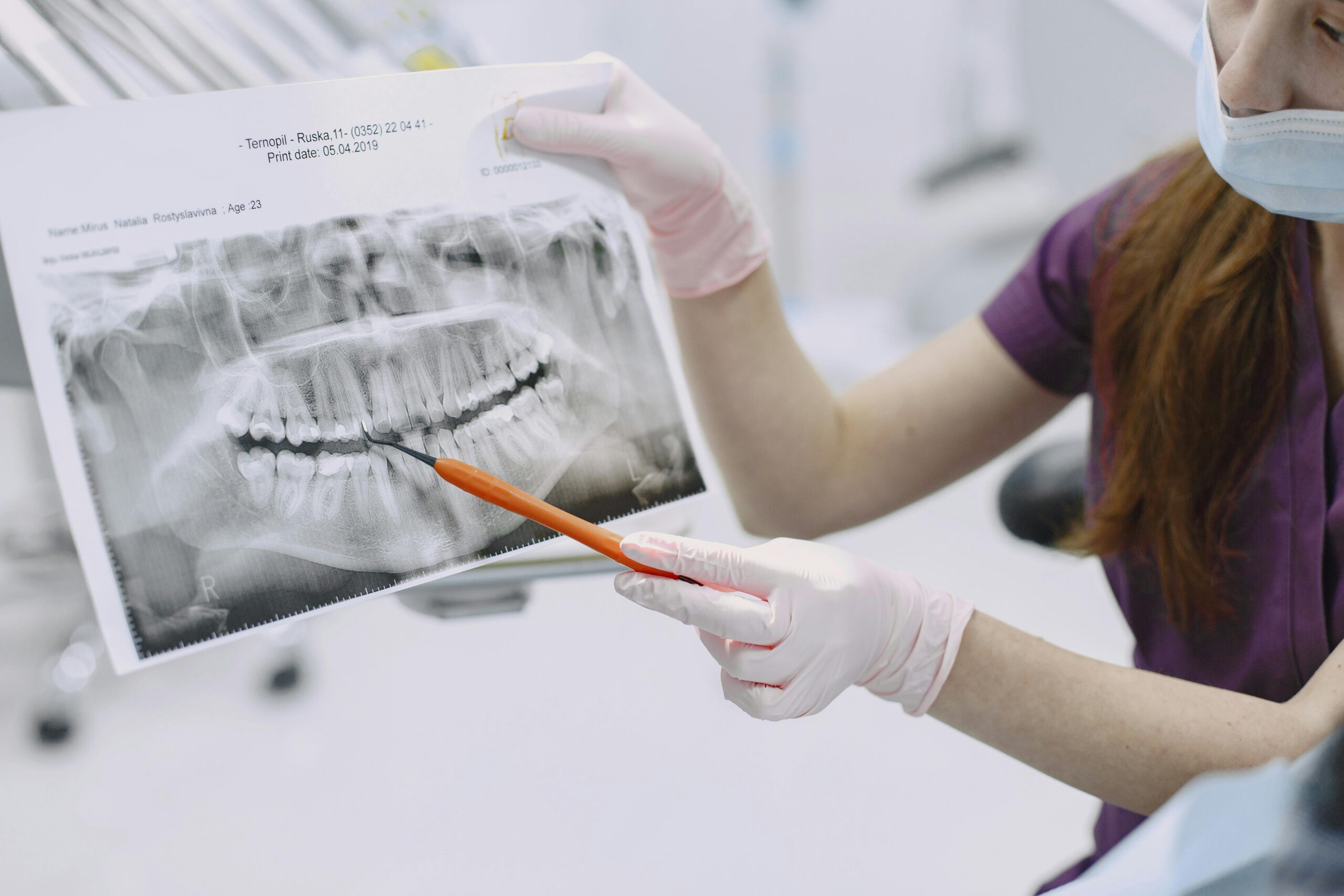
The Trios 5 scanner captures a 3D model of the prepared teeth, the opposing arch, and the surrounding tissue. This replaces conventional impression trays and is sent directly to our design software.
Temporary Bridge
A provisional bridge is fabricated and cemented to protect the prepared abutments while the permanent bridge is being designed and fabricated. You leave with a functional temporary restoration.
Temporary Removed, Bridge Tried In
The temporary bridge is removed and the permanent ceramic bridge is tried in. Dr. Turke checks the margins, contacts, bite, and color match. Minor adjustments are made at chairside.
Permanent Cementation
Once fit and bite are verified, the bridge is permanently bonded in place. Final bite check is performed. You leave with your complete permanent bridge.
Neither is universally better -- the right answer depends on your specific anatomy and goals.
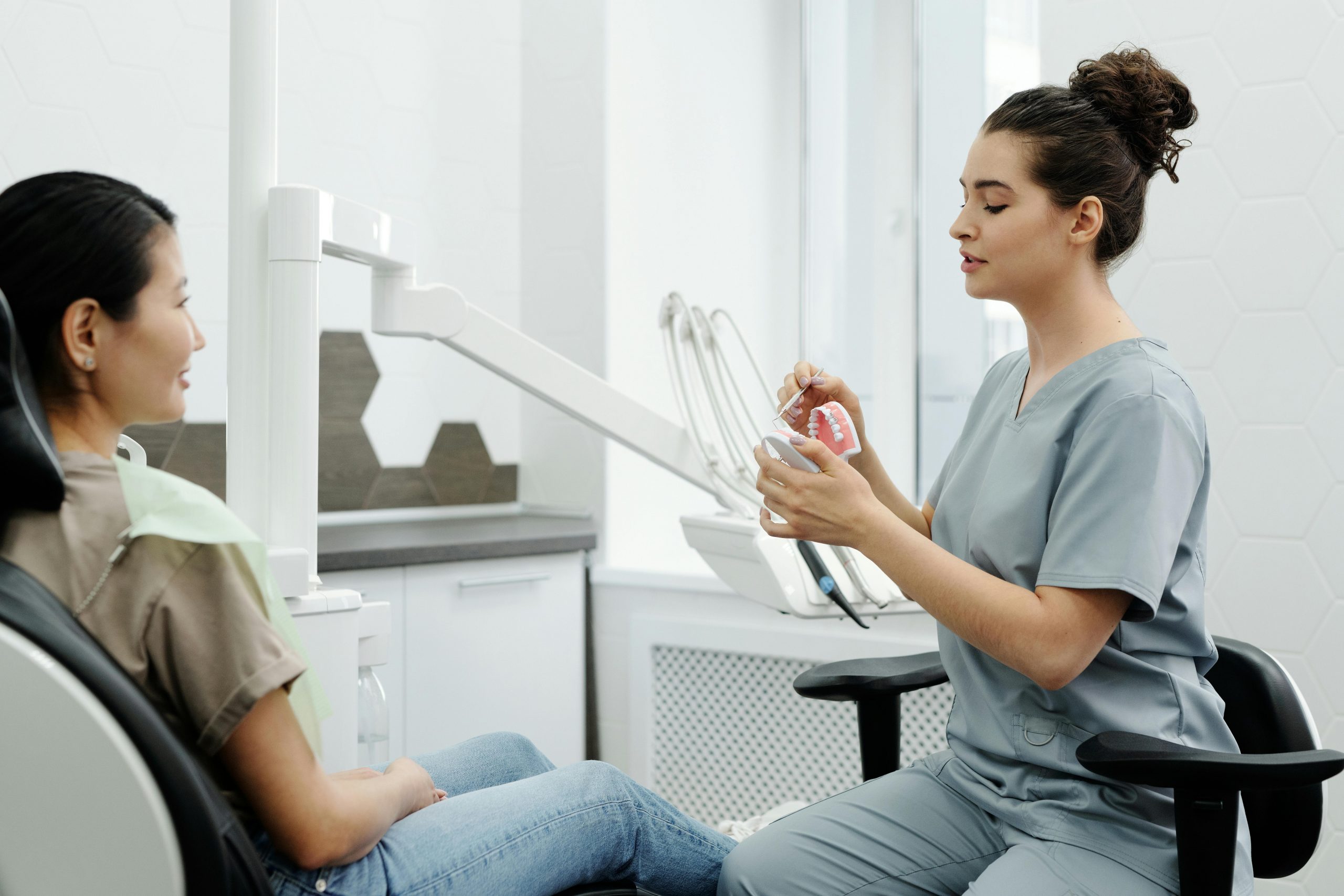
At your consultation, Dr. Turke will review your X-rays, the condition of adjacent teeth, and your preferences. In cases involving implants, Dr. Dawson is also available in-house for the surgical component -- so there is no need for a referral to a separate office. Learn about dental implants at SmileScience.
A well-designed and well-maintained dental bridge typically lasts 10 to 15 years, with many lasting longer. All-ceramic bridges are subject to fracture from extreme bite forces or heavy grinding -- patients who brux are advised to wear a custom night guard.
The area most vulnerable in a bridge is beneath the pontic, where the gum and the artificial tooth meet. Bacterial plaque and food debris can accumulate in this space if not cleaned properly. Flossing a bridge requires using a floss threader or water flosser to clean under the pontic -- your hygienist will demonstrate the correct technique at your cleaning appointment.
Related Services
Live coverage estimator
Three quick taps - pick your insurance, pick your procedure, see the patient-cost range against our 2026 fee schedule next to our in-house membership plan. No login, no email, no sales pitch.
Estimate range, not a quote. Final cost depends on your specific plan benefits, remaining annual max, and clinical findings at your consult. Defaults used here: $1,500 annual max, $50 deductible.
Sixteen carriers including Delta, Cigna, Aetna, all 4 major BCBS-network plans, AARP, and "I don't see my plan." We file claims for every carrier.
Plain-language categories - Cleaning, Filling, Crown, Root Canal, Extraction, Gum Treatment, Implants, Cosmetic. Drill down to the specific option that matches your case.
Insurance estimate vs. our in-house membership plan, side-by-side. Ranges (not single numbers) so you're not surprised at the desk. Real 2026 Glendale-market pricing.
A traditional three-unit bridge (two crowns and one pontic) typically ranges from $2,500 to $4,500 out-of-pocket, depending on the material and specific case factors. Most dental insurance plans cover bridges at 50% after deductible, subject to your annual maximum. We verify your benefits in advance and provide a written treatment plan with itemized fees before you make any decisions. Financing through CareCredit, Cherry, and Sunbit is available for out-of-pocket balances.
All-ceramic bridges placed with proper preparation and bite verification typically last 10 to 15 years with routine maintenance. The most common reasons a bridge needs replacement earlier are decay at the abutment crown margins, gum recession exposing the margins, or fracture from heavy bite forces or bruxism. Patients who grind their teeth should protect the bridge with a custom night guard.
The preparation appointment is done under local anesthesia, so you will not feel discomfort while the teeth are being prepared. You may have some sensitivity in the prepared abutment teeth for a few days after the appointment. Over-the-counter pain relief manages this well. The delivery appointment is typically comfortable with little to no anesthesia needed.
Yes. A properly fitted ceramic bridge restores full chewing function. During the temporary bridge phase, we recommend avoiding very hard or sticky foods on that side. Once the permanent bridge is cemented, you can eat normally, though we recommend continued caution with extremely hard foods like ice or hard candies on any restoration.
Neither is universally better -- both are proven tooth replacement options with different trade-offs. An implant preserves more natural tooth structure (no adjacent teeth need to be reduced), protects the jawbone from resorption, and is independent of adjacent teeth. A bridge is faster to complete and does not require surgery. The right choice depends on the condition of your adjacent teeth, bone volume, budget, and timeline. Dr. Turke will review both options with you during your consultation.
Yes. All-ceramic bridges -- using E.max or zirconia -- are designed to match the color, translucency, and shape of your natural teeth. The shade is selected at chairside with a color guide, and custom staining is applied after milling for precise matching. Modern ceramic bridges are indistinguishable from natural teeth in most cases.
The consequences of leaving a gap accumulate over time. Within months, the teeth adjacent to the space begin to tilt toward the gap, and the opposing tooth over-erupts into it. These positional changes disrupt the bite, accelerate wear on the affected teeth, and can create space problems that make future replacement more complex. The longer the gap is left unfilled, the more extensive the correction required.
4.9 (437 reviews)
I recently had the pleasure of visiting Smile Science Dental Spa, and I couldn't be more impressed with the level of care and service provided by the entire team. Dr. Dawson and Dr. Turke are both incredibly skilled and made me feel completely at ease throughout my procedures. Their professionalism, combined with their gentle approach, made me feel comfortable and well-informed every step of the way. I was especially impressed that I was able to get a same-day crown(apparently their first ever!), which exceeded my expectations. I couldn’t believe how quick and seamless the process was. It really saved me time and made the experience even more convenient. Cindiray and Angeles, the dental assistants, were equally wonderful. They were not only friendly and attentive but also thorough in explaining everything and made sure I was relaxed during each phase of my visit. Lastly, a big thank you to Litzy at the front desk, who greeted me with a smile and helped with scheduling and any questions I had. She made the entire check-in process a breeze. From start to finish, my experience at Smile Science Dental Spa was exceptional. I'll be returning for sure. I highly, highly, highly recommend them for anyone looking for high-quality dental care.
View Full Review on GoogleDusty
Honestly I’ve never been so happy to go to the dentist. I came in (late due to Lyft) and was still taken care of and treated with care. Even without insurance (kicking in within the next month) prices for an extraction on my infected tooth were more than reasonable. I was able to get more than expected done in the same visit. Dr. Dawson and his team made me feel so comfortable and taken care of. Won’t go anywhere else.
View Full Review on GoogleCherish B
I recently started as a patient after leaving our long-time family Dentist and couldn’t be happier! Marcela is AMAZING and a FANTASTIC hygienist!!!! 😃 Dr Dawson is great too! Every time I visit, they make me feel like family.
View Full Review on GoogleTJ Winzeler
Myself and my family had previously gone to Dr. Turk at another dental office that he worked at. He had relocated and we did not know where he had gone to until this week. Today I got in with Dr. Turk and he took the time to look at my x-rays carefully . I was having pain from a tooth and some other issues. The previous Dentist I went to that I saw just a few days earlier, he did not find any issues with my tooth which I had pain in. Dr. Turk identified infection and referred me to an endodontist. He is very gentle as a wonderful disposition and my self and my family are thrilled to be able to get back with him. The office is lovely, relaxing music, heat and massage chair.I have always been very nervous and some anxiety going to dentist as I have had bad reactions with the anesthesia. I am confident that Dr. Kirk will help me get through my next appointment just fine. “The staff are very kind and attentive. I am looking forward as I have quite a bit of work to be done, and I know I’m in good hands with Dr. Turk and his staff. Five stars!⭐️ Sherry
View Full Review on GoogleSherry Redmond
I recently moved to Arizona and had an issue with a tooth repair from 15 years back. Not knowing anyone here in my new home, I searched dentists close to me. I chose Smile Science much like pinning the tail on the donkey and my selection couldn't have been better! What a terrific staff! Dr. Turke was concerned the tooth would need to be extracted, but said he wanted to take a shot at saving it..and that's just what he did! After setting a temporary crown, I was on my way with an appointment to install the permanent crown in the following two weeks. That evening I received a call I've never received from a dentist. Dr. Turke had taken the time to follow up with me to make sure I wasn't in any discomfort..I was completely caught off guard by this kind of attention to detail and caring for my well being. The permanent crown is now in place, it fits and feels fantastic, the job and treatment are first class! Thank you, Dr. Turke and staff for taking in this stray and giving me a home dentist! I'd like to say that I'm just good at selecting blindly, but the truth is I am very lucky..and I'll take lucky over being good any day of the week! Thank you, again and Happiest of New Year's in 2026, Science Smile!!
View Full Review on GoogleEddy
Schedule a bridge consultation at SmileScience Dental Spa in Glendale, AZ. Dr. Turke will review your options -- including both traditional and implant-supported bridges -- and give you a clear written treatment plan before any work begins.


